 |
Back to Index |  |
Next |  |
Last | ||||
| 56 records found. Page 1 of 6 displayed. | |||||||||
For most of the photos on this page, you can click the image for a larger picture.
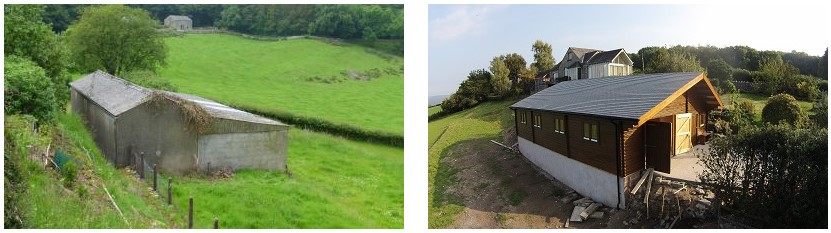
We moved into this house in 2013. One of the big attractions for me was the big shed that was in the garden/field. It was virtually derelict but it was there and I wanted (finally!) somewhere decent to work in. This is the story of that shed.
We drew up a plan that should have avoided the need for planning permission. The building was asymmetric; firstly because one room had to be wide enough for a garage, second because I thought the shed should fit into the slope of the land; thirdly the existing building was asymmetric.. It was sized to comply with the conditions that dictated planning permission; for example, the ridge was less than 4 metres high. However the local council decided that as the original shed was originally an industrial (!) mushroom house, I had to get planning permission for change of use. After they took my money they renamed the project "Replacement of Domestic Outbuilding" which I thought was a bit rich. The size of the building required Building Approval. Oh the joys of British bureaucracy.
I did a bit of research on building options. I had this hankering to do most of the work myself. I knew I was no good at bricklaying or plastering so a conventional building was out. We did get a quote for a block built building but the quote for the walls alone was £15,000. I looked around at kit built options and the option from Keops Interlock looked very impressive. Their web site is a mine of information and a custom option (rather than standard designs) was no problem. Richard at Keops is very helpful and a design emerged fairly quickly. The decision to go with Keops was based on their web site, the advice I got during design and that they provide virtually everything. Essentially you are getting a kit not just a set of logs. That turned out to be not quite true as you will see later on.
Eventually I got my planning permission but they added a rider in that the roof had to be of Cumbrian slates. In order to get the ridge below 4 metres (and also to avoid the building being too high and more visible from the road) the slope on one side was around 17 degrees whereas the steeper side was 23 degrees. Welsh slate will, at a push, go down to 25 degrees whereas Cumbrian slate (as it is less flat) requires around 45 degrees. So I had been given planning permission for something I couldn't build. That was aside from the sheer weight of slates. I had done some research on roofing and a reasonable compromise had been synthetic slates from Tapco. Although they are synthetic, the only real give away, if you aren't close, is the regularity. They have good shading and a riven edge. The council were fairly dismissive at first stating that they would be "far too shiny". However I persisted and Tapco kindly gave me a sample which I presented to the planning officer. You could see that they were a bit surprised and a few weeks later I got a letter saying "Though not acceptable in a more prominent position, I am of the opinion that this will be acceptable for the outbuilding and sufficient to discharge the condition."
So with planning permission and the building control application(and cheque!) in the post, off we went. You can click on the images for a larger image.
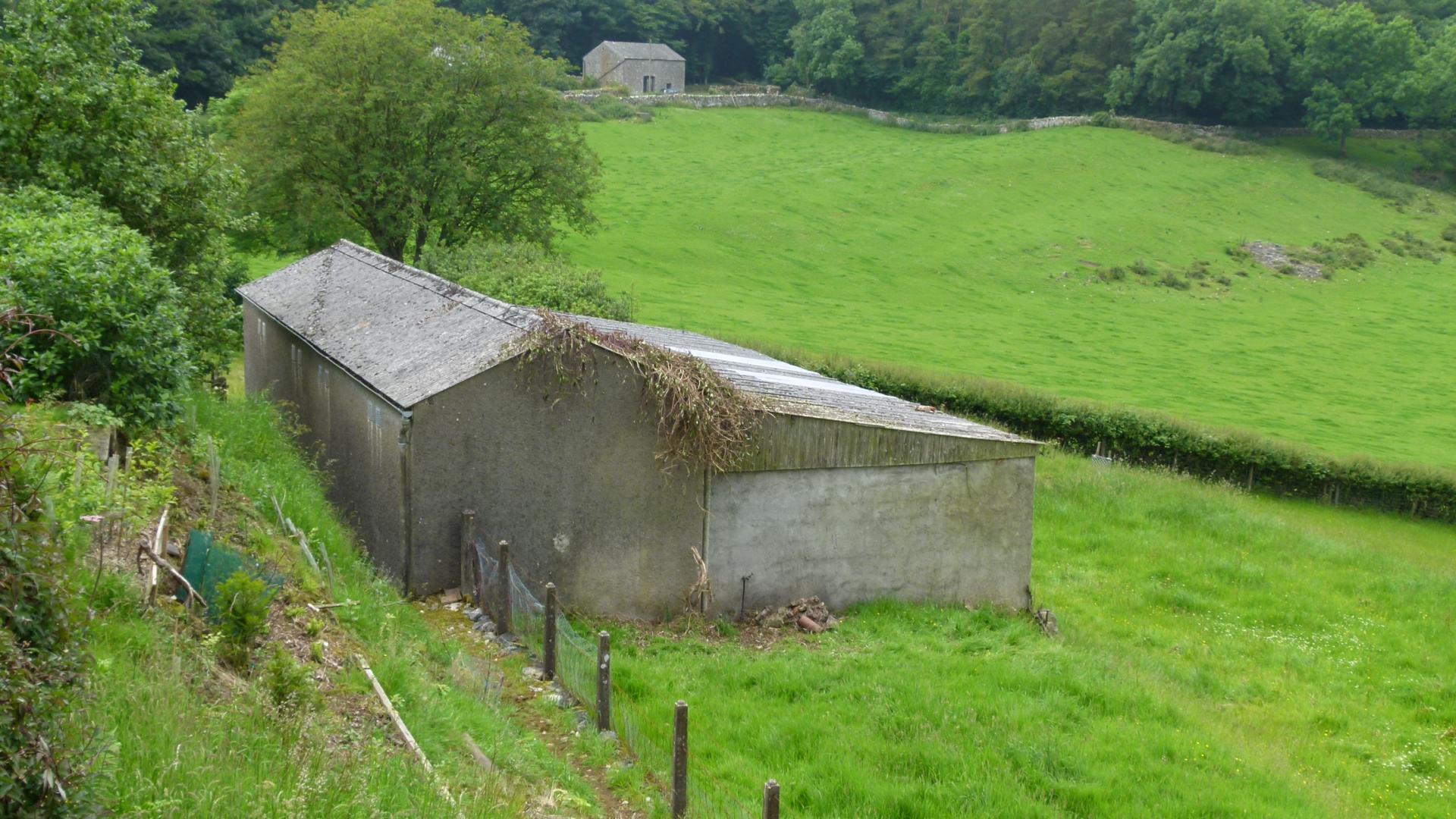 |
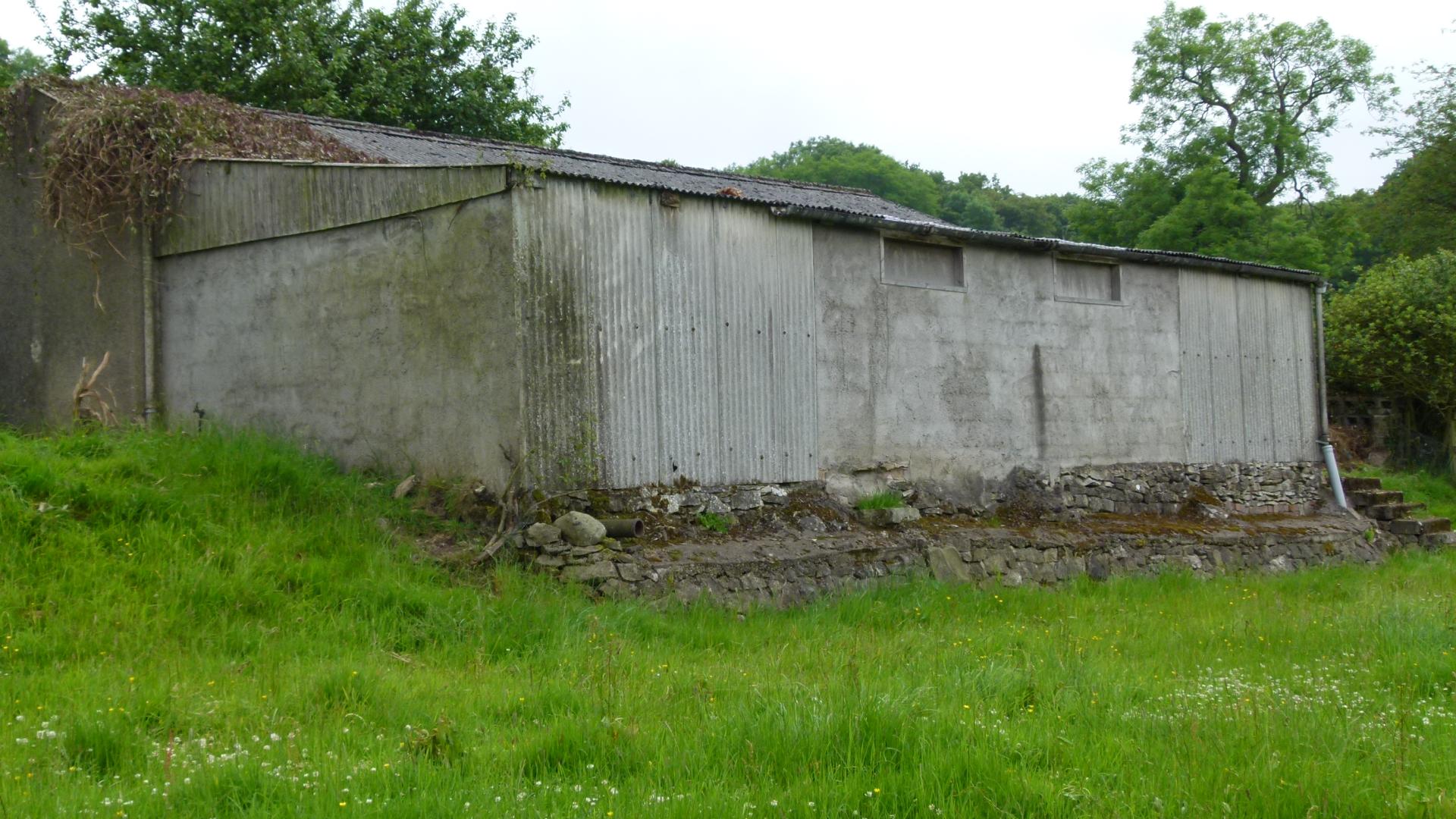
June 2014 The shed was built at the bottom of the garden bordering onto the adjacent field. The original part on the left had been a mushroom house, built in the 1950s, according to the council. Why anyone would build a mushroom house next to domestic building is a puzzle. we think. On the right hand side a previous owner had built a very dodgy lean to. The mushroom house had some very solidly built shelving, presumably for the mushroom trays. It had no windows and it was letting in water on the corner nearest the photographer. |
 |
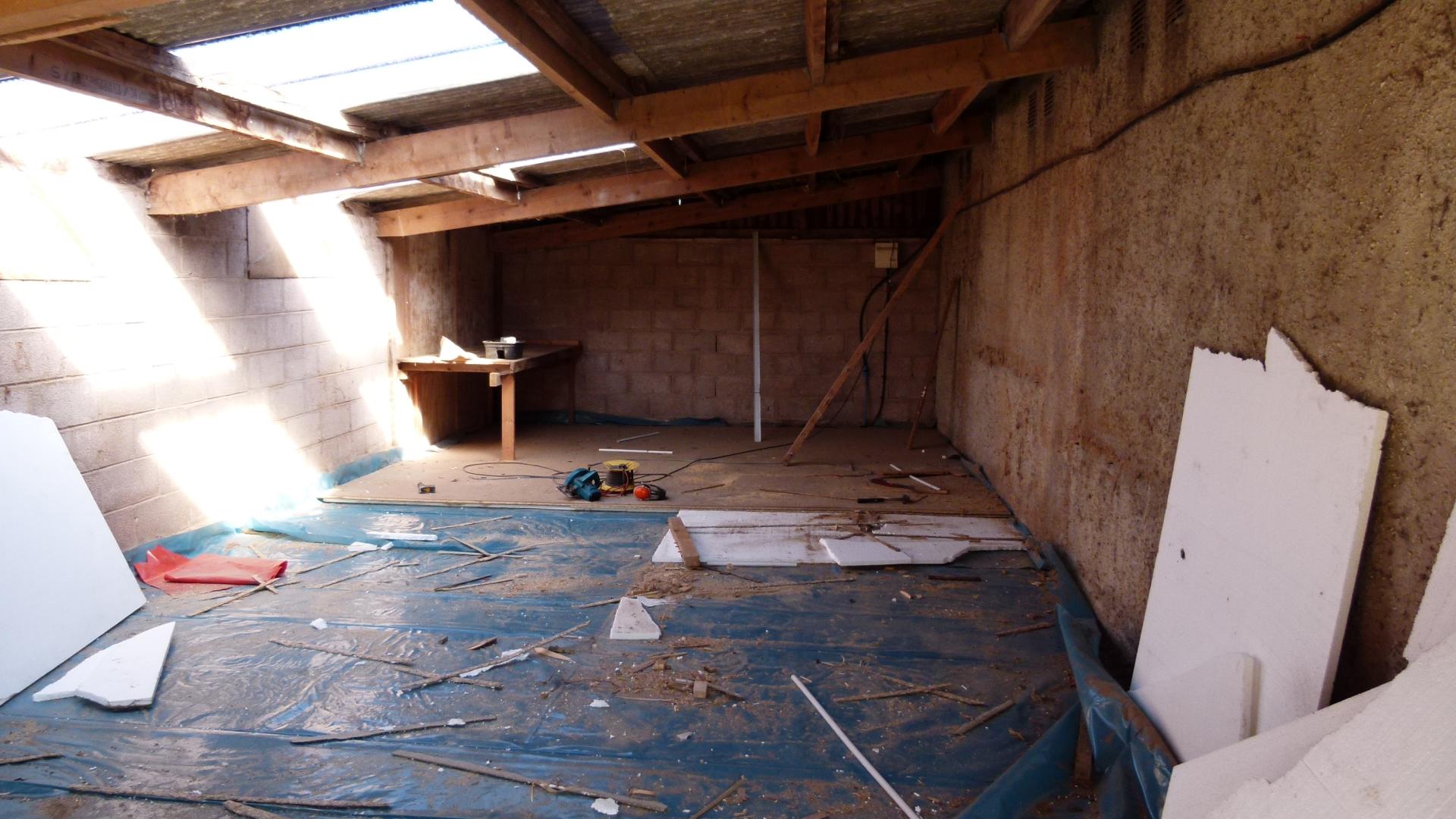
June 2014 The really dodgy bit were the foundations for the lean to section. You can see that there was no such thing as solid foundations with most of it built on loose rubble. As a consequence the wall had started to give way and had been repaired with a large dollop of concrete. The floor had a basis of concrete (in places) and had been covered in sand, then plastic DPC, foam insulation (the horrible white stuff that produces lots of small balls) and then a layer of flooring chipboard. The DPC could be seen all round the sides. It wasn't a very nice sight and the inside wasn't any better. |
 |
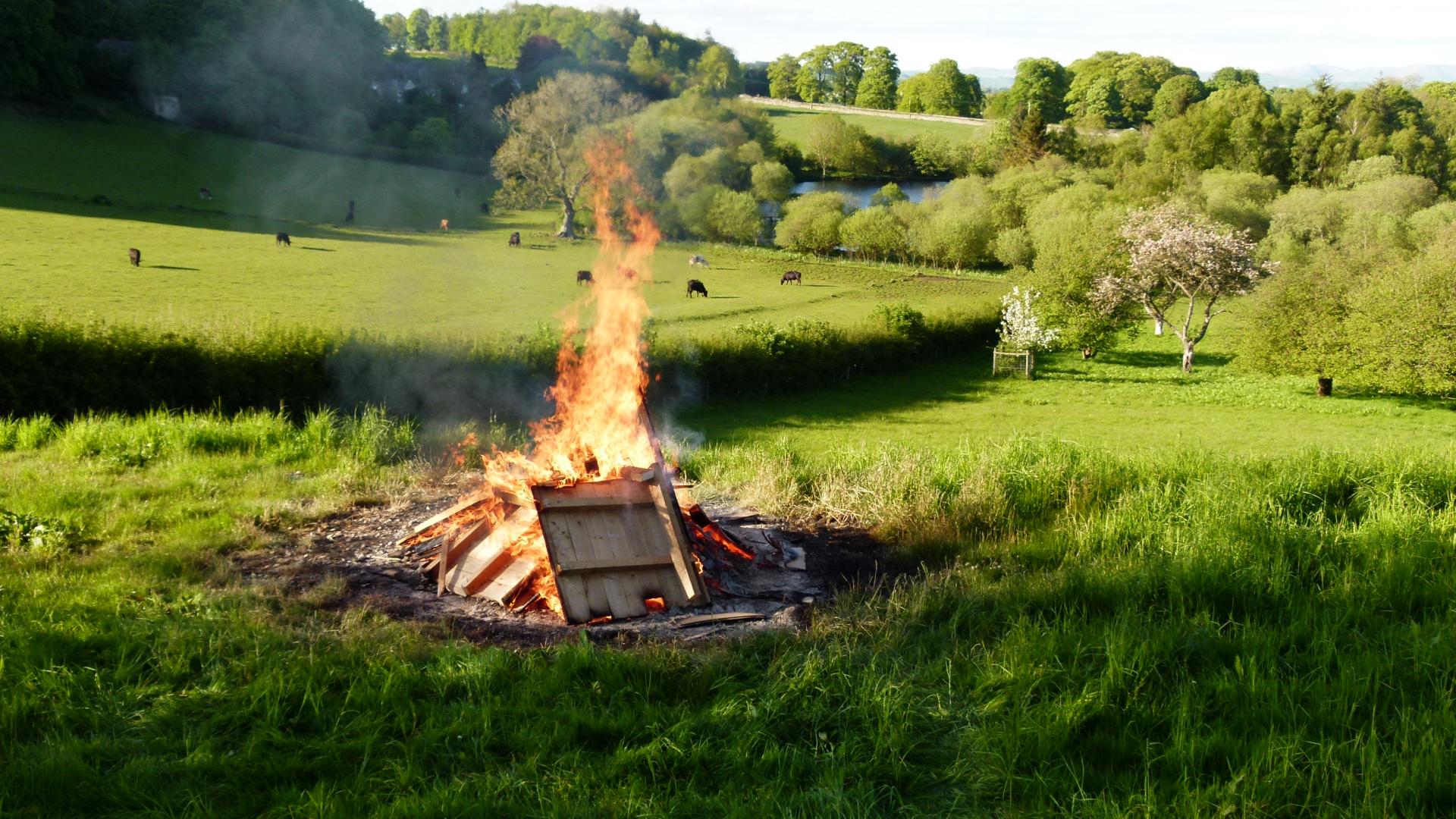
Here's the inside after I started to pull up the floor. Basically a horrible place to work. |
 |
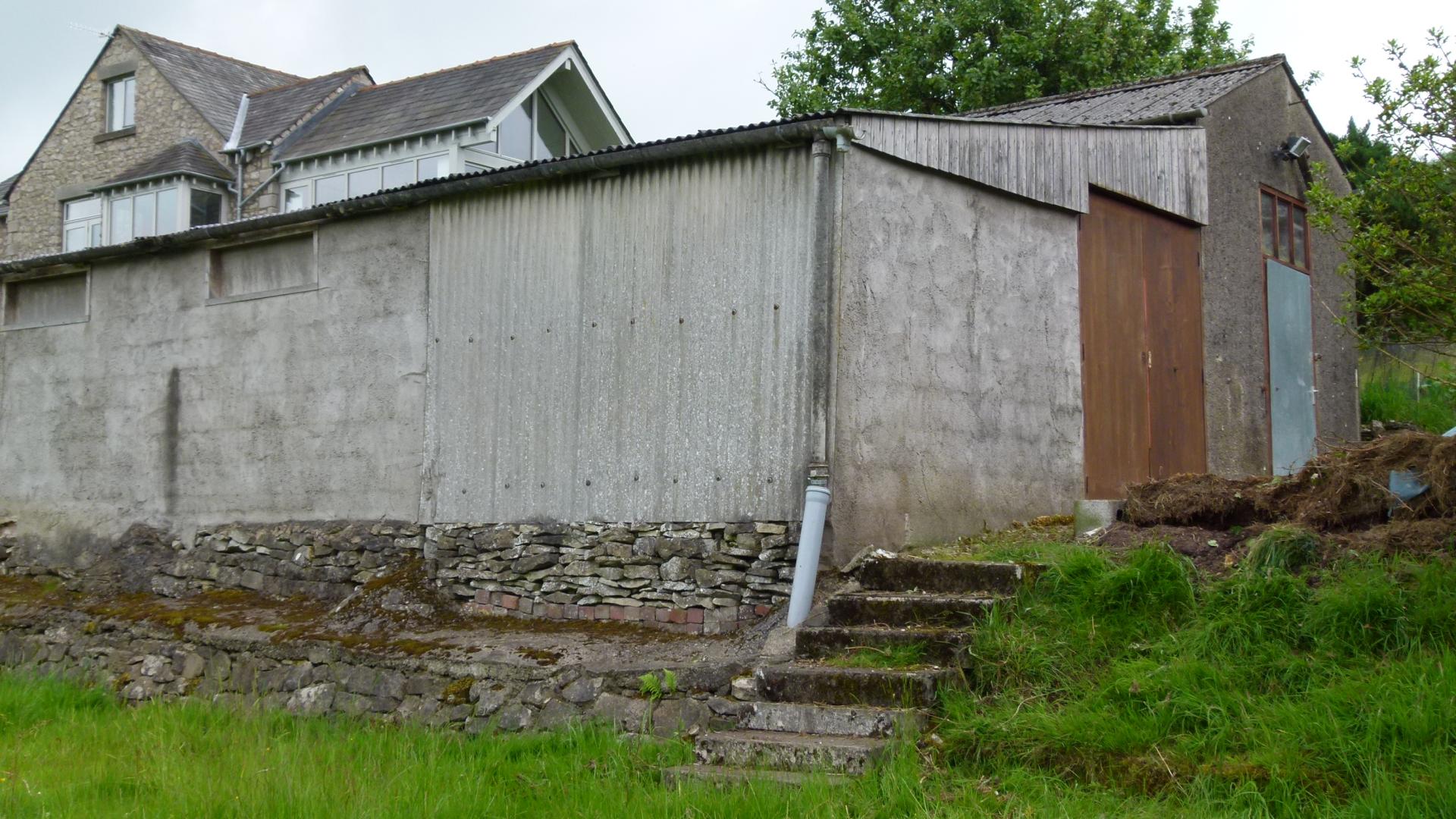
We had a good bonfire with the shelving which probably disposed of a lot of woodworm too. |
 |
This is the other corner of the shed from the field. Note the wonderful drainage! We were not able to work out why outer sides of the wall were clad with asbestos sheeting. Maybe it was originally designed to store hay from the field? |
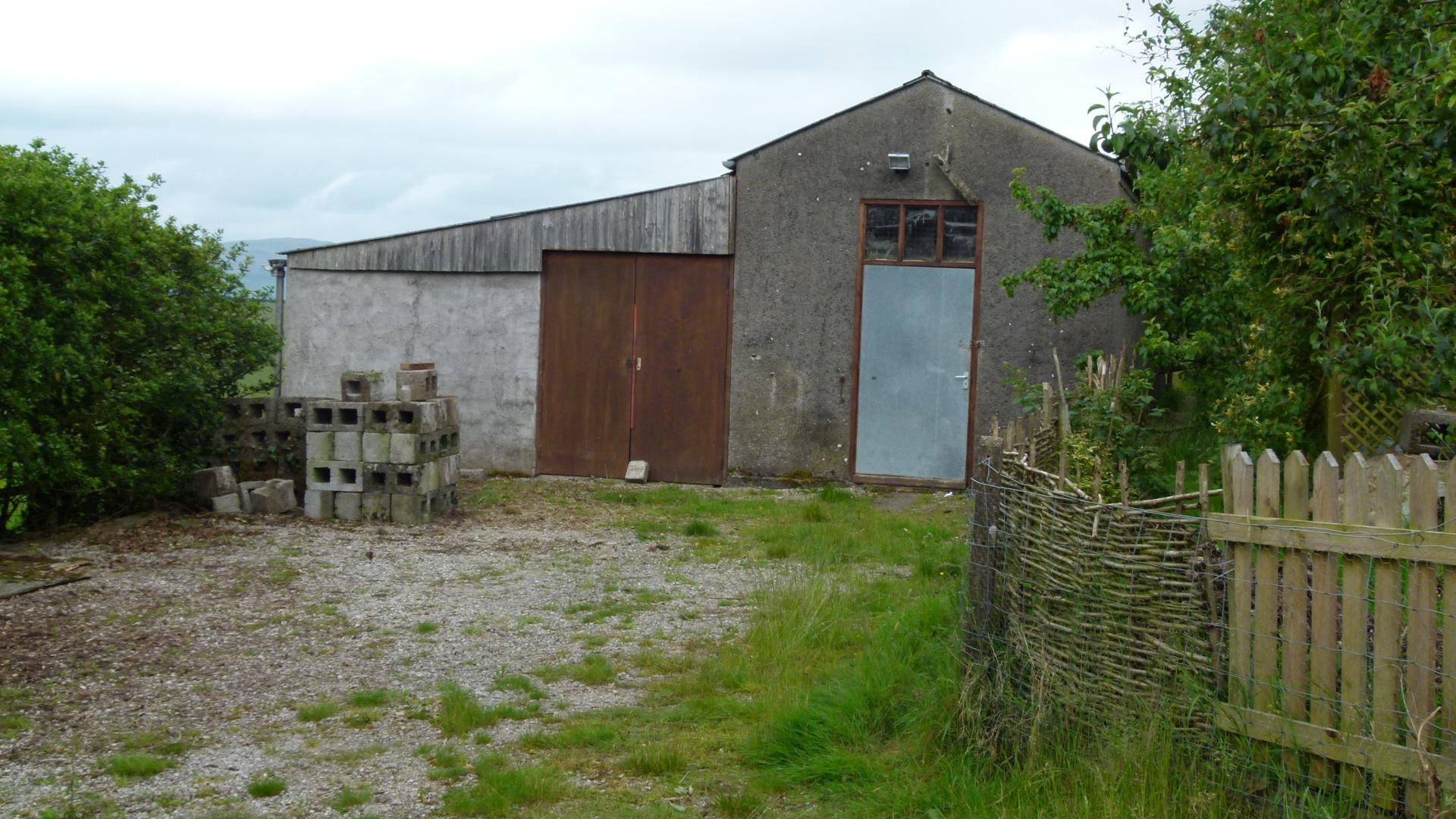 |
Finally a view of the way in. It was possible to (just!) get a Land Rover through the left hand door but you had to breathe in. I stripped a Land Rover project in here in the winter of 2013/2014 - see the Lightweight section. I debated what to build a replacement in. I wanted somewhere that didn't get too cold. We priced a conventionally built building from one builder who produced an eye watering quote. I had a ambition to build most of it myself, especially to do a roof. I knew I was not happy with my standard of bricklaying so a conventional building was out. Searching the internet I came across Keops Interlock who make log cabins. They offered a complete customisation service and I was impressed by their web site. |
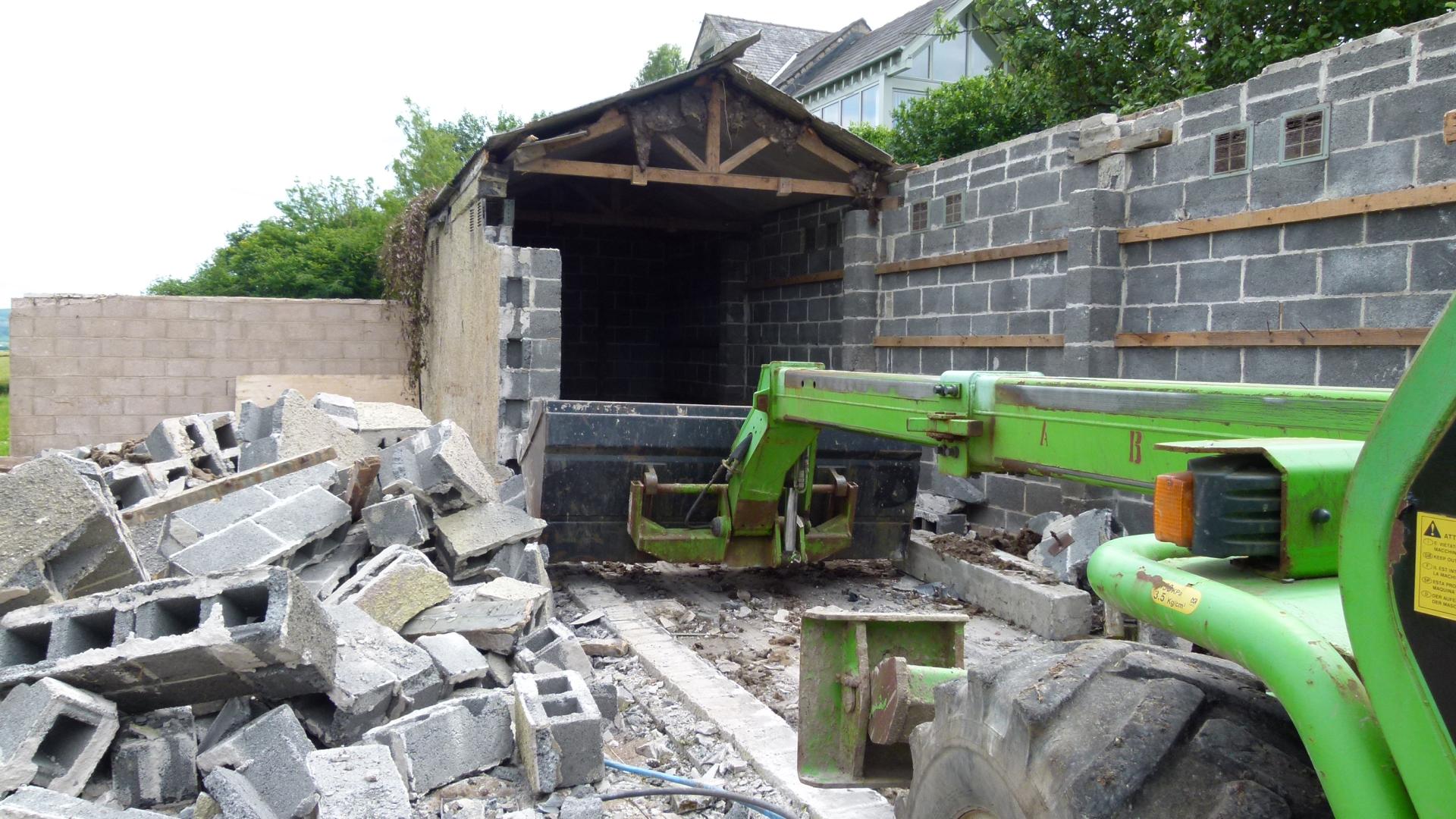 |
16 June 2014 Our friendly farmer neighbour recommended a builder to do the foundations as this was going to need some serious digging. So with a deposit off to Keops, demolition began. It came down pretty quickly with the aid of some prodding from a big green machine. |
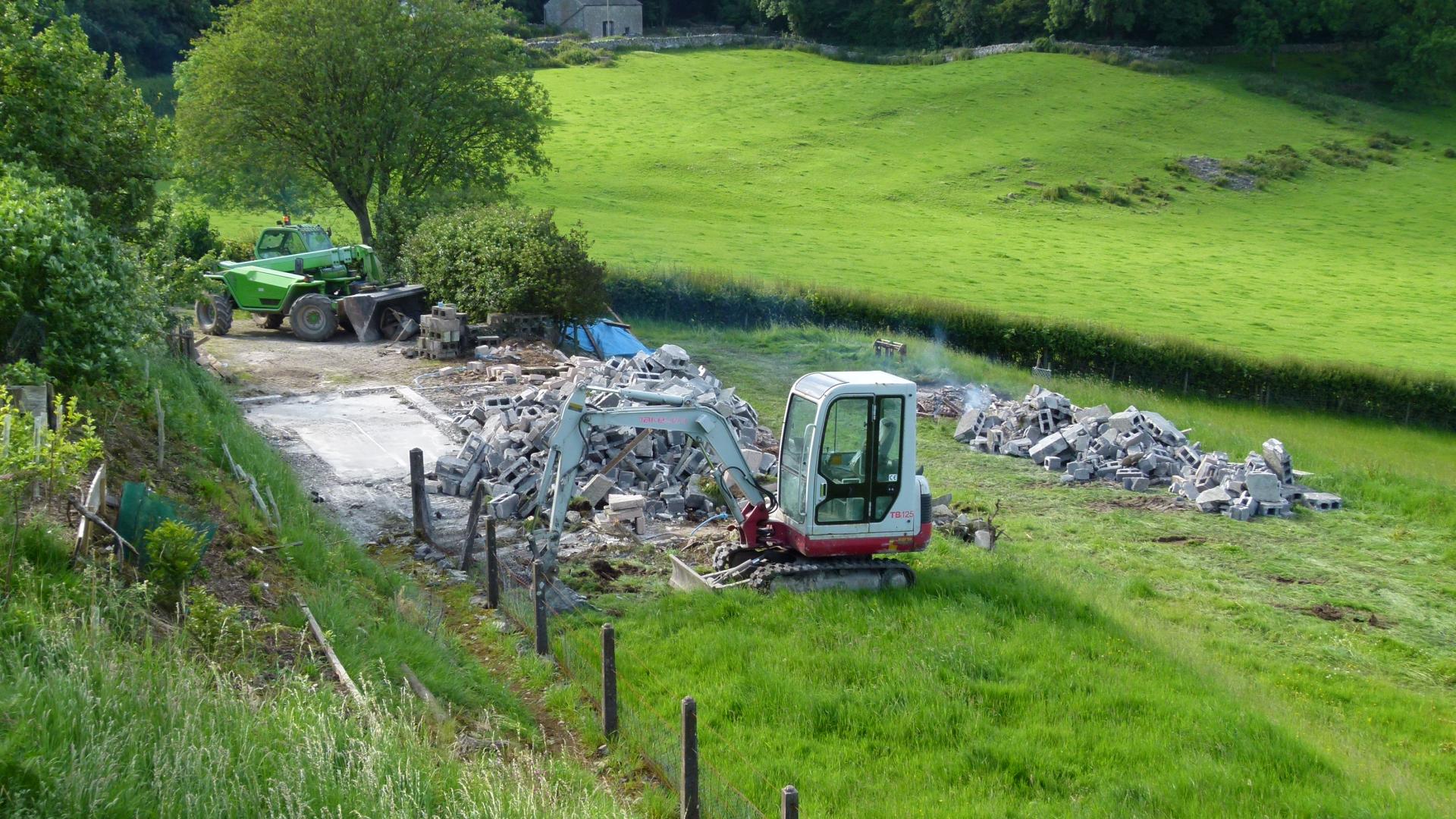 |
16 June 2014 By the end of day one there was no shed and a big pile of rubble. |
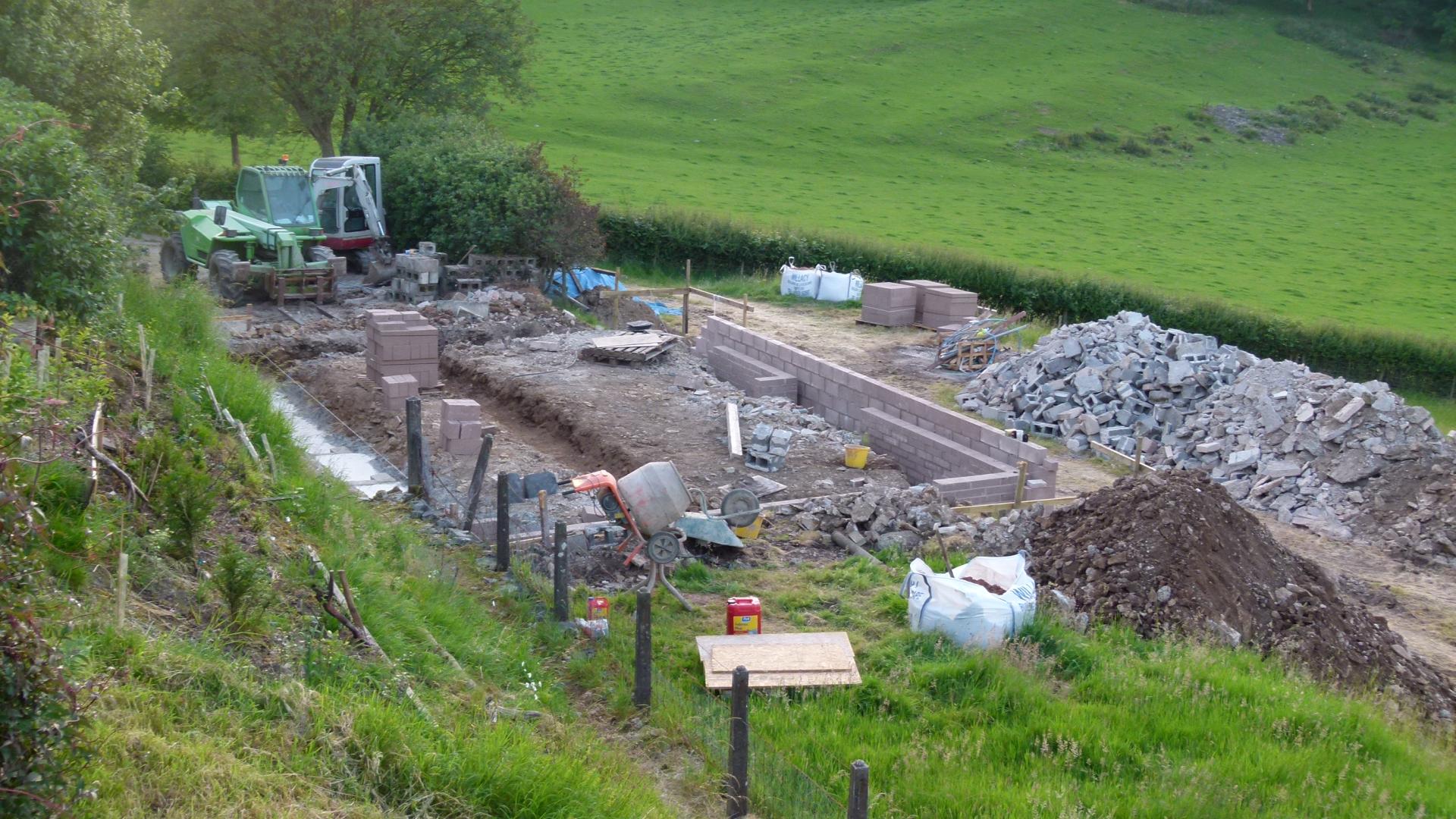 |
17 June 2014 By the end of day 2, the rubble was all in the field and marking out had commenced. Getting the levels right was a bit of a job as the ground sloped in 2 directions. |
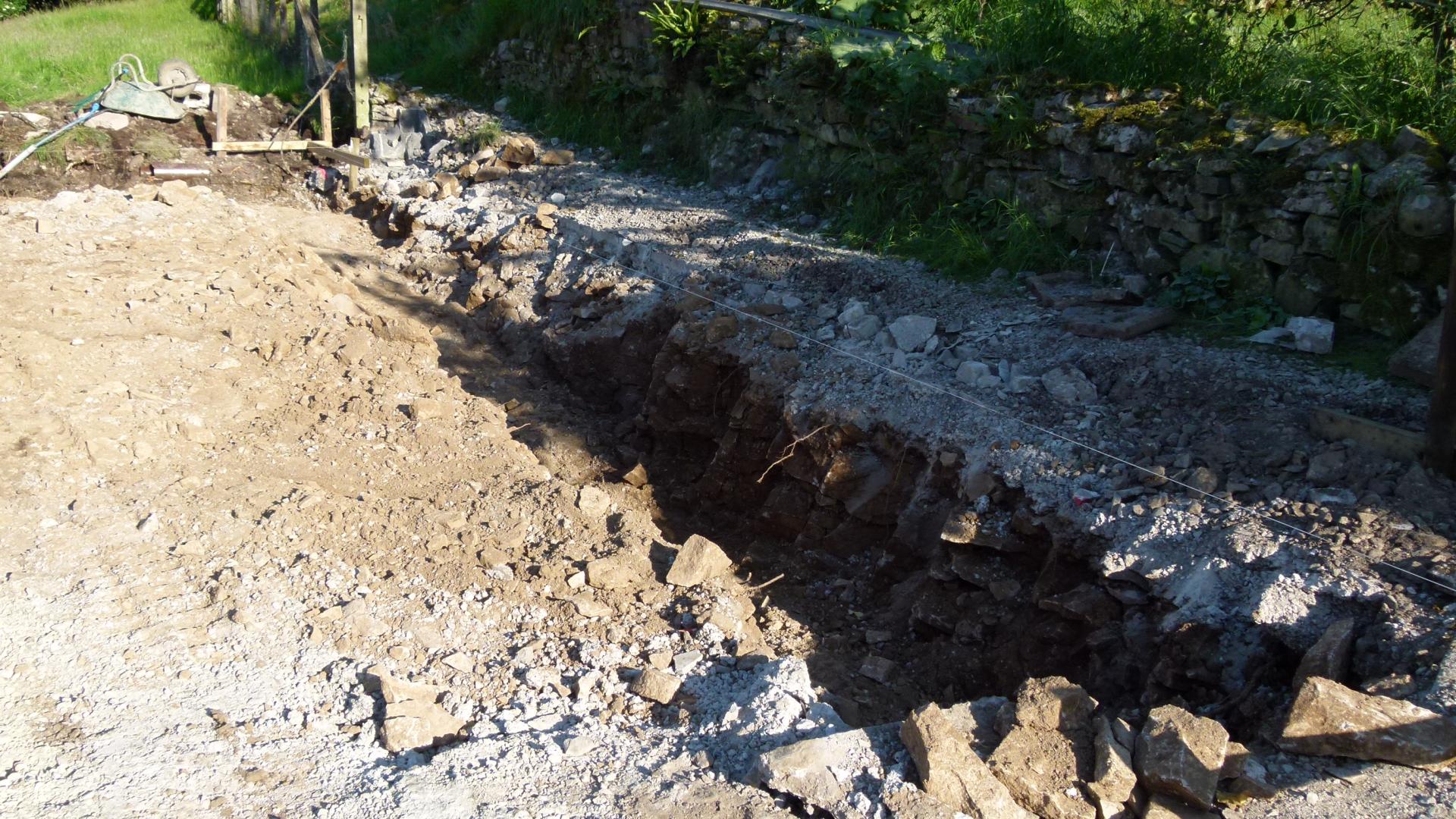 |
18 June 2014 Setting out levels in progress. |
|
Back to Index | |
Next | |
Last | ||||
| 56 records found. Page 1 of 6 displayed. | |||||||||