

 |
Back to Index |  |
Next |  |
Last | ||||
| 82 records found. Page 1 of 9 displayed. | |||||||||
For most of the photos on this page, you can click the image for a larger picture.
Dismantling
Dismantling is the worst job of the whole project. You start on a car that you were driving only a few weeks ago. You've gone through a lot together and suddenly you start attacking it with an angle grinder. That doesn't help the morale much. Then the exposure to the filth of 30 years worth of driving also gets you down. Dismantling is the downward side of the whole project. Once you start assembling, the whole project takes on a more positive aspect; you suddenly start making progress. It's also good because you are generally working with clean components (Waxoyl excepted!)
Dismantling needs organisation skills of someone more disciplined than me. Ideally, bits should only have been taken off the old car when I was ready to start working on them. Although I've got a double garage, I still didn't have enough space. I could have left it outside but you do need to get bits really dry before refurbishment can start.
I hate dismantling. Everything is filthy and its demoralising as you are only going backwards.
I got as many cardboard boxes as possible and tried to keep each sub-assembly together. I didn't spend enough time on fasteners. If I did it again, I would measure the diameter, thread and length of every bolt/stud I took out. In most cases, the part number in the parts catalogue accurately defines these length and thread of a bolt/setscrew - the MOSS catalogue has some handy tables at the back. Other part numbers are less precise and in some cases the MOSS parts catalogue is wrong. Buy lots of big sealable transparent bags and store bits in them. Label the bags so you know what is inside.
I should have hung on to more of the bits for longer. There's a great temptation to throw stuff away but try to resist that.
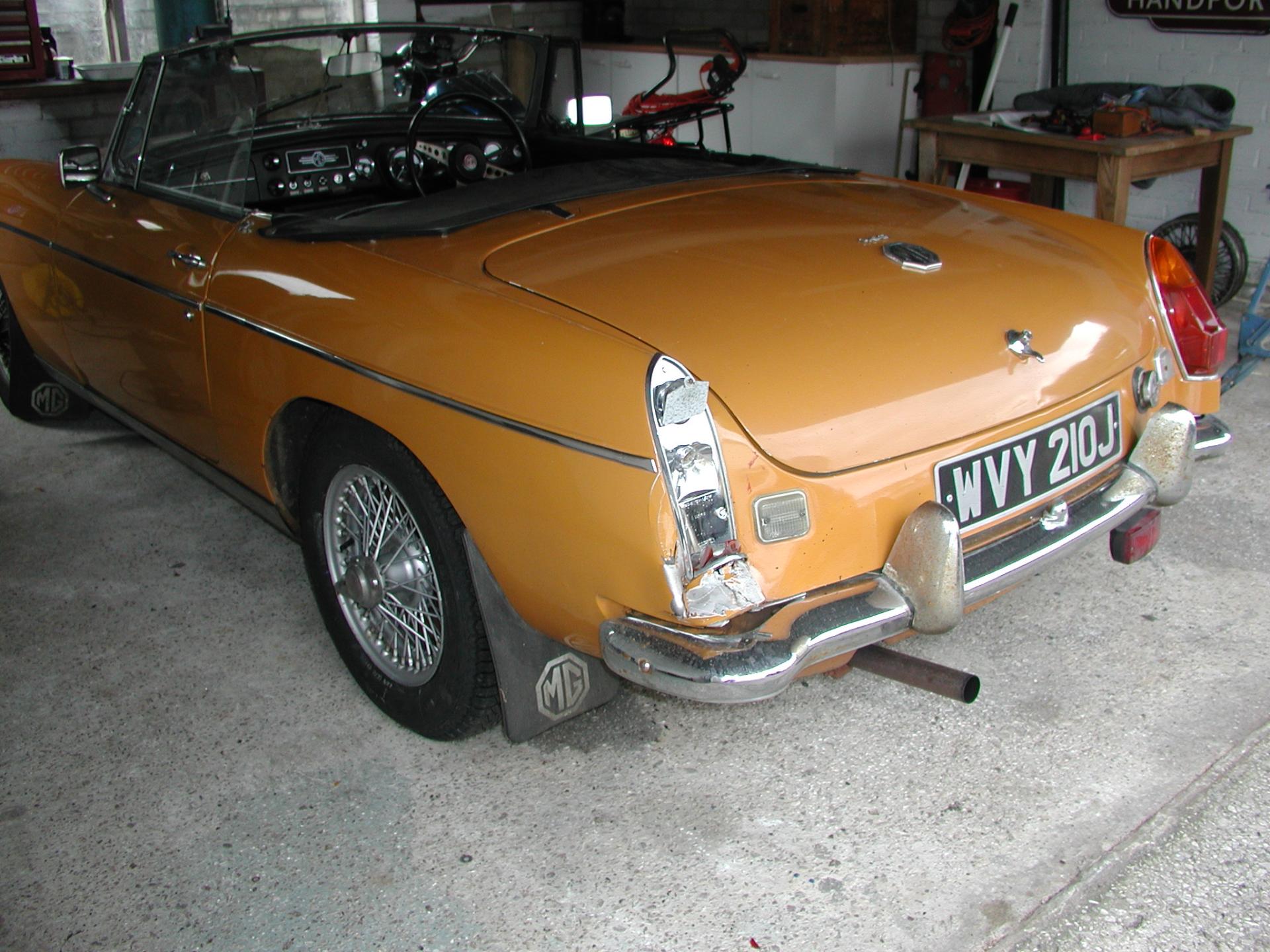 |
2 June 2003 This first picture shows the state of the rear wing immediately after I managed to reverse into the Land Rover. The damage doesn't look that bad but there's probably a lot of work to do in order to sort it out. When I look at the car now it looks very smart but underneath the exterior, rot has got a good hold! |
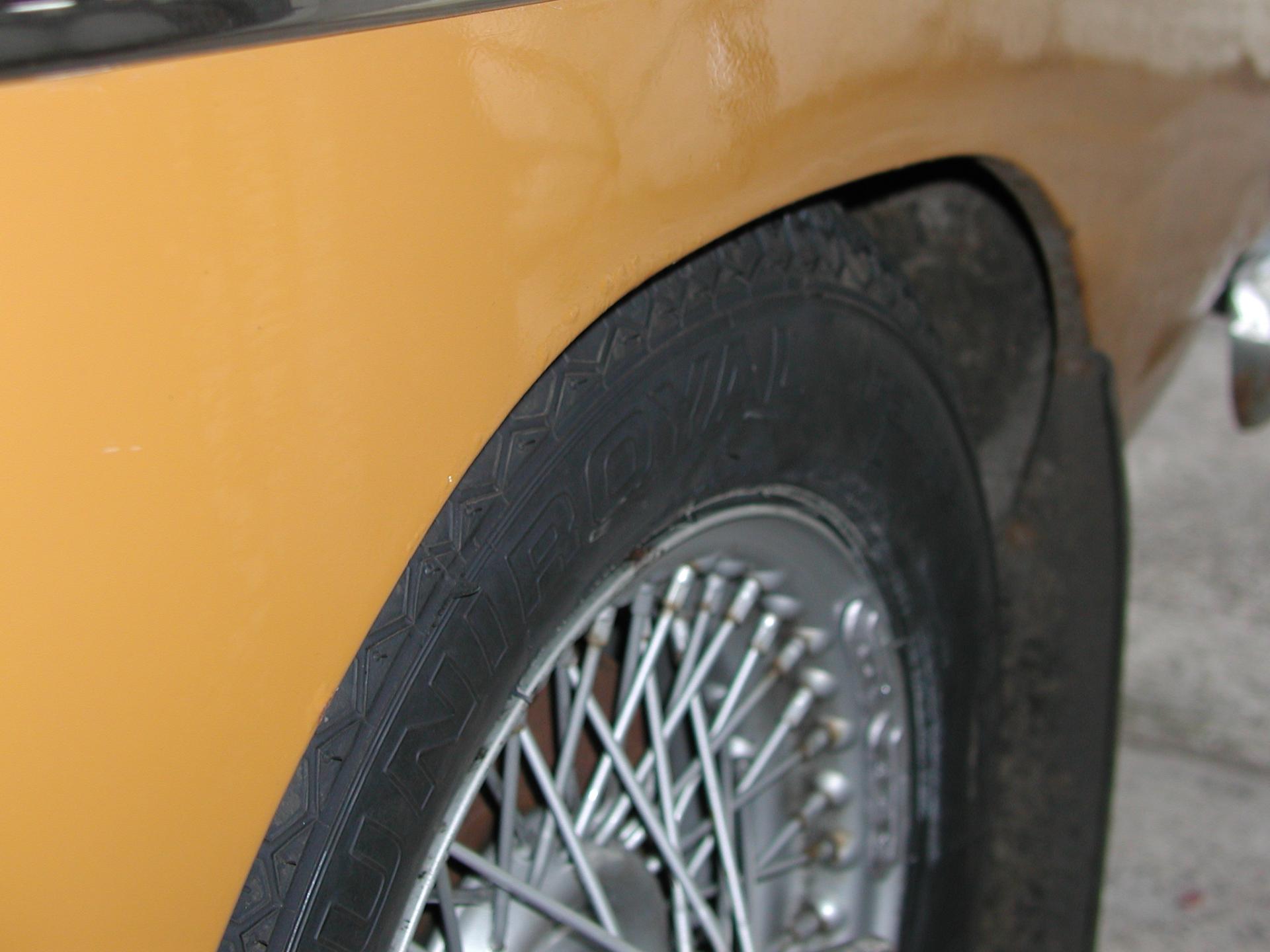 |
The second picture shows the nearside rear wheelarch. Here you can see why I only reckoned for one more summer of driving. It doesn't look that bad but the rot is working its way out from the inside. Already, there are some rusty paint nicks on the front edge. |
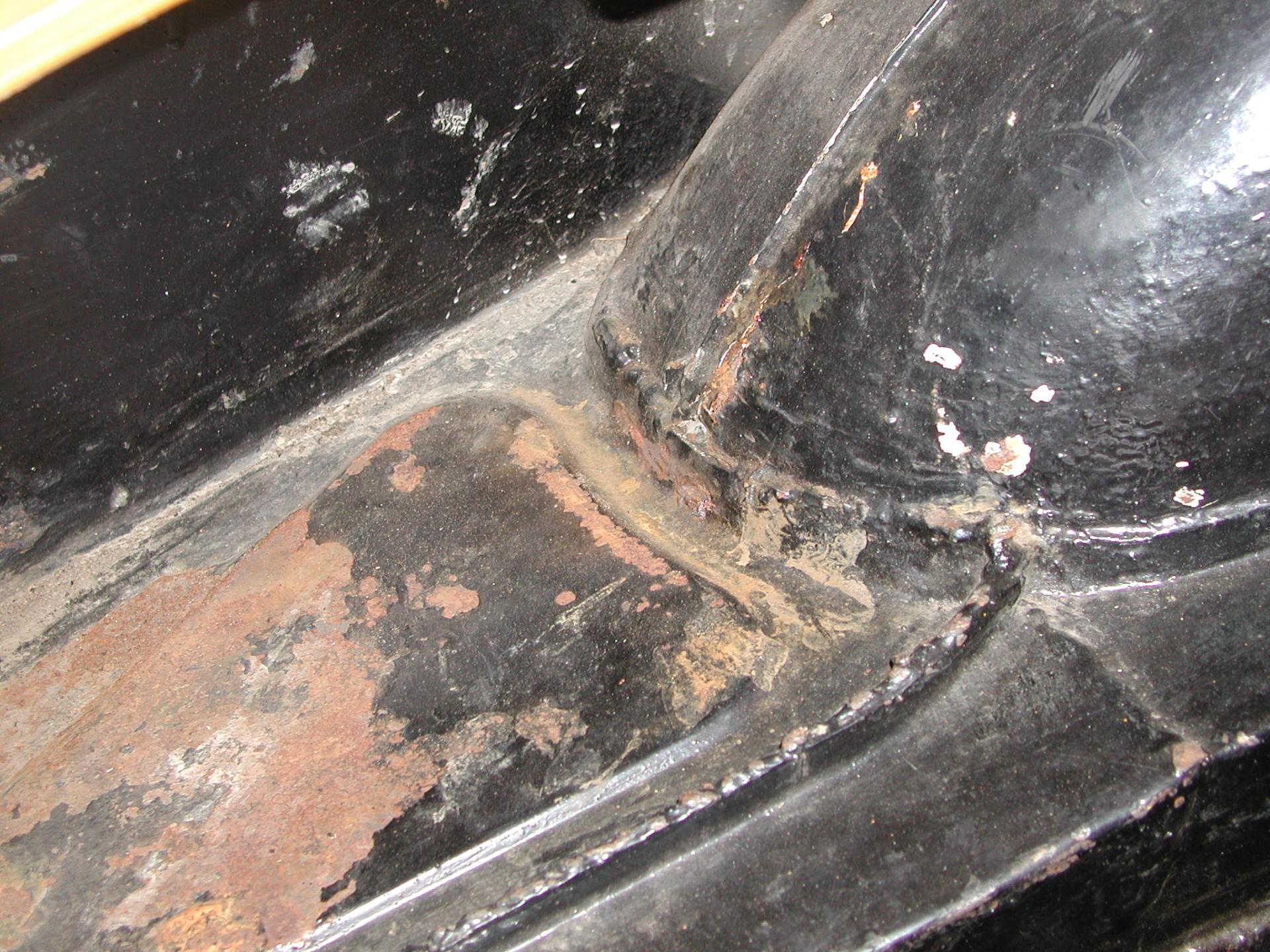 |
This picture is the boot floor where it meets the left hand wheelarch. If you look at the vertical seam running down the wheelarch, you can make out that it's starting to split apart. The car had had a previous repair where the inner wing joined the outer one and it wasn't a very good repair! |
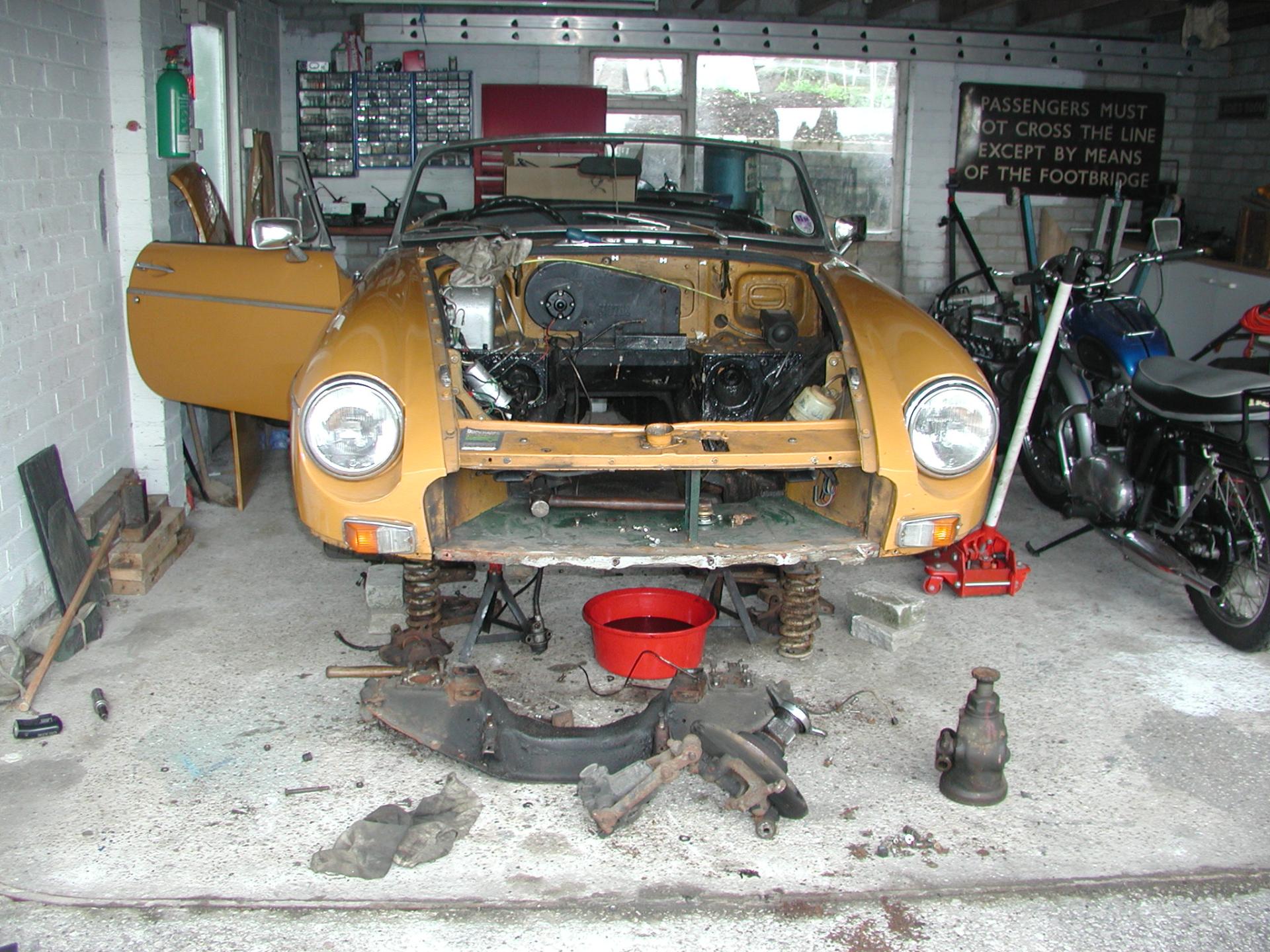 |
17 June 2003 So here's where we start. The engine came out first - once out, I put the whole thing to one side having squirted lots of oil down the plug holes. Next was the front suspension which came apart without too many problems. The main problem was the bolt that secures the shock absorber arms to the trunnion on the vertical link. Both sides were rusted solid - I used a hacksaw to cut through the rubber bush and then through the bolt. Slow work! |
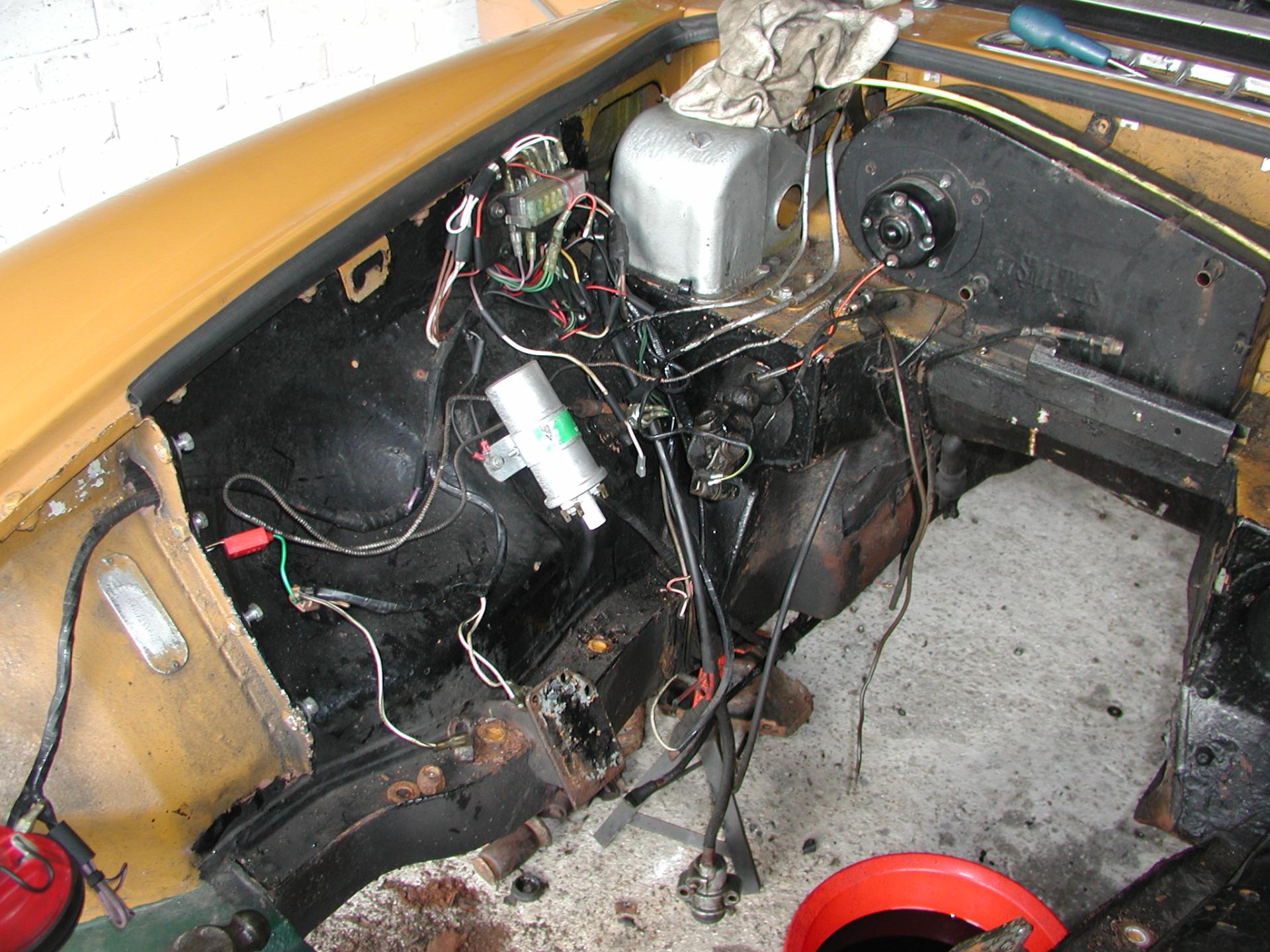 |
This one's interesting when you compare it with the build pictures. It shows what 30 years on the road does to your body! This is where you need to photograph every wire and every pipe - record where they go through the body as you will forget. You can see that the chassis plate doesn't tell very much. |
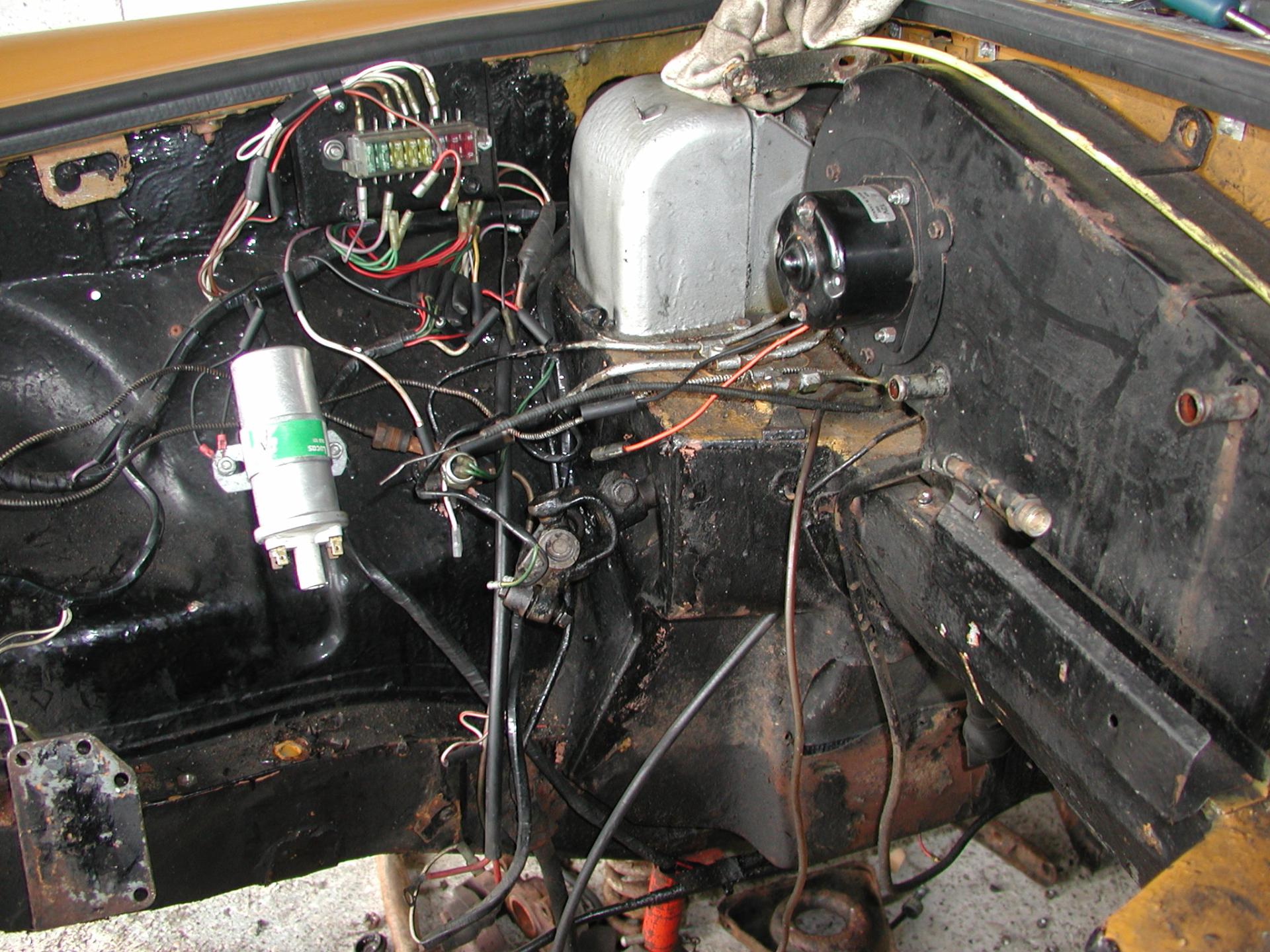 |
Looks a bit sad, doesn't it? The fuse box is an improvement on the original (I think!) but I'll be going a bit further on the new one. I felt that the join between the main loom and the rear harness was poor with loads of bullet connectors. My aim was to do something better. At this stage you cannot take enough photos! The photos will help you put it all back together correctly. |
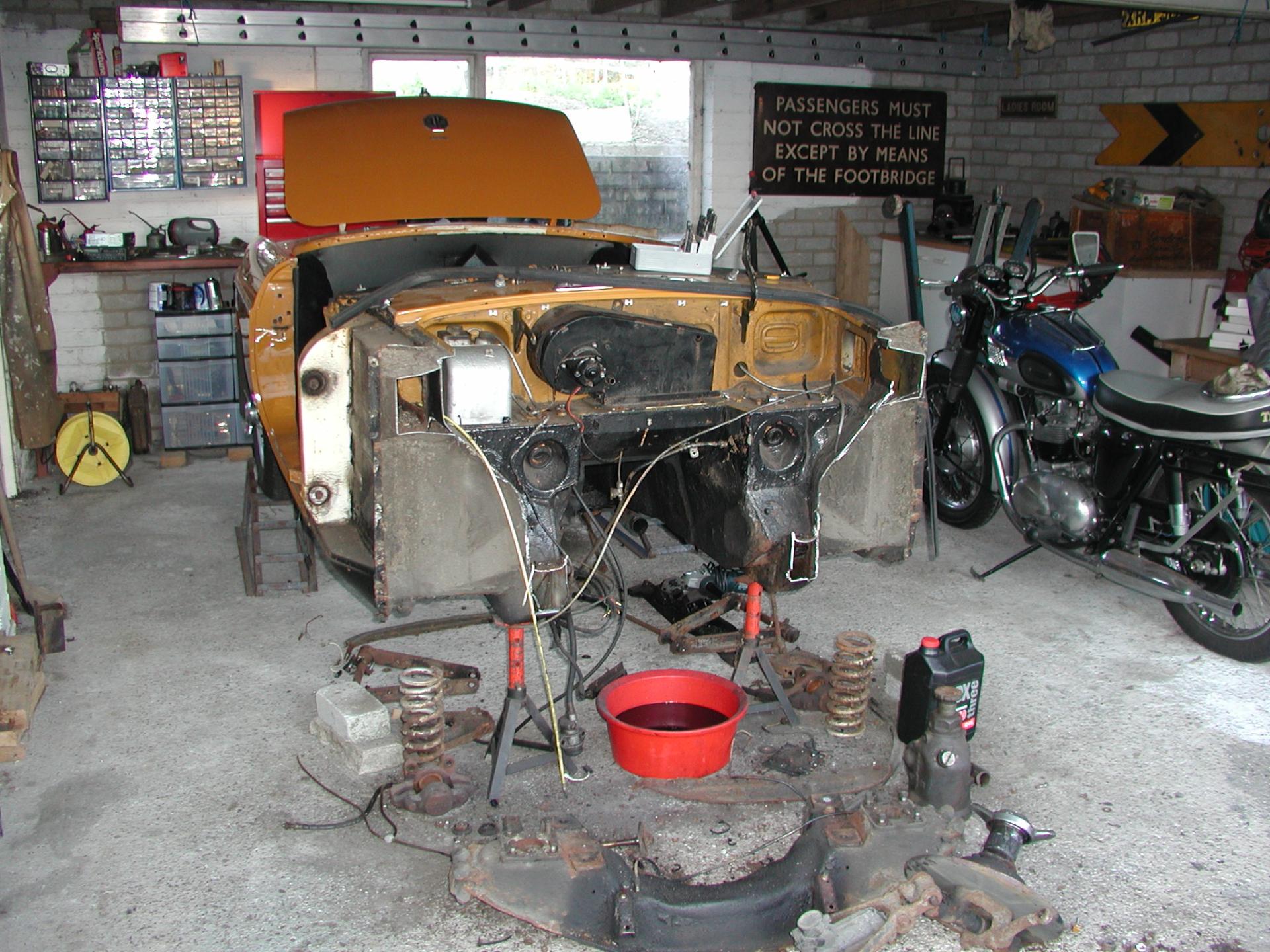 |
23 June 2003 This is where it gets serious. The wings did unbolt - apart from that little self tapper at the bottom of the wing. As the wings were relatively new, I was very careful with them and they're now in the loft - just in case! I dismantled my Triumph Spitfire with a hacksaw when I scrapped it but the MG is different. I needed an angle grinder and a selection of cold chisels as the metal is thick in places. First, the front section was cut off with an angle grinder. You can see the front suspension bits discarded in front of the car. The spring pans were corroded for 50% of the spring dish surface - a bit worrying as it has just passed its MOT test. |
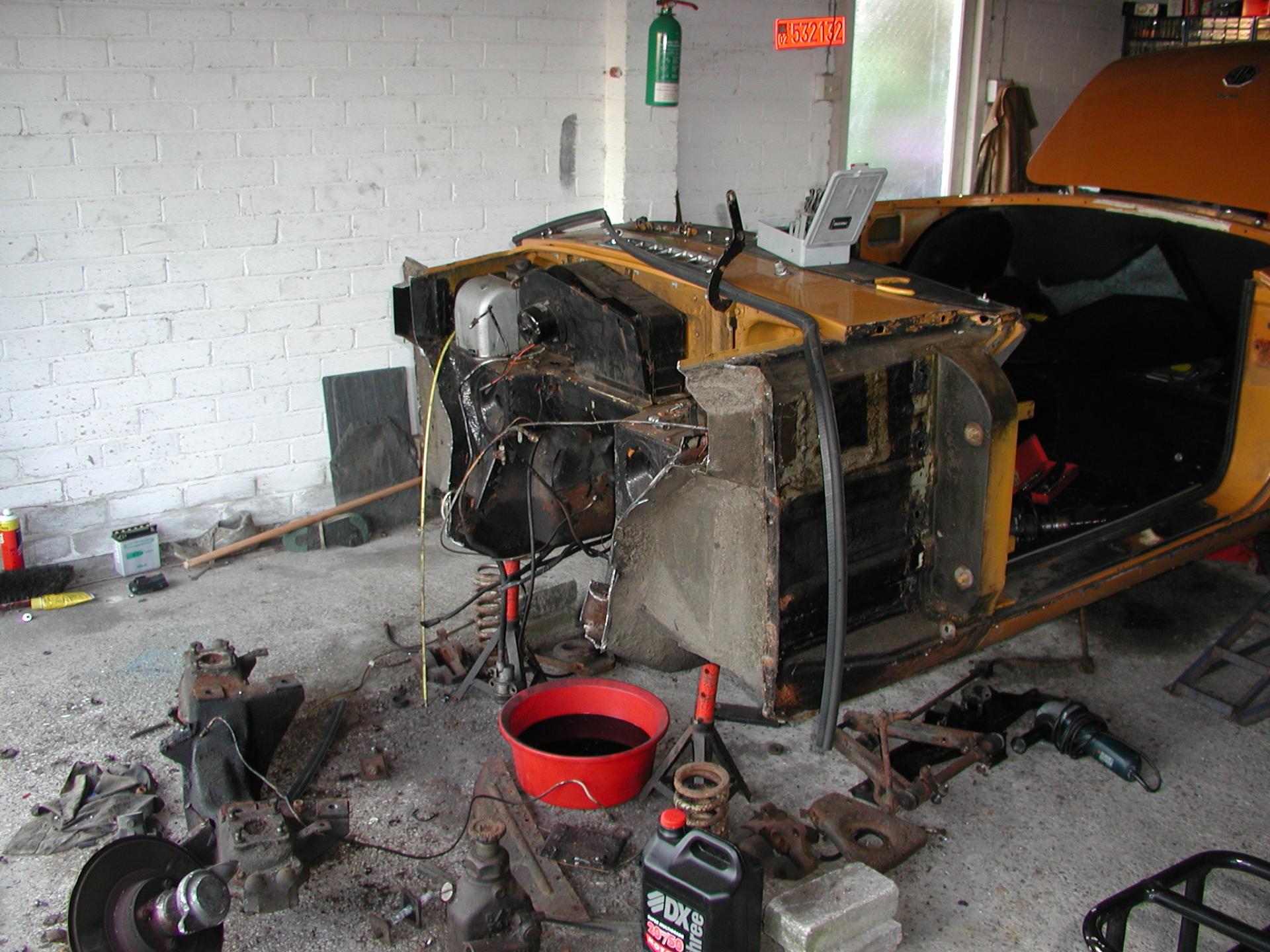 |
It's at this point, that you really wonder what you're doing. It's filthy work and very depressing. |
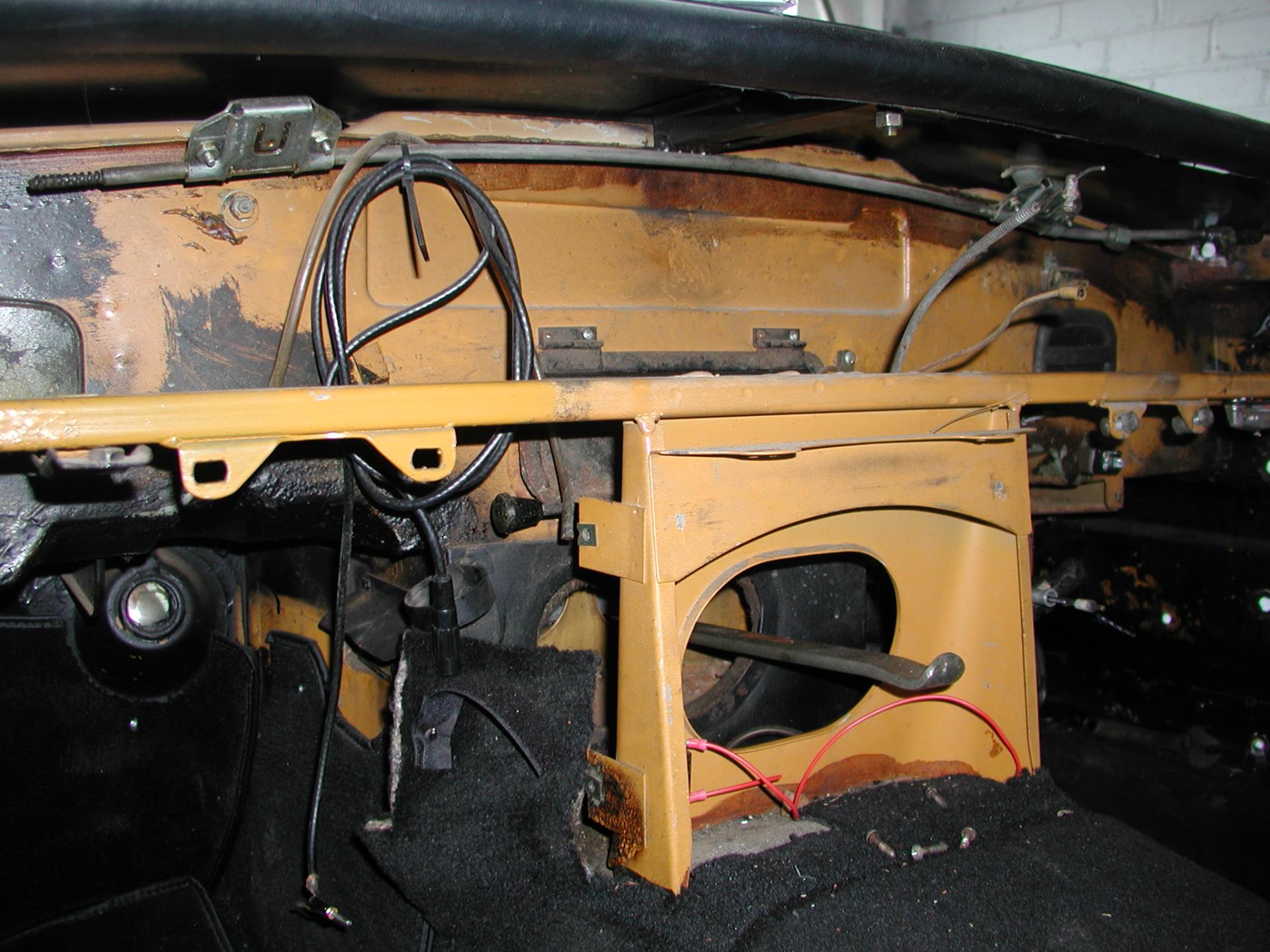 |
This is the original dashboard area - you can just see the knob of the fresh air vent at the bottom of the cable coil. I can't remember what the tyre lever was being used for! |
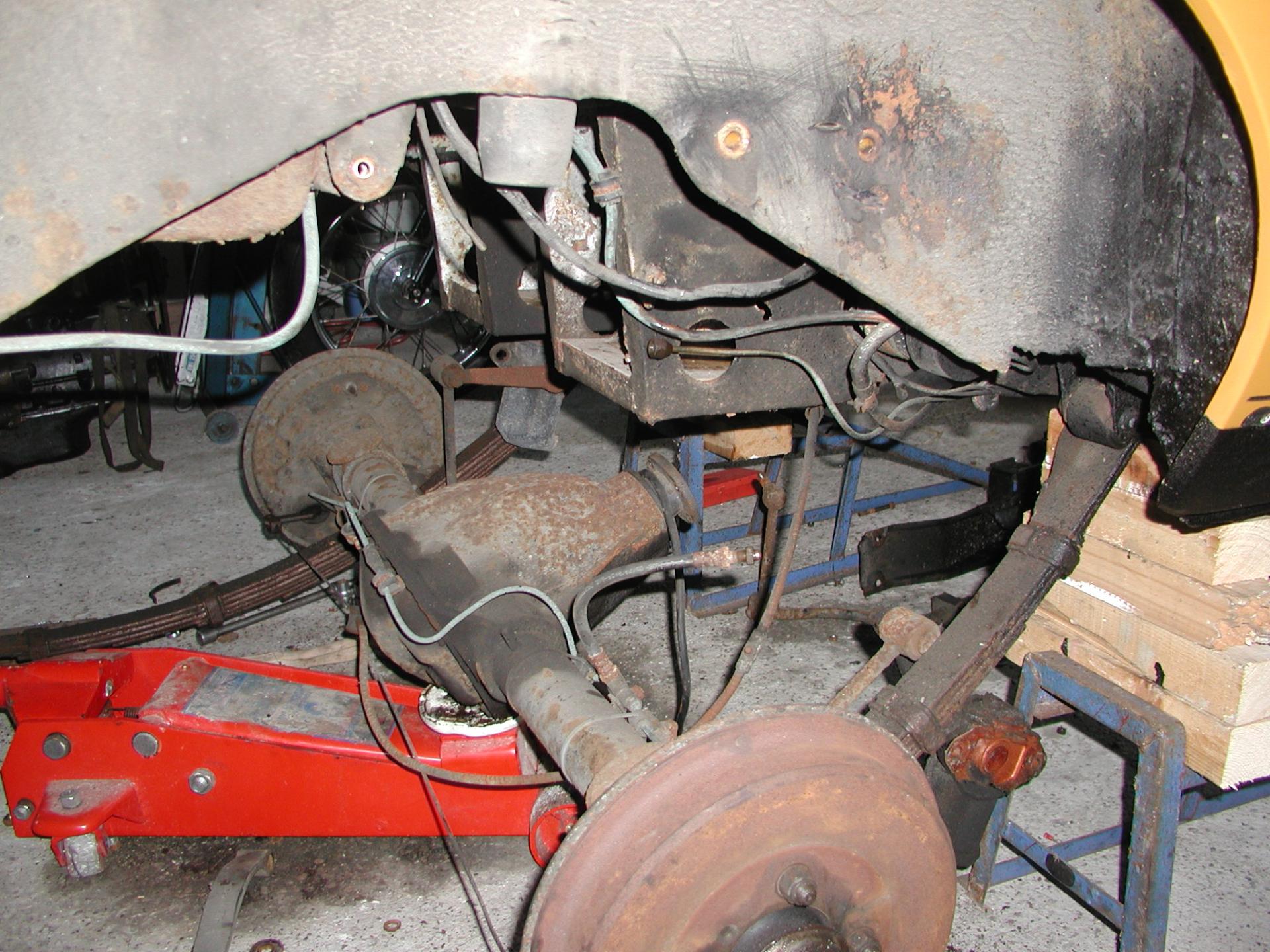 |
25 June 2003 Everything was stripped at the front so it was time to work at the back. Undo the back spring hanger bolts and then lower the whole lot to the floor using a trolley jack. Some of the bolts in the shock absorber were badly rusted and had to be cut away with the grinder. The axle was easily restored with a rotary wire brush and lots of Smooth Hammerite. |
|
Back to Index | |
Next | |
Last | ||||
| 82 records found. Page 1 of 9 displayed. | |||||||||