

 |
First |  |
Previous |  |
Back to Index |  |
Next |  |
Last |
| 82 records found. Page 5 of 9 displayed. | |||||||||
For most of the photos on this page, you can click the image for a larger picture.
| I mentioned that I thought that a voltmeter and ammeter were essential bits of instrumentation (along with an oil pressure gauge which is standard on the MGB). A decision was then needed on where to site them. I could have fitted a 2 gauge panel bolted to the bottom of the dash. In the end I decided to replace the radio speaker console for my car with a console from a later model which I could adapt. More on this later. | |
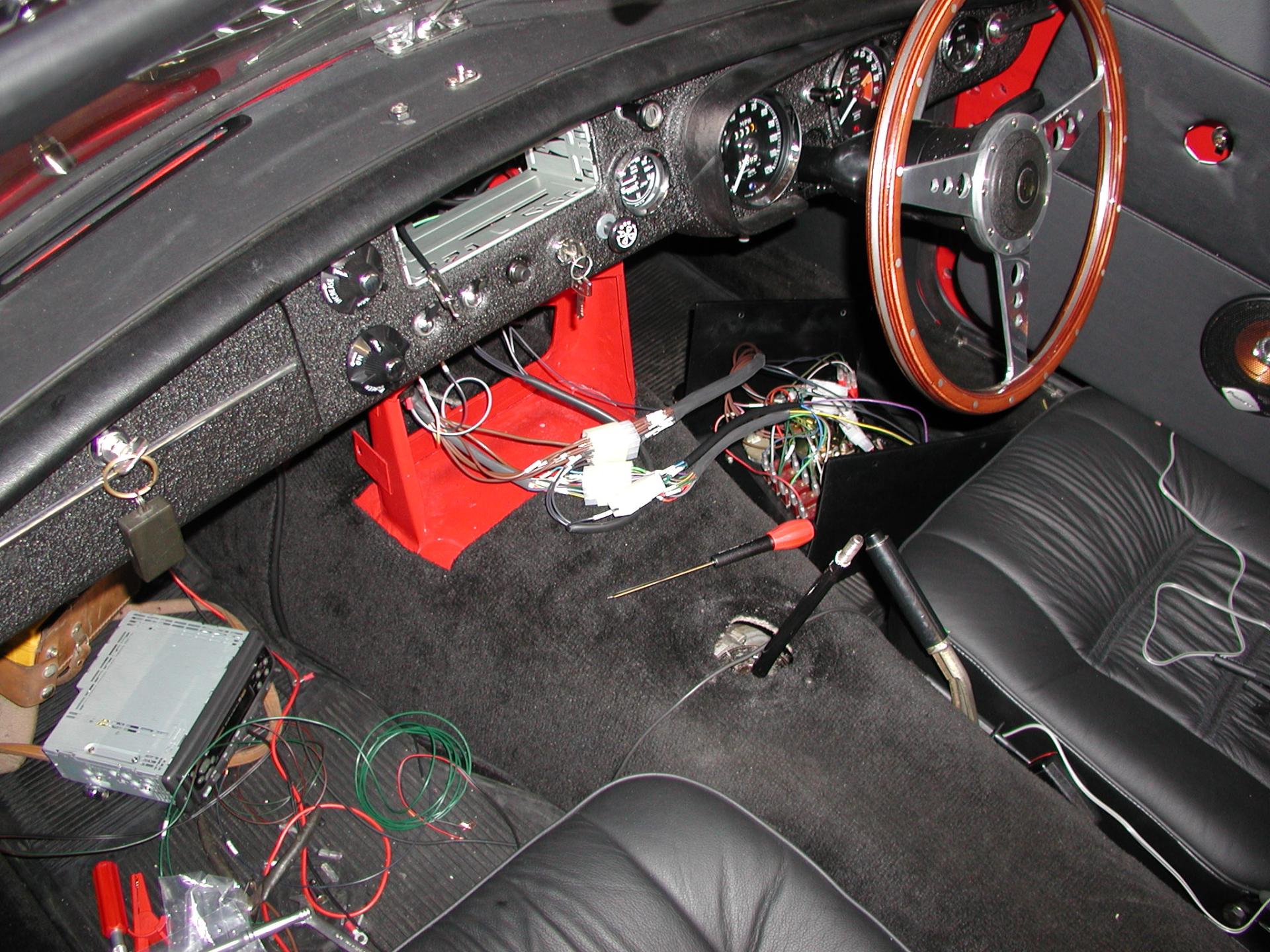 |
This shows how the console was connected up. The console has 3 gauges (ammeter, voltmeter and manifold vaccuum), 5 switches (fuel pump, aerial, interior lights, reverse and fog lights) and 4 warning LEDS (overdrive, choke, reverse and fog lights). The choke warning is a must as I was always forgetting to shut it properly before. 3 multi way sockets carry all the connections. The 2 11-way sockets are wired male/female and female/male to avoid connecting the wrong pair - that was a good design accident! |
| Engine - Refurbishment The engine shouldn't have been very bad. It hadn't done very many miles since the last major service where I had overhauled the camshaft and bearings. When I got to the crank I was a bit concerned about the state of the bearings and some score marks on the crank. The engine reconditioner confirmed that a regrind was required and that a light hone and new rings would be beneficial. This was done and the engine rebuilt. |
|
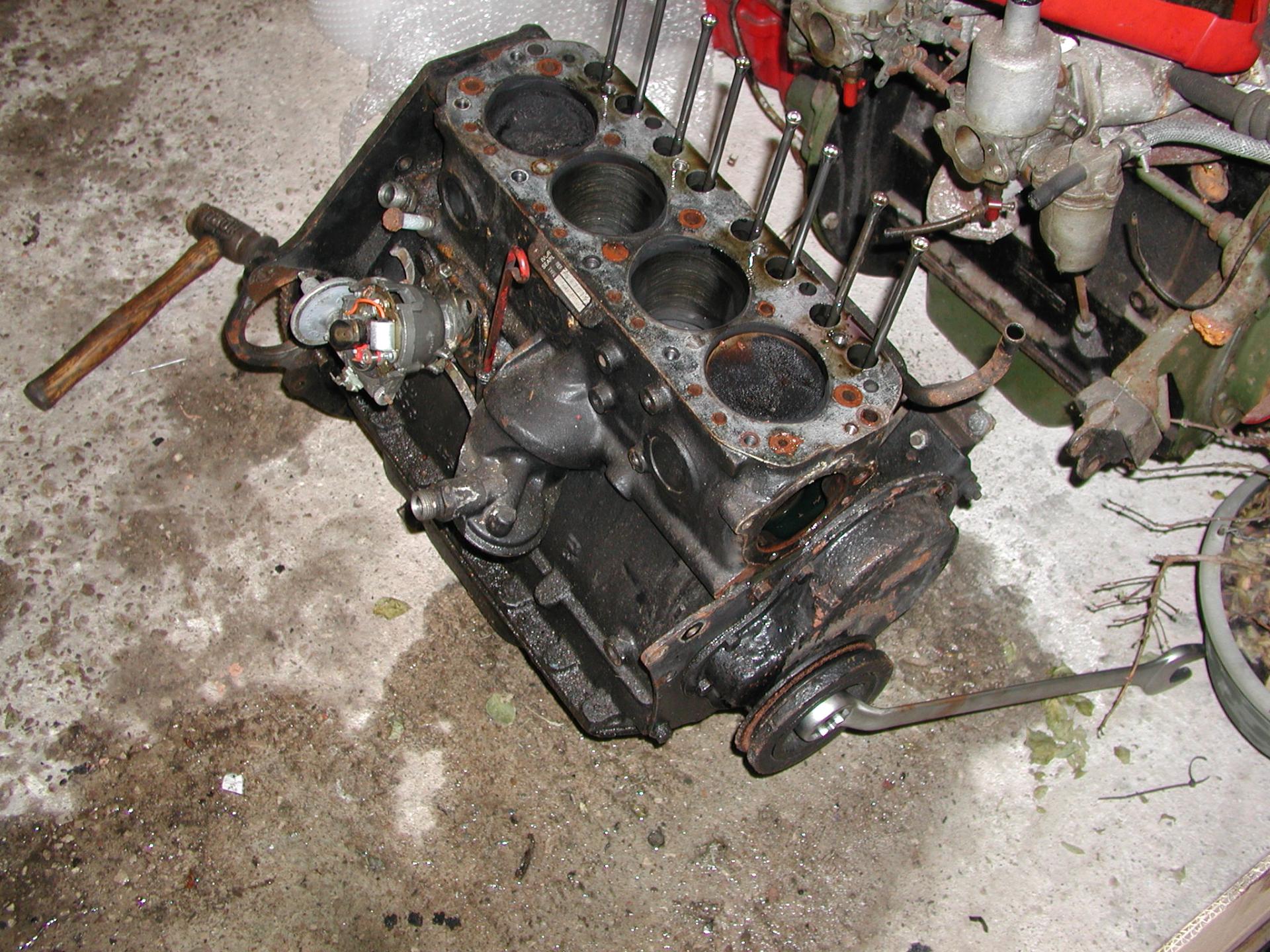 |
Here's the engine partly dismantled. The spanner was a useful purchase even though it's rarely used. Here it is being used to undo the crankshaft pulley bolt. The best way to remove this is with the engine in the car, in gear and the handbrake fully applied. The engine in the background is from a Spitfire MkIII, complete with gearbox and overdrive. It went to a good home as the purchaser had managed to put a con rod through the side of his engine. |
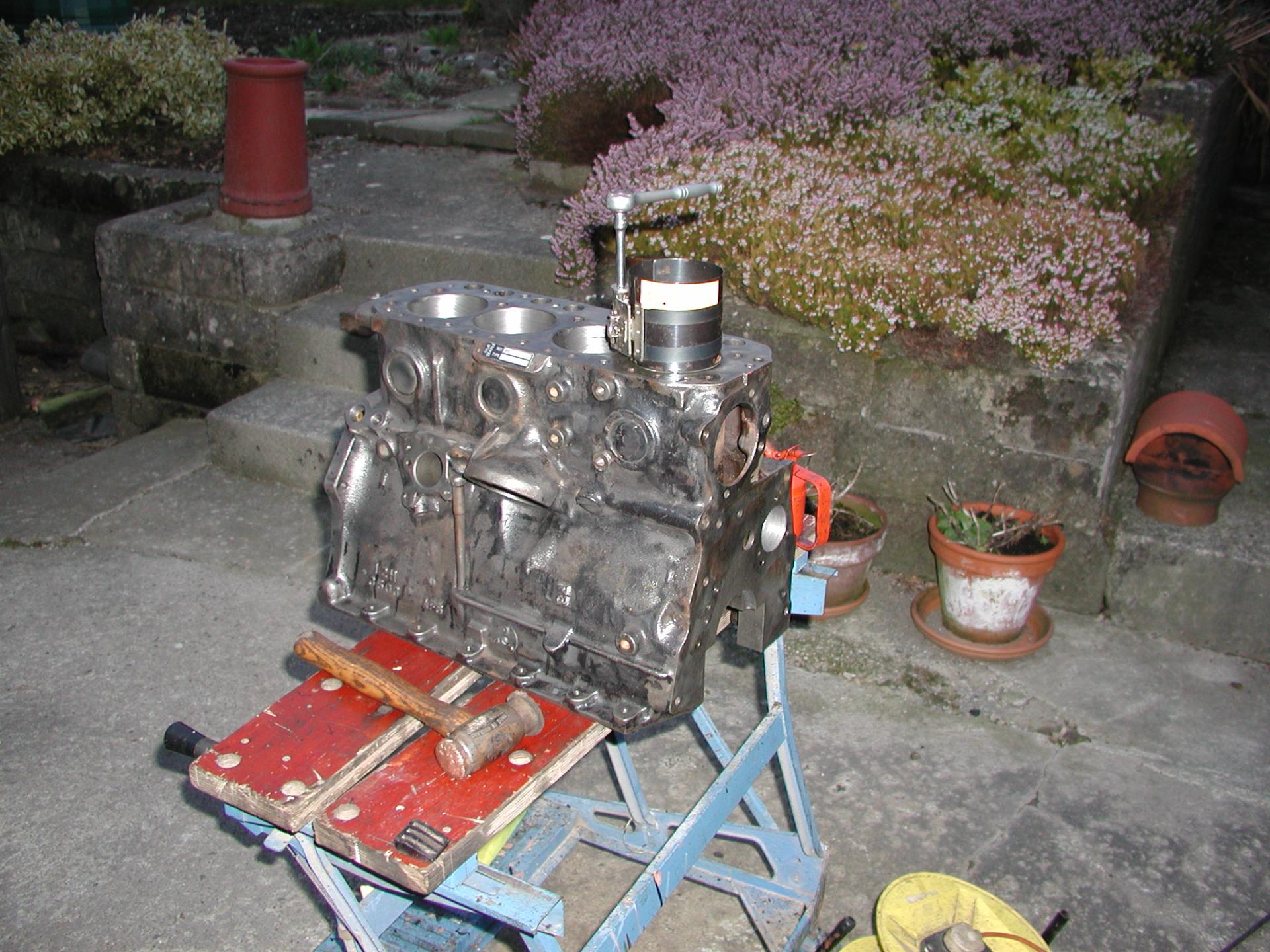 |
I don't know how I would cope without a Workmate! This one has had a seriously abused life but continues to give good service. The most irritating thing is that the little nylon clips that stop the legs moving have snapped through too much sunlight. (Since the date that this picture was published, I've managed to find someone that sells them) The block has been cleaned, wire brushed and cleaned again. The number 1 piston is about to be fitted. One sharp blow with the shaft of the hammer and it's in. Plenty of oil - you can just see the oil can. |
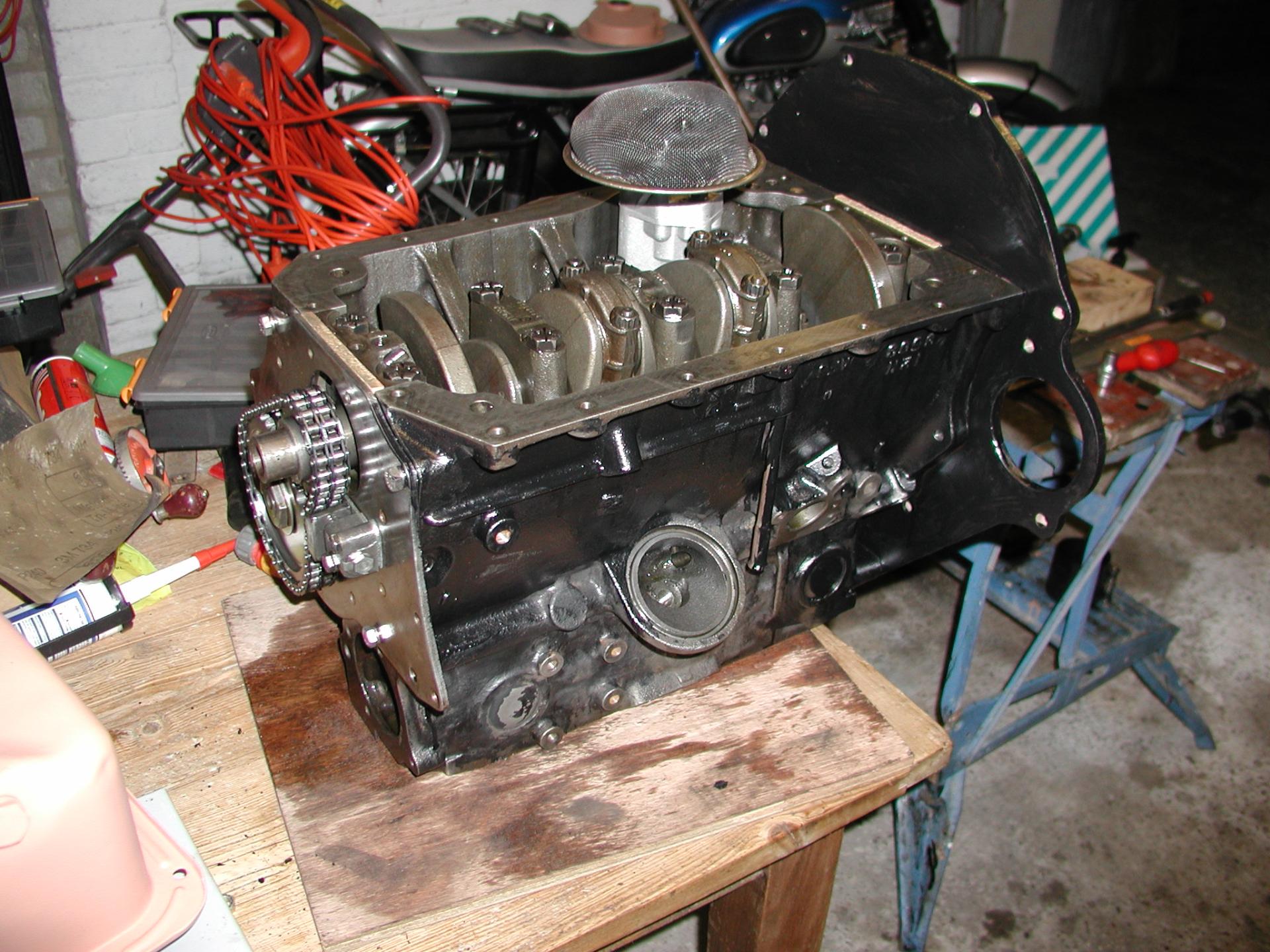 |
Crank in and caps tightened being very careful to keep them all in the right order and the right way round - lots of oil. Engine plates fitted and some painting complete. Someone recommended Halfords engine paint so I'm experimenting with that. (Hindsight - there are better engine paints out there). New oil pump fitted. |
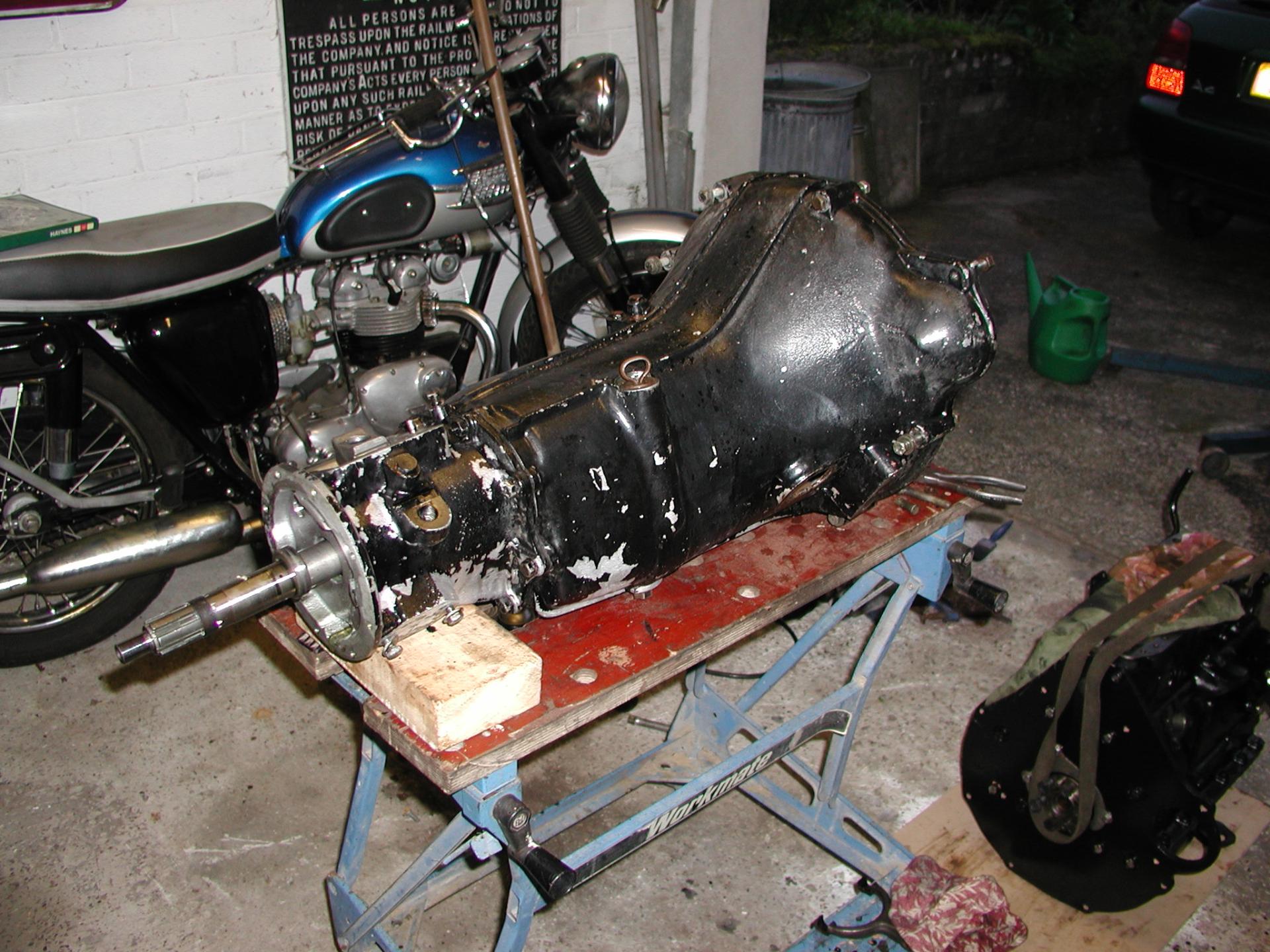 |
Meanwhile, the gearbox didn't need much work. I find it best to take the overdrive off and only fit it once the engine/gearbox has been sited in the engine compartment. The gearbox only needed a clean and repaint as it was in good condition. Be careful with the speedo cable adapter. It's easy to knock it and I had to replace mine as there was a big chip missing. Likewise you need to be careful with the remote control housing breather. This is nylon and mine had been sheared off. All new clutch components were fitted. I find the best lining up tool is a headtorch and a long 1/2" socket drive extension as a lever. When the circles are symmetric, the gear box should fit. I succeeded on the second attempt! |
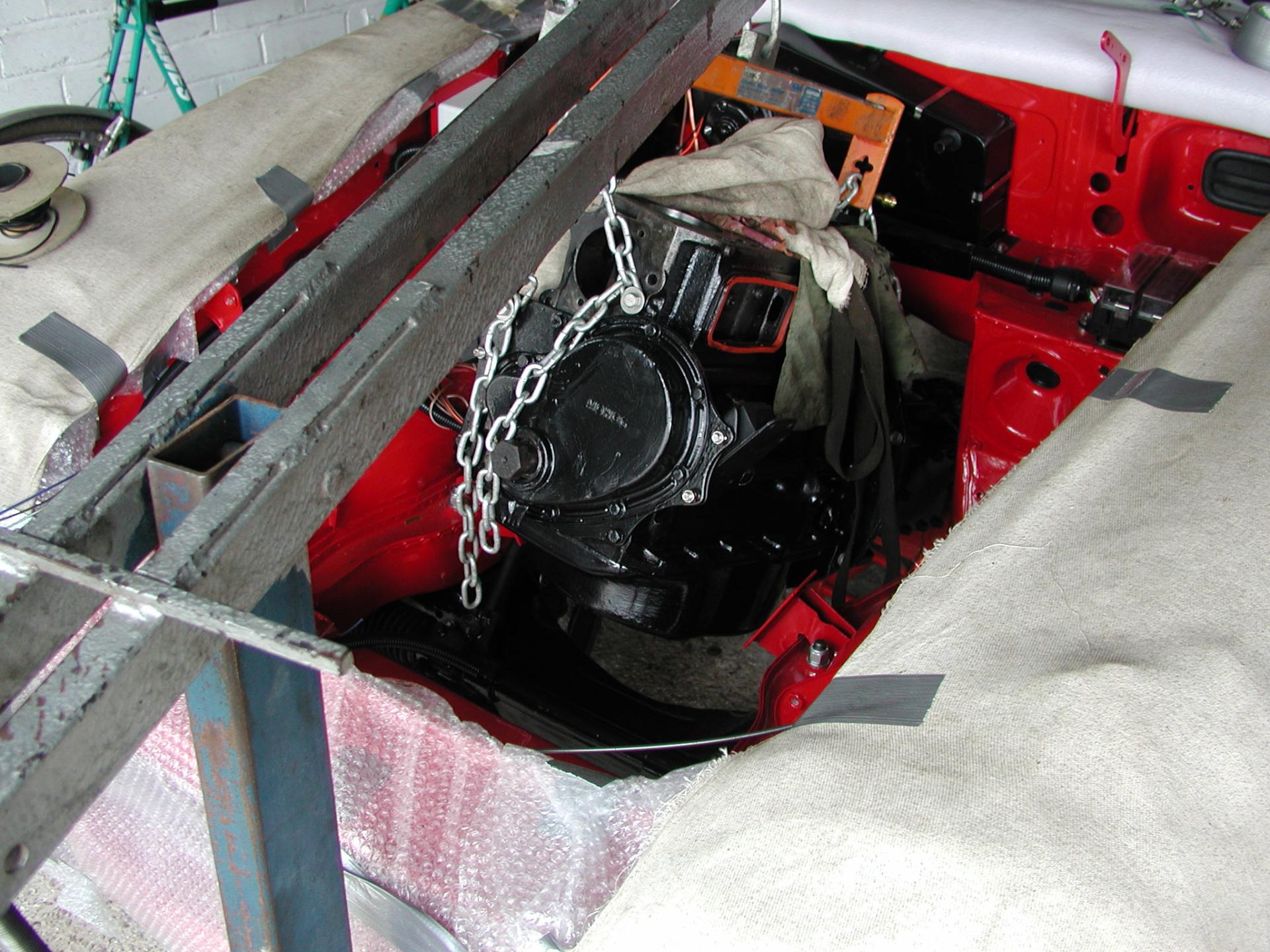 |
My engine hoist isn't the best in the world but it does the job. I get the back end of the car as high as I can and the front end as low as I can - with the wheels off. I don't fit the cylinder head as I get a vital bit of clearance without it. The nasty, cheap Chinese adaptor (in orange) does actually work this way but I have to remove the levelling screw handle and operate the nut with a spanner - otherwise it hits the hoist arm at this angle. I start with the engine horizontal and once its over the grille section, start to change the angle like shown. At the point shown by the photo, I then get underneath the car and attach the overdrive - make sure the 2 sets of splines inside the overdrive are aligned otherwise you will swear a lot! With the overdrive on, it's too long for me to be able to get it in with my hoist. |
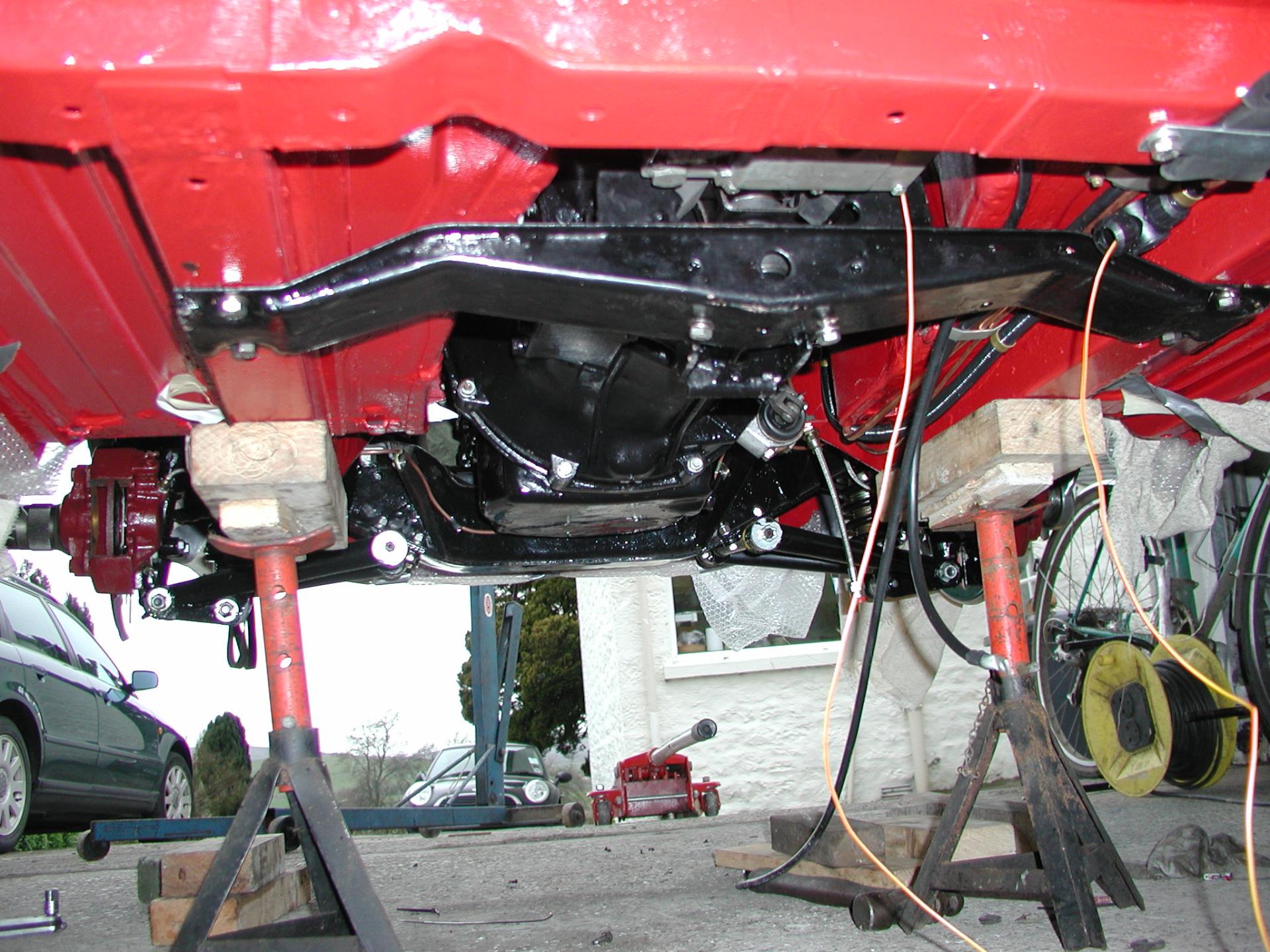 |
Now comes the horrible, horrible bit. I would really like to meet the person who designed the rear crossmember system - there has to be a better way! First, the mounting rubbers need to be forced into their holes. Then the 4 bolts have to pass through the V shaped mounting bracket and the mounting rubbers into the aluminium of the gearbox. This has to be performed in virtually no space and I've got small hands! Most of the bolts can only be turned through half a flat at a time and that's only after you've managed to start the threads. Keep everything possible loose, including the bolts at the centre bottom of the crossmember. Eventually, I used over-long bolts to give me a bit more room. |
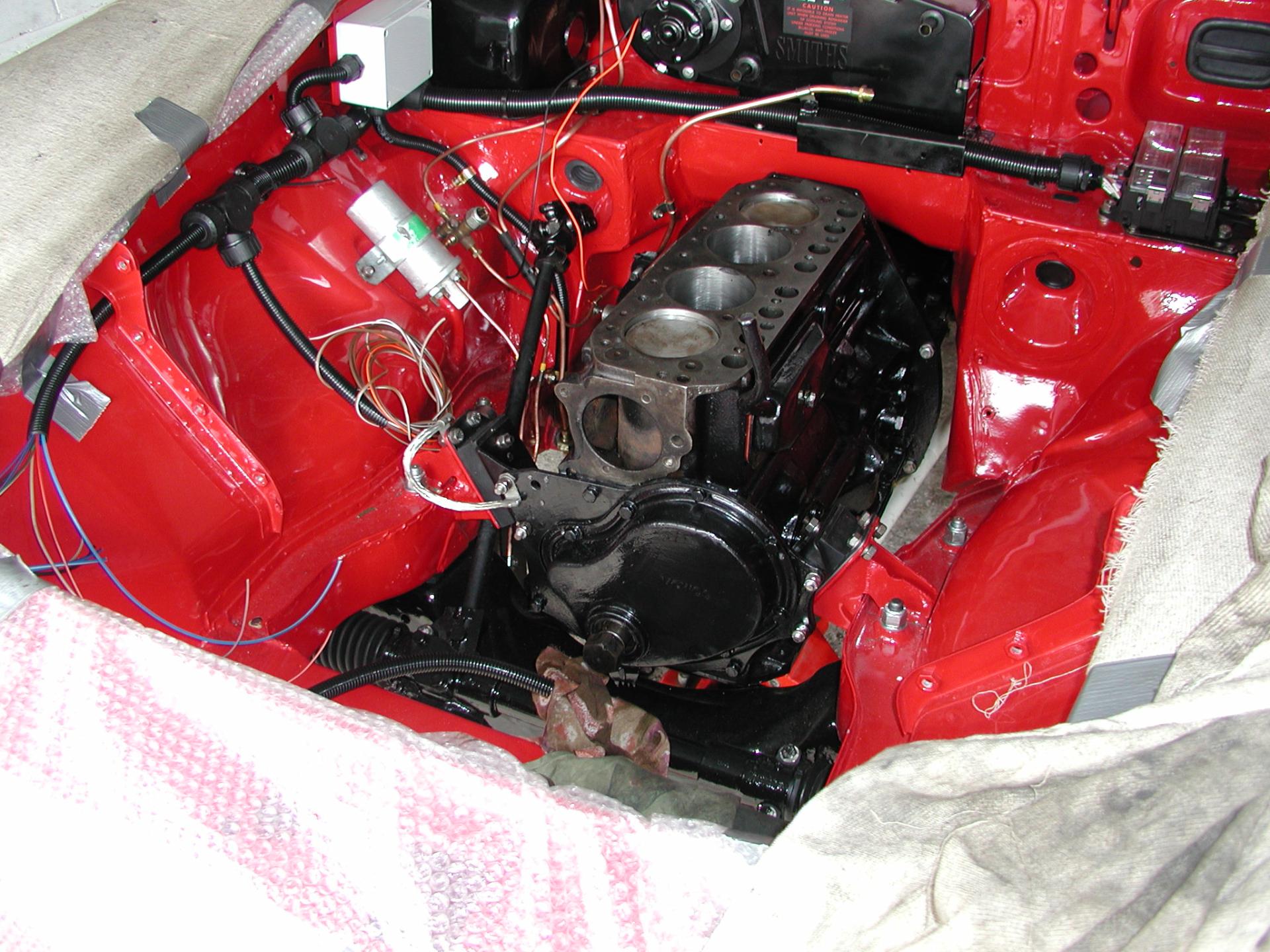 |
The top end looked like this. All the engine mounting bolts are fitted. I use circular pin punches to lever the mounting plate holes into alignment. Note the earth strap. |
|
First | |
Previous | |
Back to Index | |
Next | |
Last |
| 82 records found. Page 5 of 9 displayed. | |||||||||