 |
First |  |
Previous |  |
Back to Index |  |
Next |  |
Last |
| 149 records found. Page 7 of 15 displayed. | |||||||||
For most of the photos on this page, you can click the image for a larger picture.
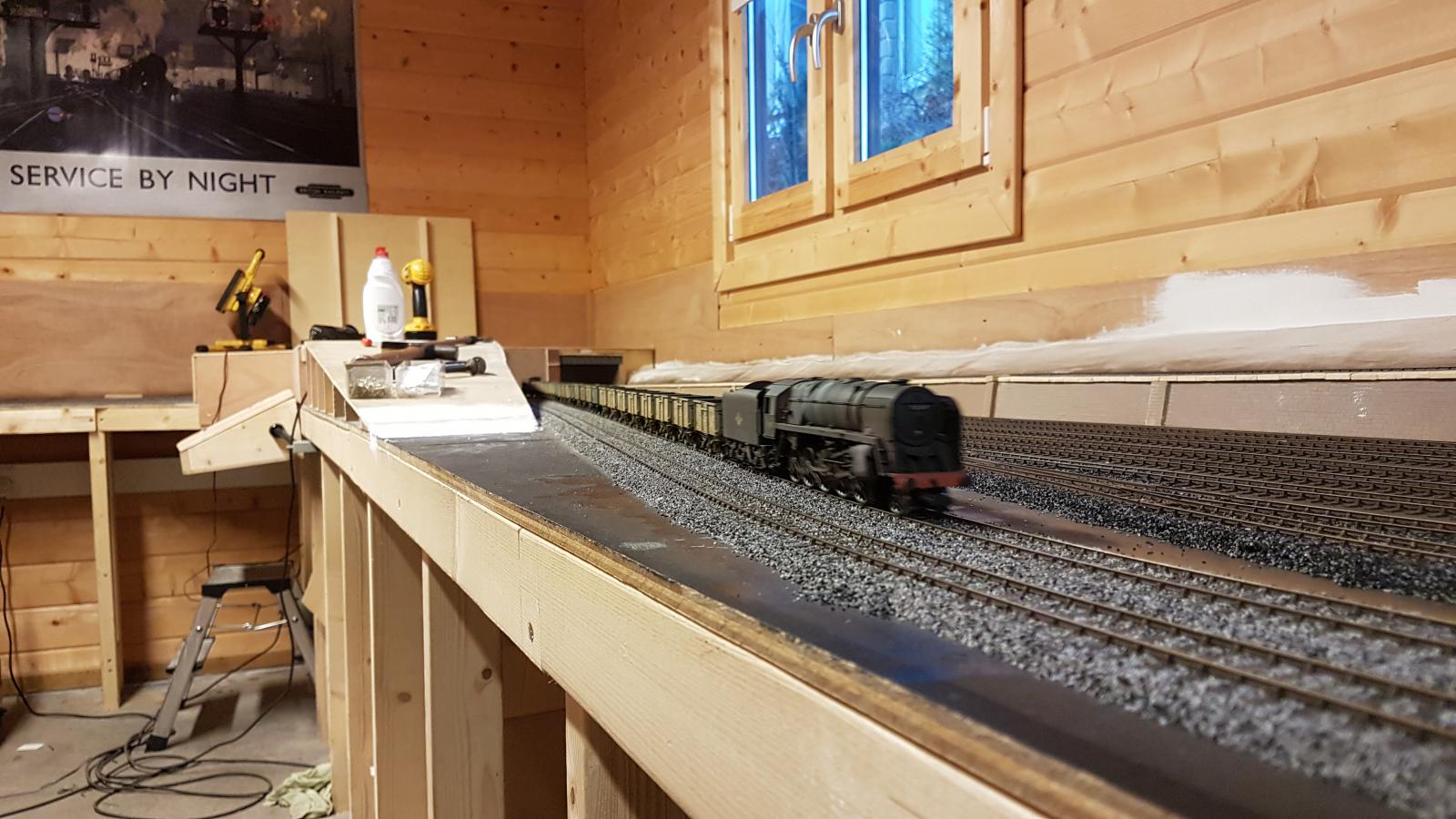 |
February 2017 And to prove it, here's the 9F on a coal train. The ballast needs some painting to tone it down a bit |
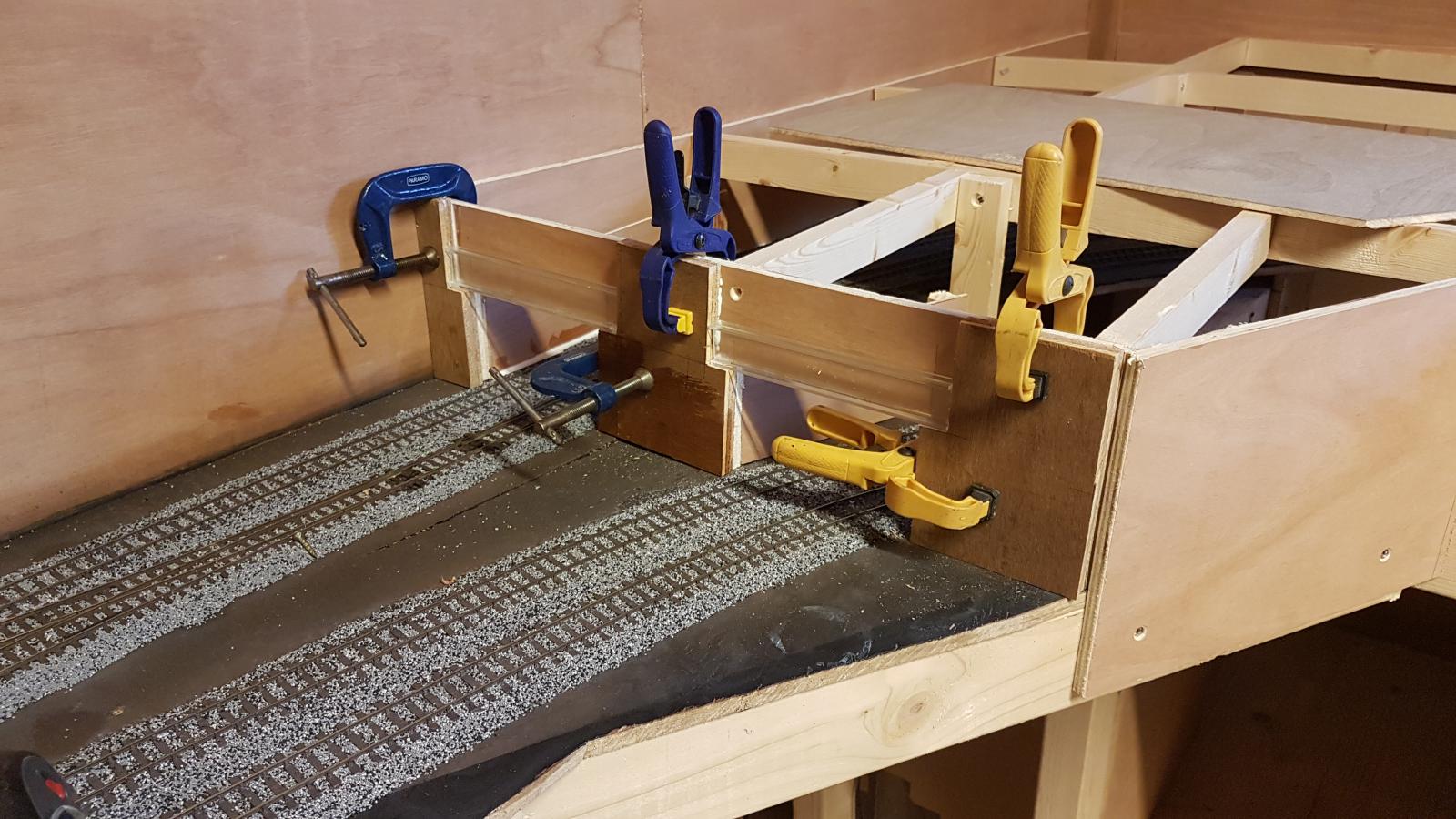 |
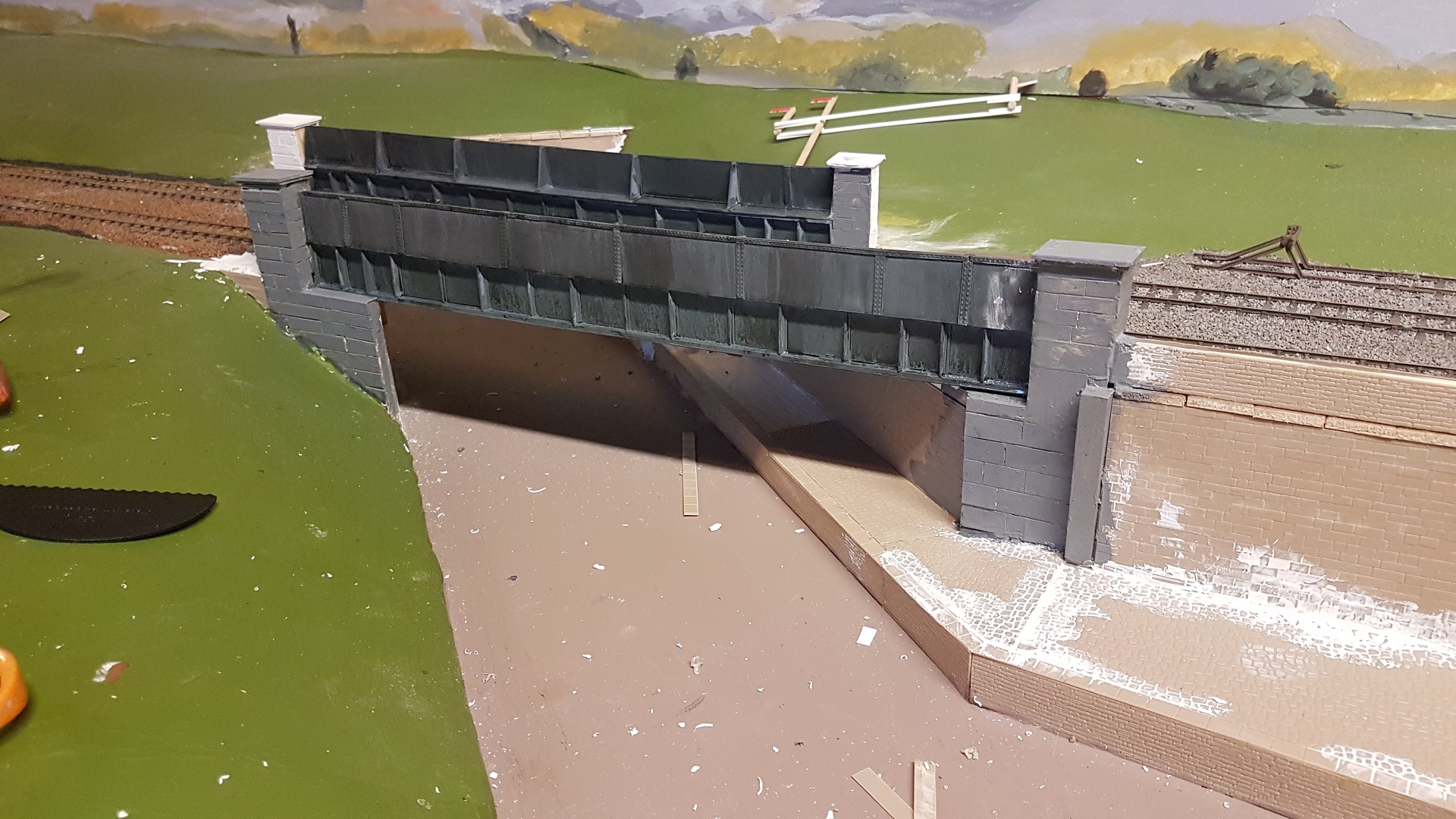
January 2018 Making the bridged area follows a similar procedure to the canal bridge where the I beam that you can see here is 'improved' with stiffeners. The wall is then built around it and then clothed with plasticard. |
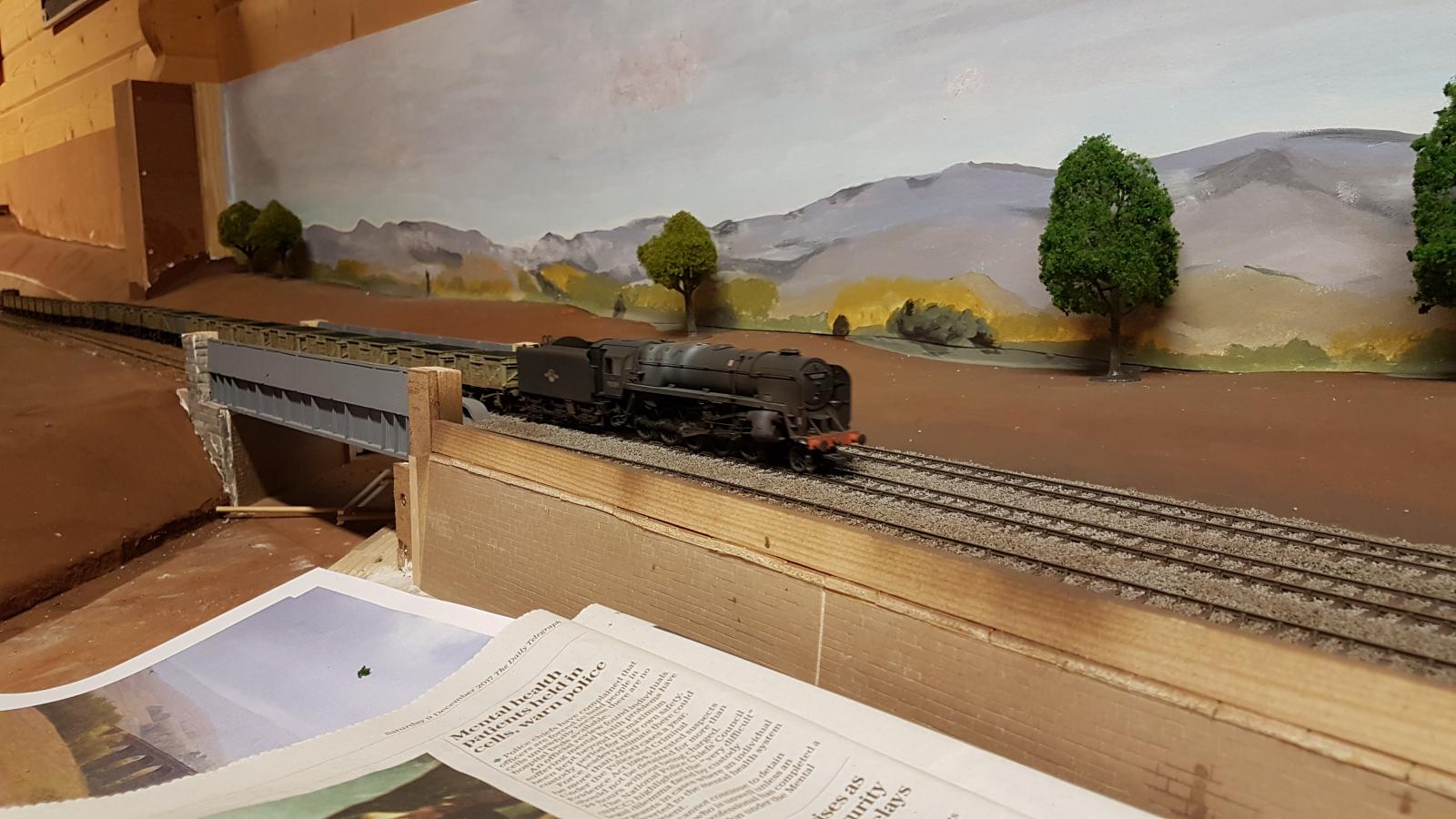 |
February 2018 Meanwhile my wife has been persuaded to have a go at the backscene. We've plonked a few trees in the front temporarily to give it some depth. Makes it start to come to life, doesn't it? |
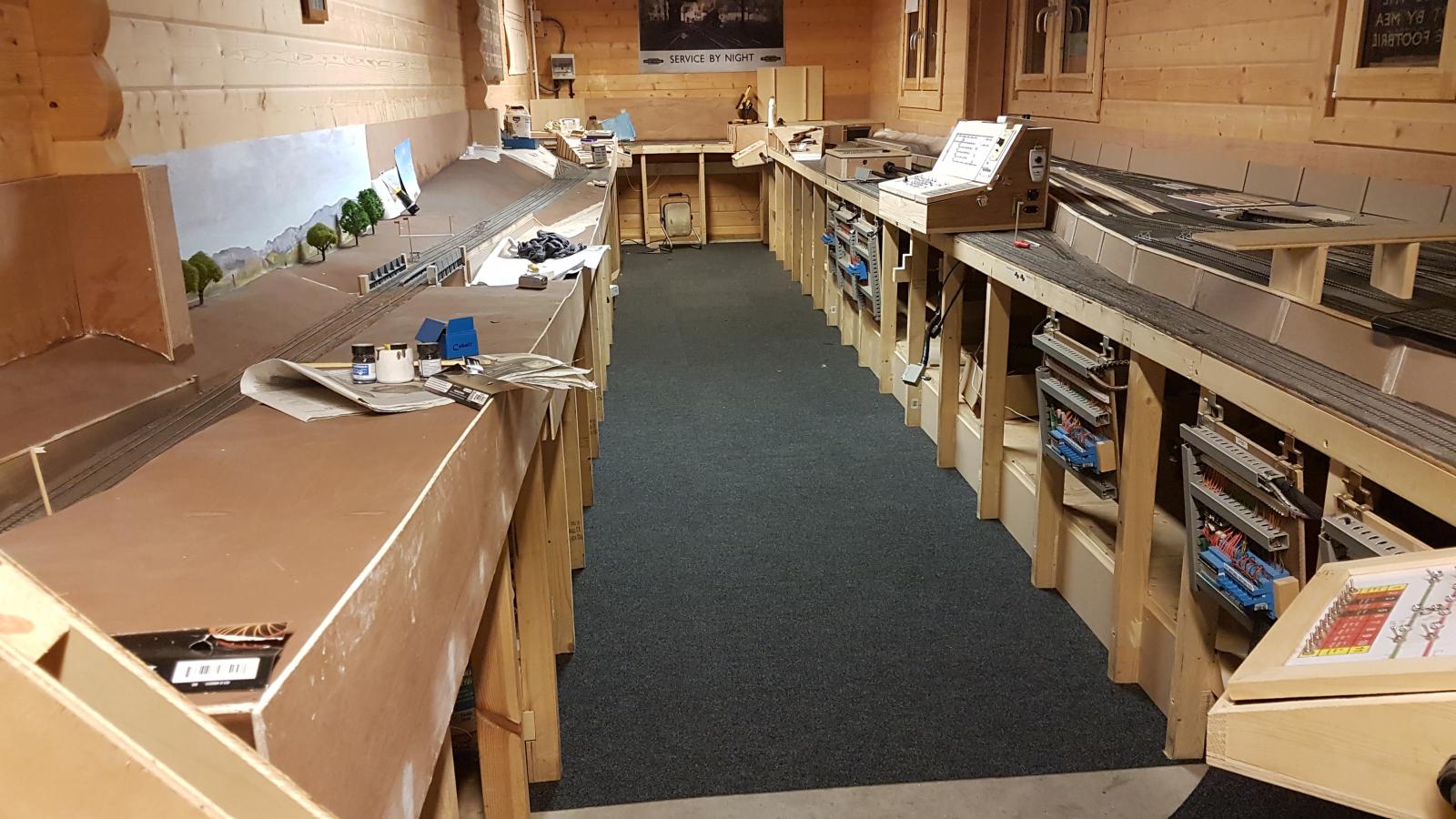 |
February 2018 The problem with a concrete floor is that its easy to kick up dust. I decided to do something about it and carpet tiles seemed to be a cost effective answer. I've added kick boards, one to hold down the tiles and two, to stop things going underneath. |
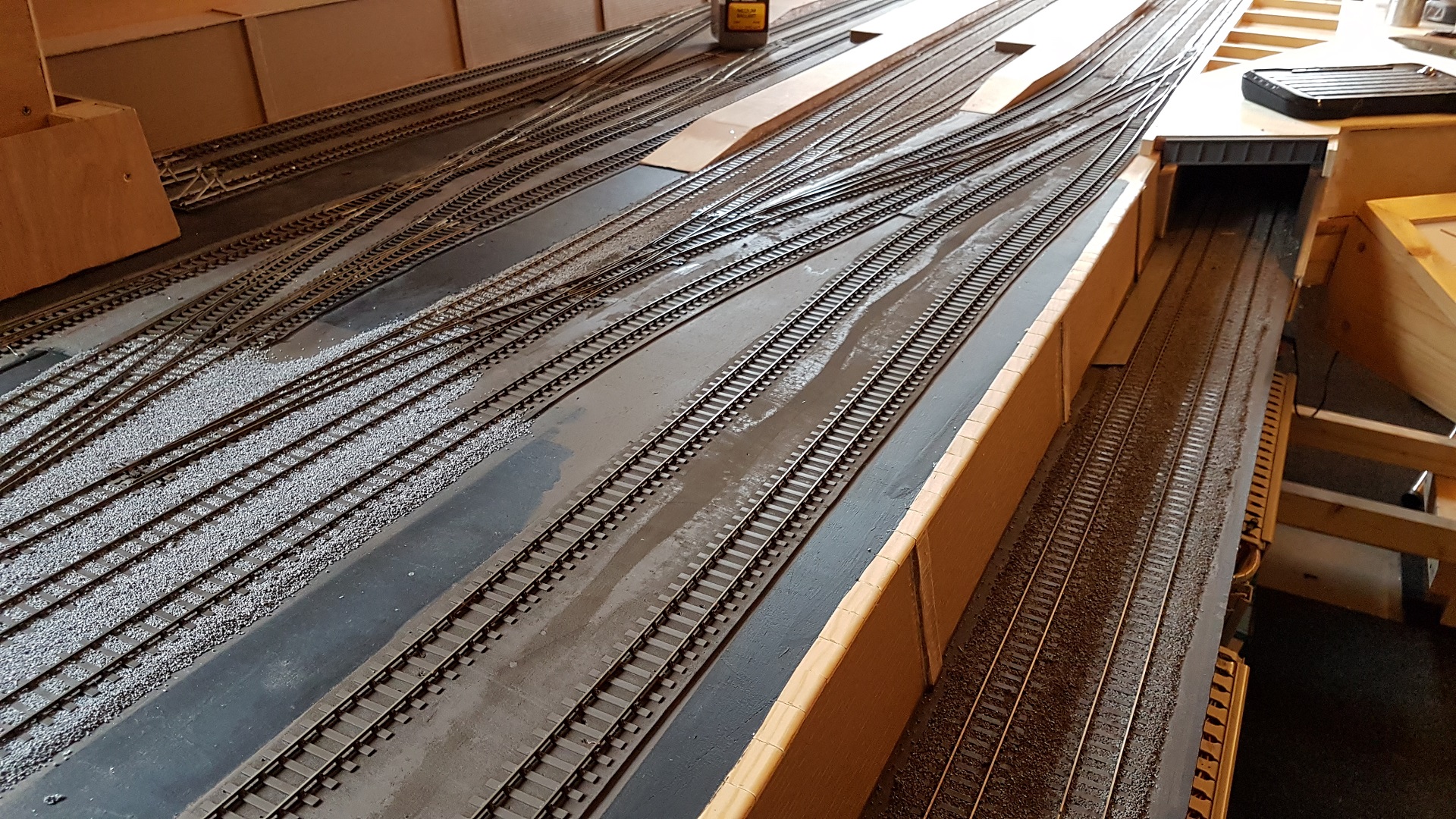 |
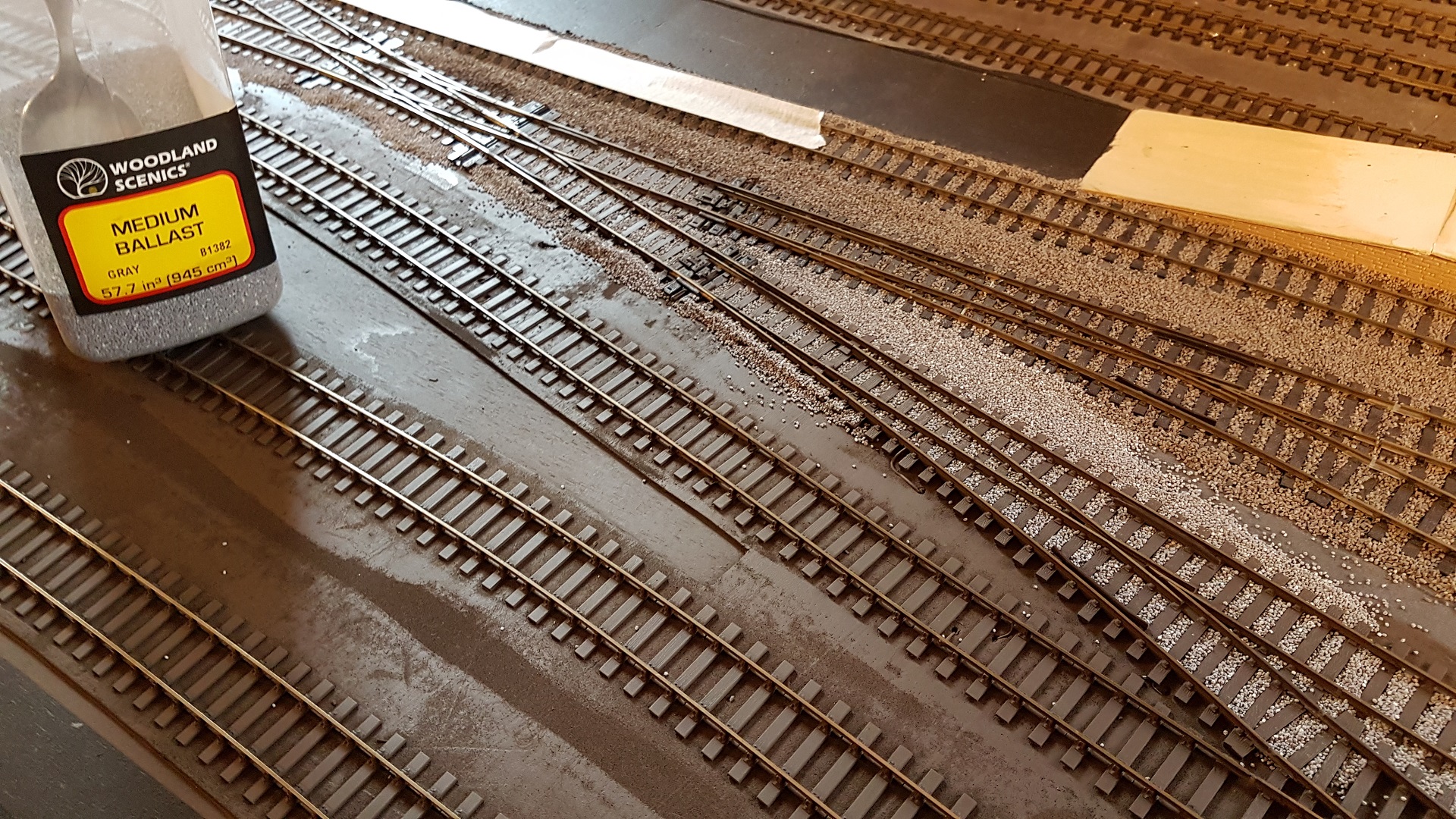
February 2018 One of the endless activities this winter has been ballasting which has gone on forever. When I look at a railway line, it just seems to be an overall brown grunge colour. You don't see rusty rails unless they haven't been laid long. After a while it all seems to adopt the same colour. C + L track used to advertise itself in saying that it is thinner so you use less ballast. It means that it's not the same height as PECO S + C components which is a problem (C +L have since introduced a PECO height version - too late for me). It may save you time but it's much harder to lay the ballast as you have to get it very thin. I find it easier to lay the ballast around the S + C than plain track. Here you can see ballasting in progress. |
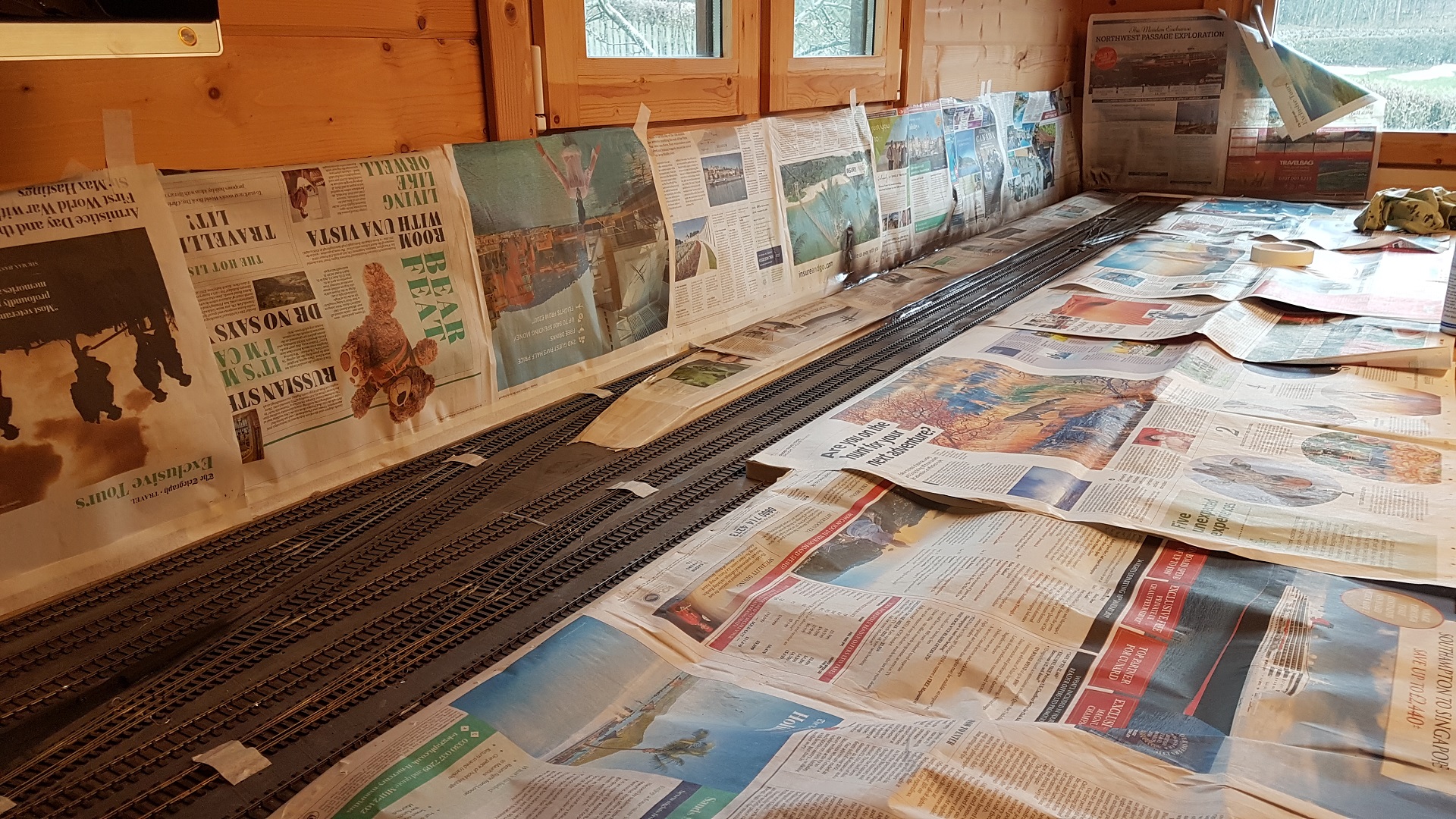 |
February 2018 First job is to mask off everything you don't want covered in paint. I also mask off the toes of points. It's not for connectivity reasons but just to stop paint getting into fine areas. Then I use Railmatch Sleeper Grime aerosol to paint the whole lot. Once I've finished spraying,I use a rag to clean the tops of the rails. A more thorough clean is needed once everything is finished. I do have a ballast spreader which I use on plain track - it is too wide for platforms. The best method when using it is to push down very hard while spreading. |
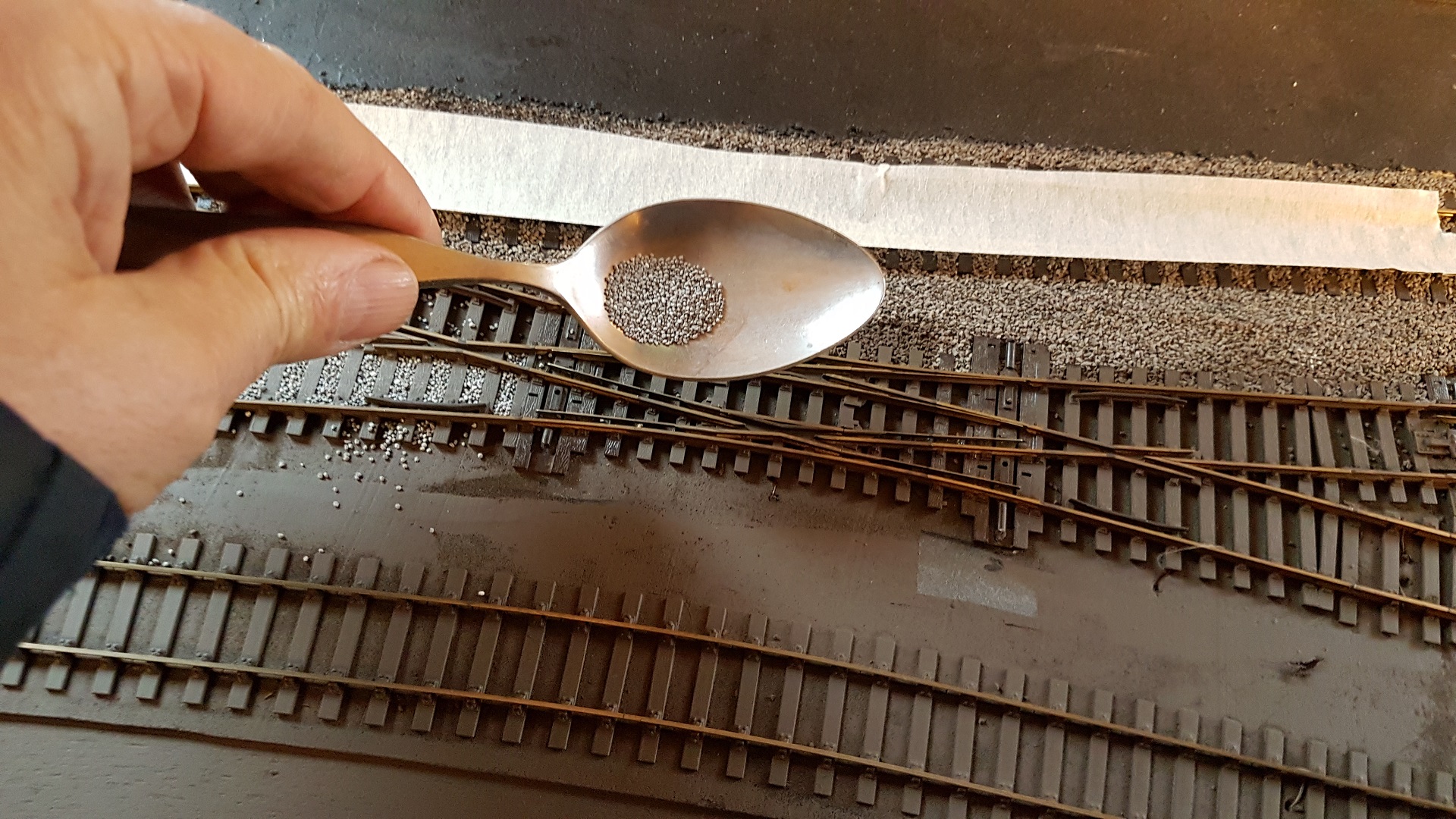 |
February 2018 For S + C work I use a spoon with small quantities of ballast. It's much easier to put too little in a top up rather than trying to extract a surplus. You have to watch out for errant stones between switch blades, on frogs and in check rails. I use a 4mm wide paint brush although sometimes fingers are just as effective. |
 |
December 2018 The canal bridge has had some weathering although I have manage to splodge the right hand side |
 |
So we plod along taking our time. I've started listening to audio books on the PC to stop me going demented. |
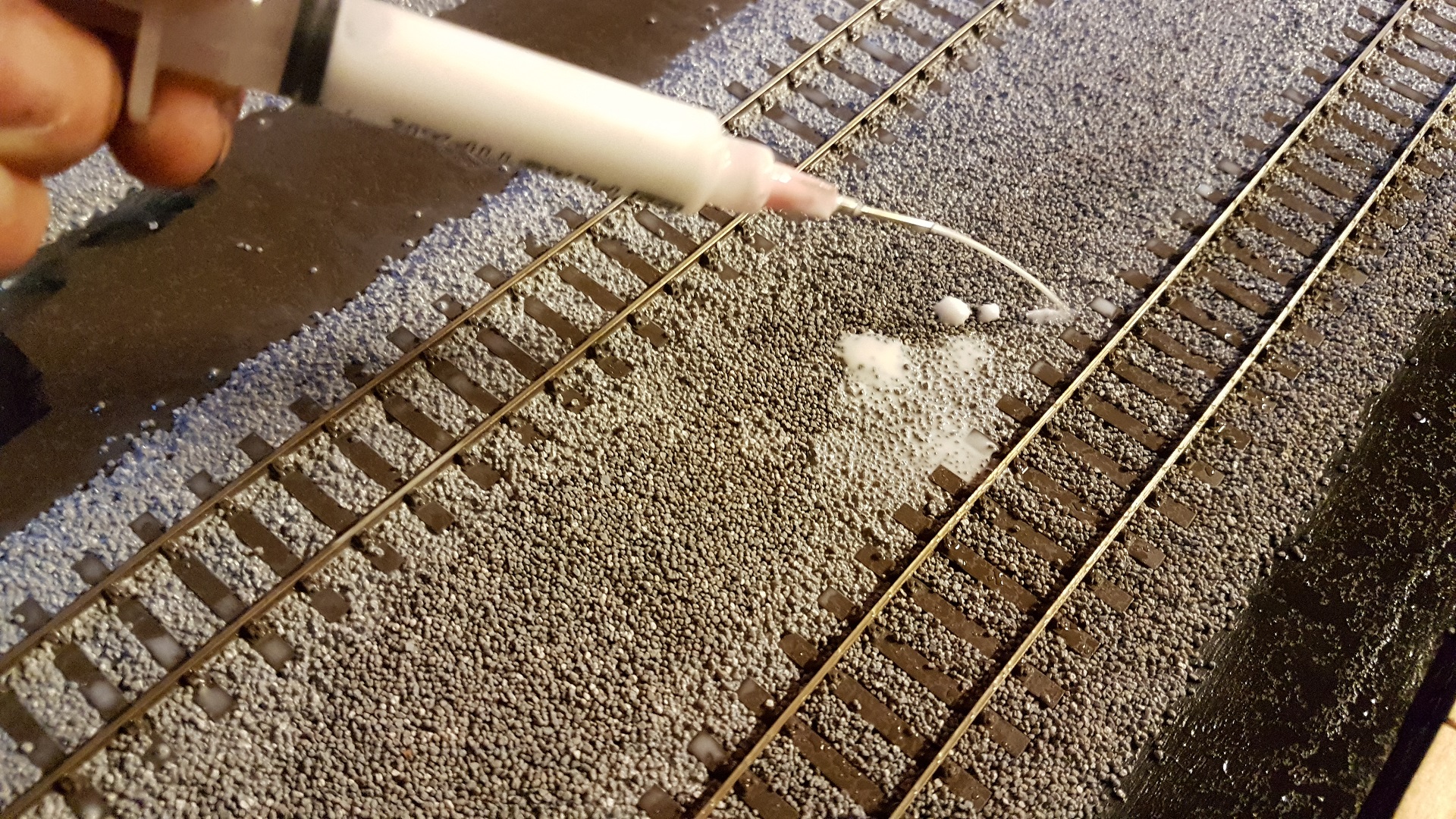 |
Now the critical time. If anyone tells you that you don't need to pre wet your ballast and you just apply some wonder mix - don't listen to them. The old fashioned way works. Find a decent mister (gardening misters are just the job) and add a couple of drops of washing up liquid to water. Mist the whole area. If the ballast isn't damp, it will deform when you try to apply the glue. Next PVA glue mixed with water 50:50 is prepared, along with another couple of drops of washing up liquid. I then apply it to the track using a syringe as shown. You've got to go carefully as if the glue comes out too quickly, it will move the ballast. You can see that the left hand track is properly saturated. |
|
First | |
Previous | |
Back to Index | |
Next | |
Last |
| 149 records found. Page 7 of 15 displayed. | |||||||||