

 |
First |  |
Previous |  |
Back to Index |  |
Next |  |
Last |
| 149 records found. Page 4 of 15 displayed. | |||||||||
For most of the photos on this page, you can click the image for a larger picture.
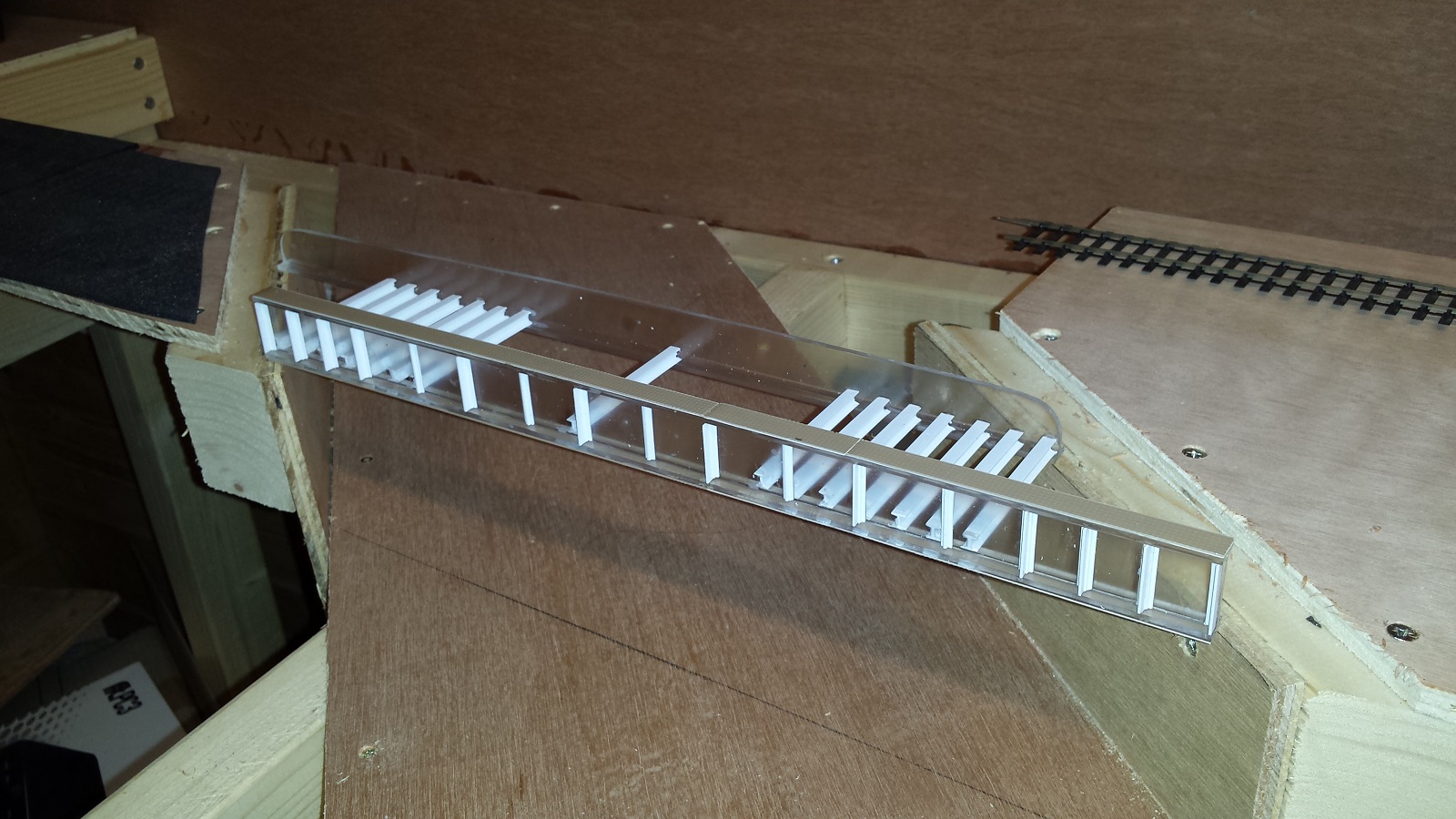 |
August 2016 I needed to take a break from matters electrical so it's time to start some of the scenery. I'm going to have a go at recreating Bridge 100 on the Calder Valley Line. You can see a photo of the original here. I managed to find some H beam material that was close to the dimensions of the original main longitudinal beams. The cross beams are going to be different from the original as these went underneath the longitudinal girders and were bow shaped - that's in the too difficult or not enough time categories. The centre longitudinal girder is hog backed and that will be a bit more tricky. |
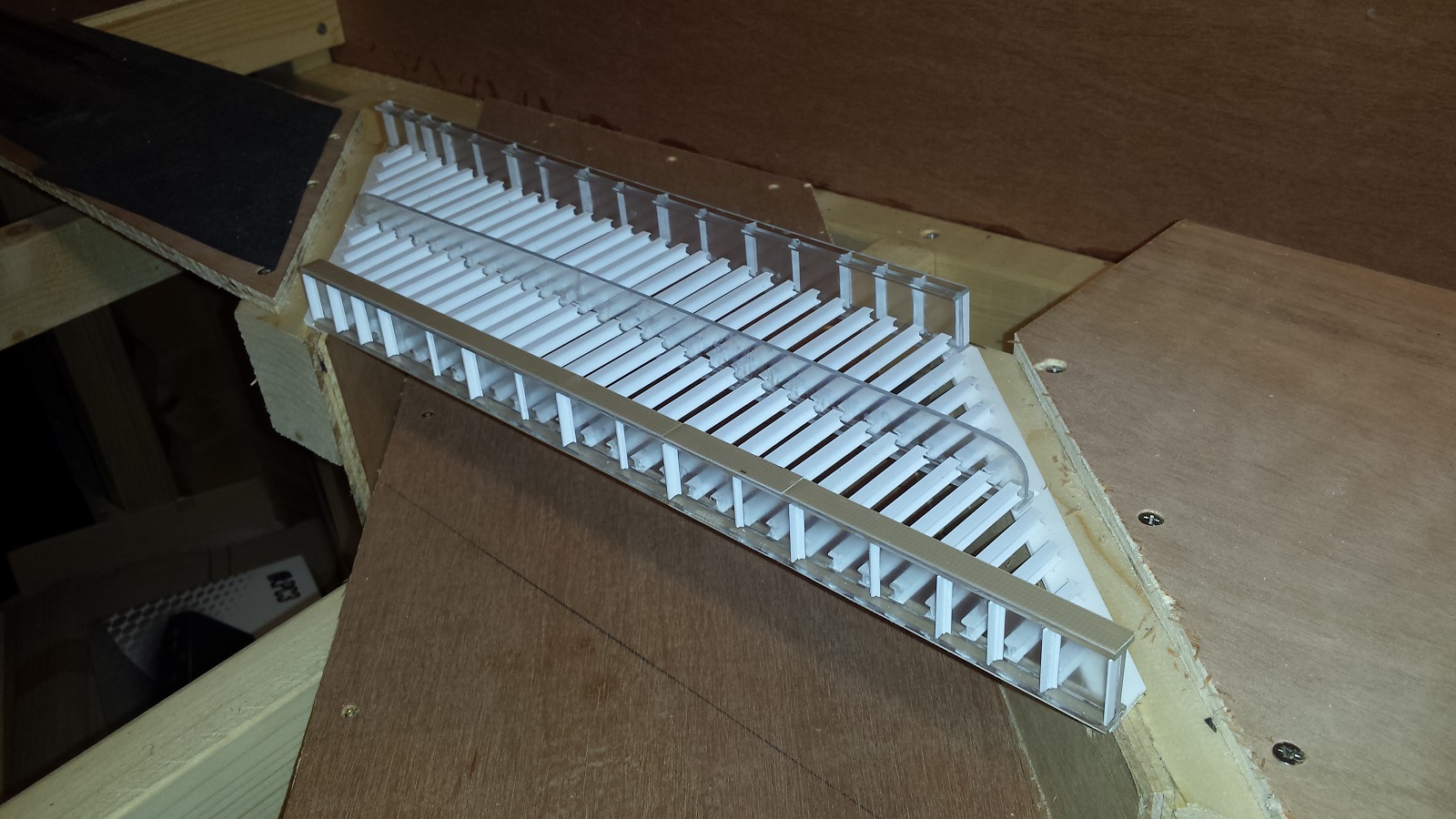 |
August 2016 Progress although the shorter H beam sections at the end have had to be removed. The diagonal piece at the ends was too low so that the H beams weren't being supported properly. Another packing piece required. The central girder took a lot of filing to get to the right hog backed shape. Now I have to apply the top flange to it. |
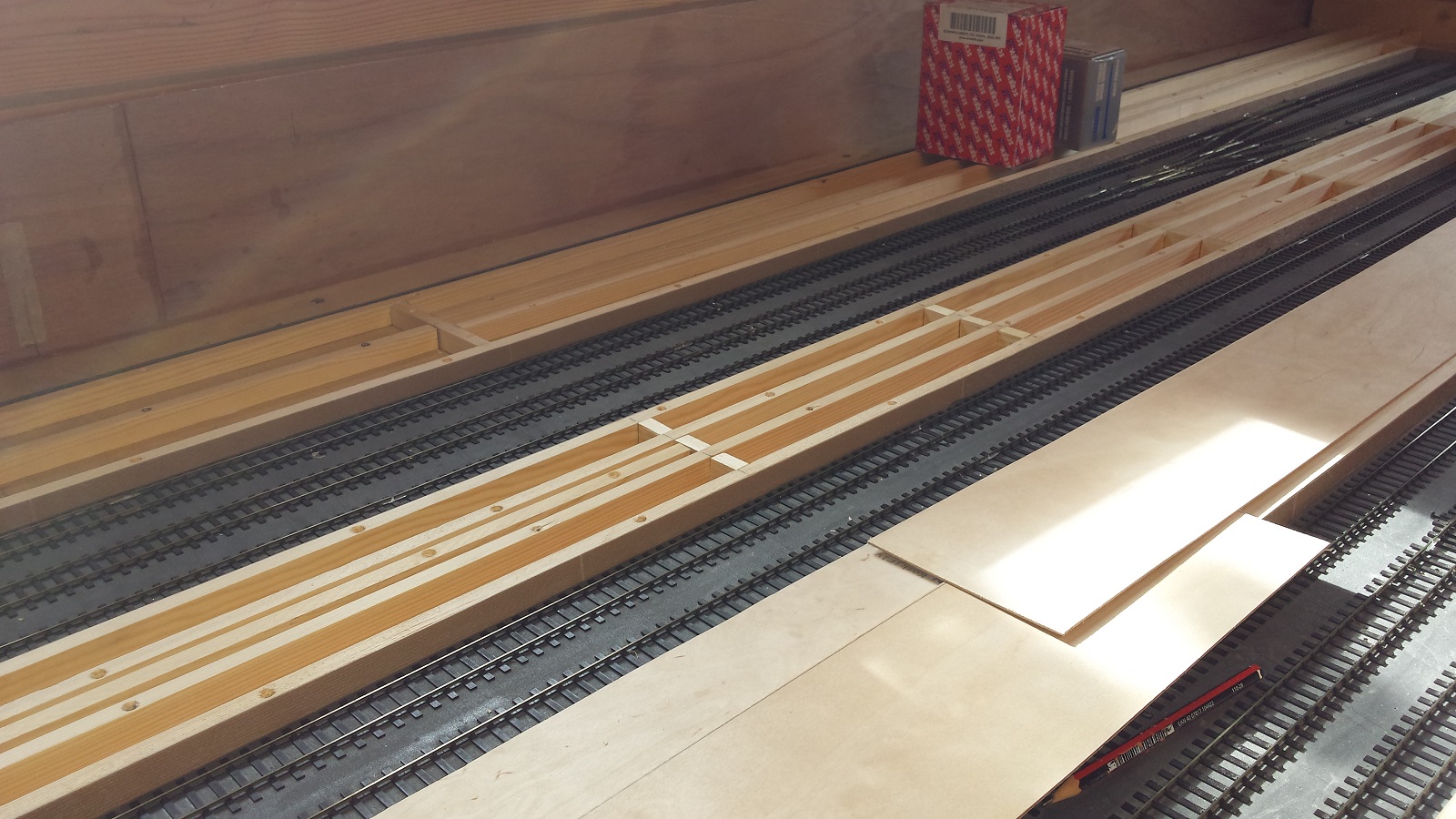 |
July 2016 Platform construction started. I use these strips of wood sawn down to the correct height. The intermediate lengthwise strips are to support the platform canopy supports which need something decent to be anchored to. I wasn't thinking straight when I got to the left hand end of the platform that runs into the bottom left hand corner. I only needed a central strip to support the platform lights so there's more wood than it really needs. You can see I got it right in the top platform. The top is finished in 1mm ply so they are quite strong. |
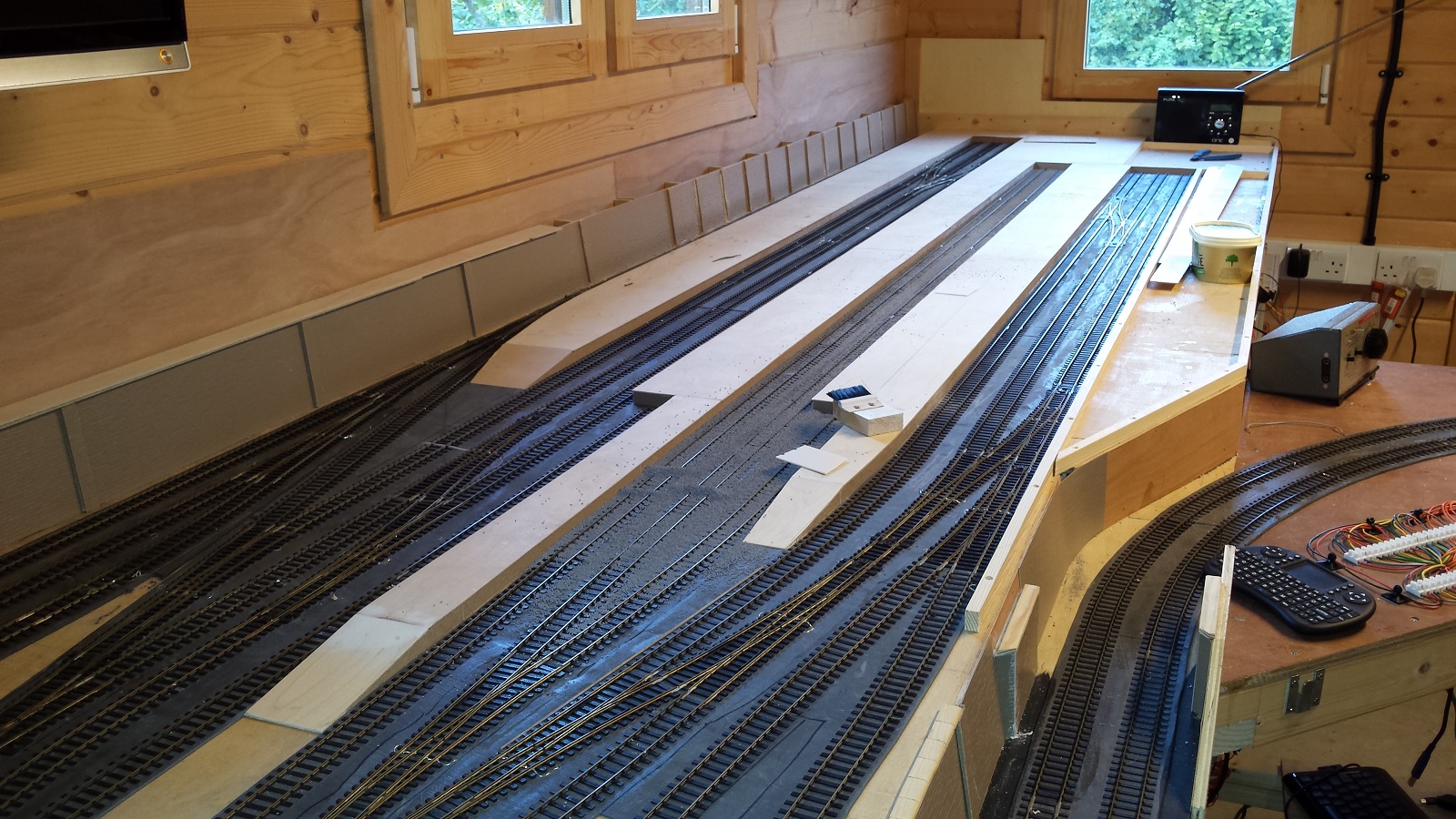 |
July 2016 A view of the finished platforms. I've started on a bit of ballasting which is obviously going to drive me insane! |
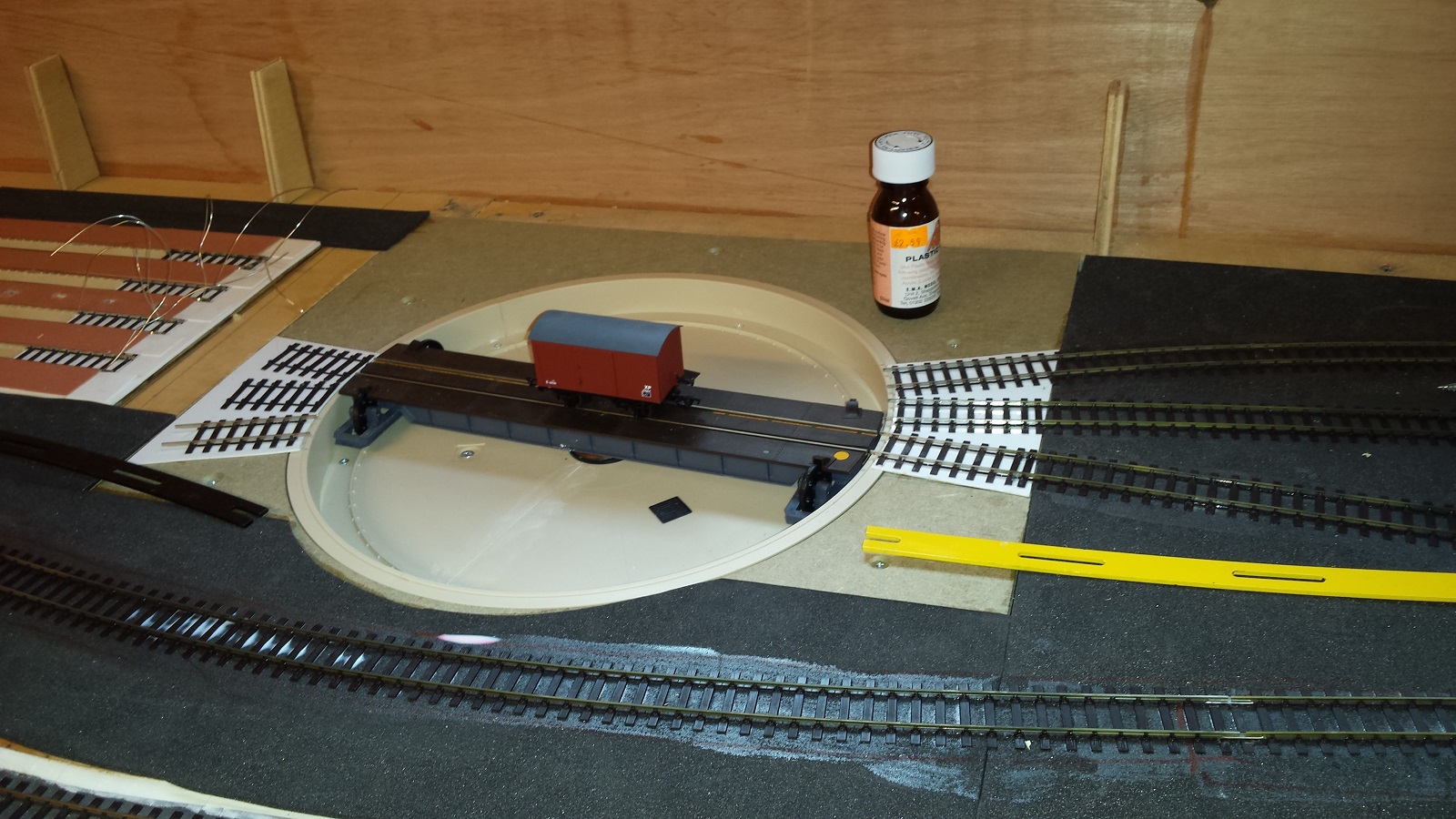 |
October 2016 In October, I finally bit the bullet that I'd been dithering over all summer and started on the loco shed area. The first thing was to cut the hole for the turntable. It could only fit in one place so it dictates the rest of the shed layout. The table came from ADM Turntables and it is a lovely piece of engineering. In order to avoid cutting a round hole I purchased the adaptor ring which means only a square hole has to be cut. The white plastic shims are to get everything to the right height (the turntable has a vertical alignment system) I've now got a challenge as I need to work out what to do to the edge while retaining the ability to be able to drop out the turntable. I will probably try a modification to the turntable to include a platform for the vacuum driven motor. That way, I will know where the head of the table is - currently a yellow dot. On the left you can see the base of the loco shed which will be a doctored Timber Tracks offering. |
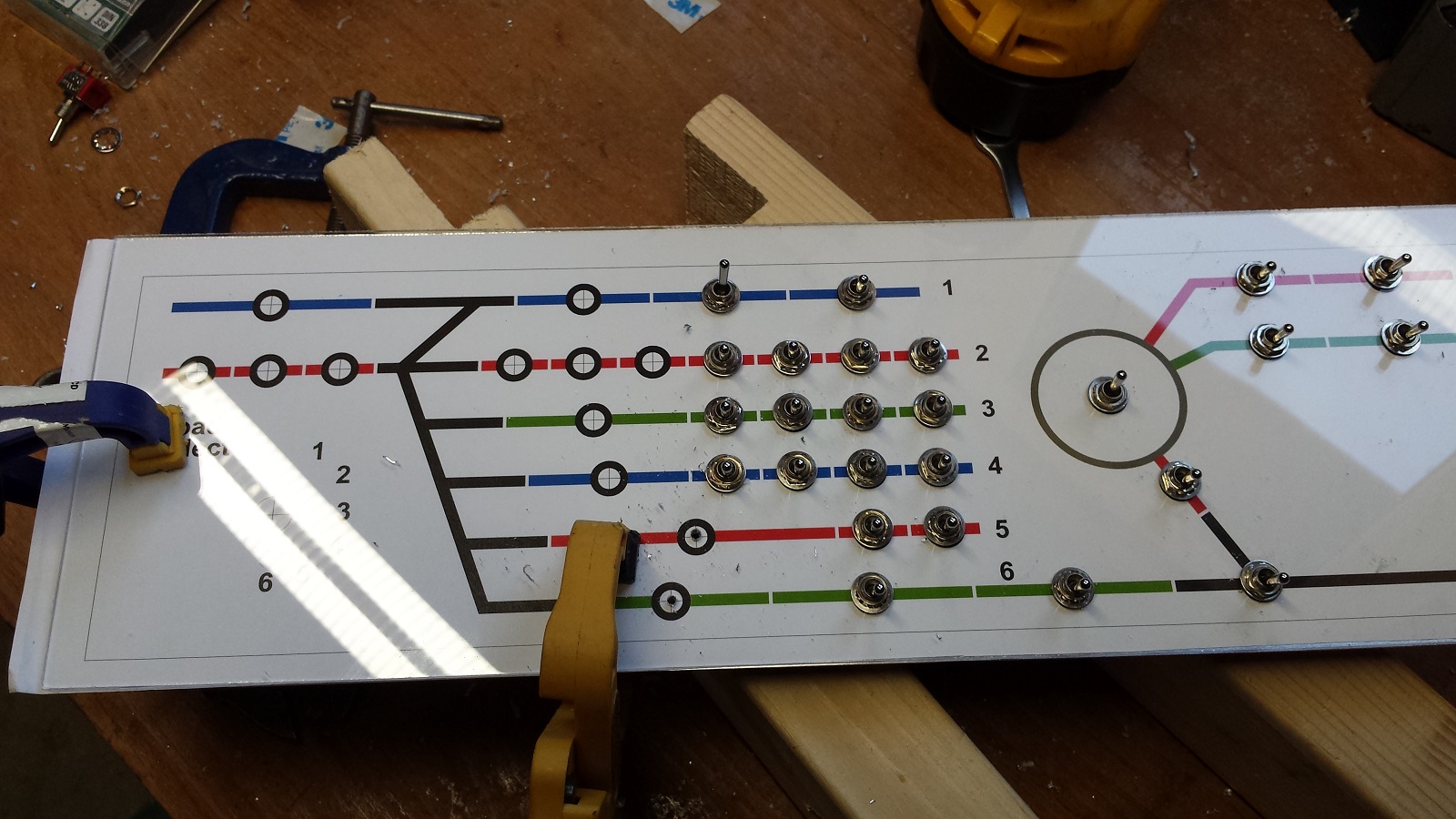 |
November 2016 Here's where I accept that DCC wins! The loco shed needs lots of isolation settings so October/November/December 2016 saw the building of the loco yard control panel. I made a good find on the internet when I discovered that The Plastic Man sells specially ground drills for cutting perspex. So one pilot drill (say 2mm), then the plastic drill down to the aluminium and finally and ordinary 6mm drill to avoid blunting the plastic drill. This saved an enormous amount of time compared with the fiddle yard panel (see above). The switch in the middle of the turntable is to switch polarity. On the left hand side, a rotary switch will set the route as there is only one route possible at any one time. I'm going to use some AND gate logic for a better point ladder indication. |
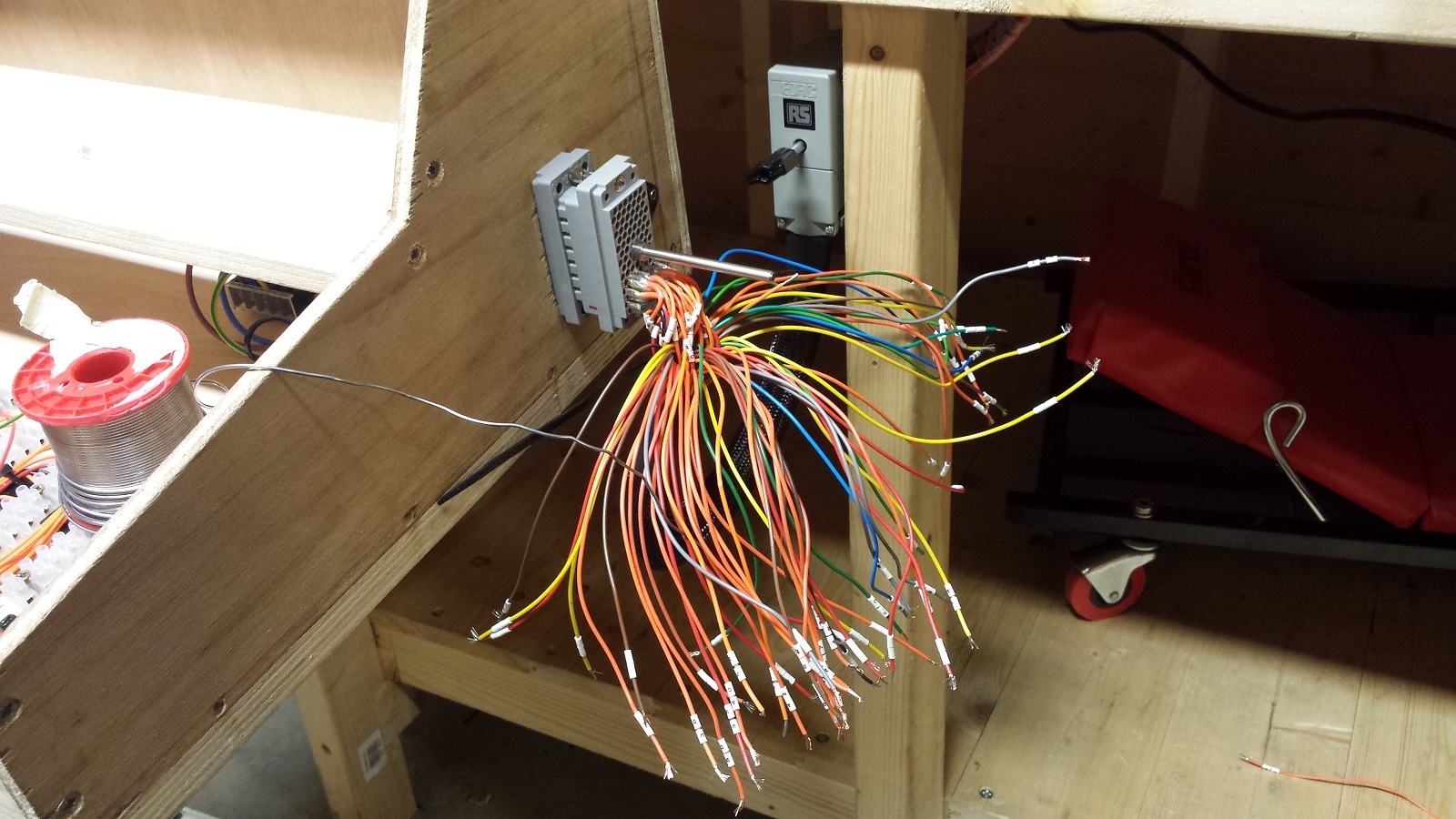 |
November 2016 Lots of isolating sections means lots of wires so I've used these EDAC 90 way plugs and sockets. I had used them on my uncompleted previous layout which had a number of sections and was designed to be portable. I had to buy a pin extractor tool so that I could reuse the connectors. |
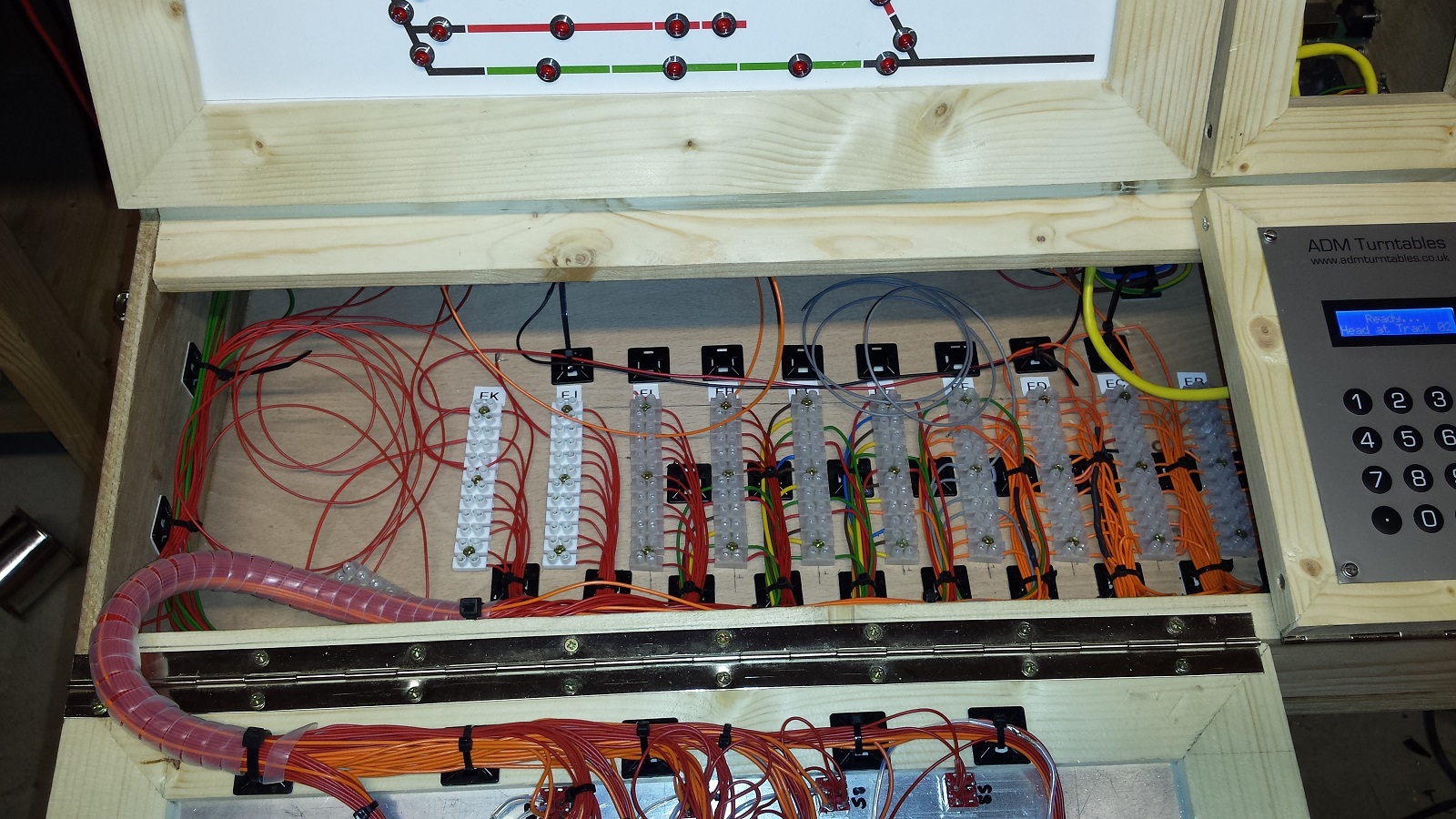 |
December 2016 The control desk for the locoyard starting to come together. I think the only way to wire neatly is to fix one end and temporarily secure the other end making sure you have surplus wire. Once you finished at the secure end, you can cable tie everything down. Then complete the other end cutting off the surplus wire. You can see the turntable control panel which is another nice piece of work from ADM Turntables |
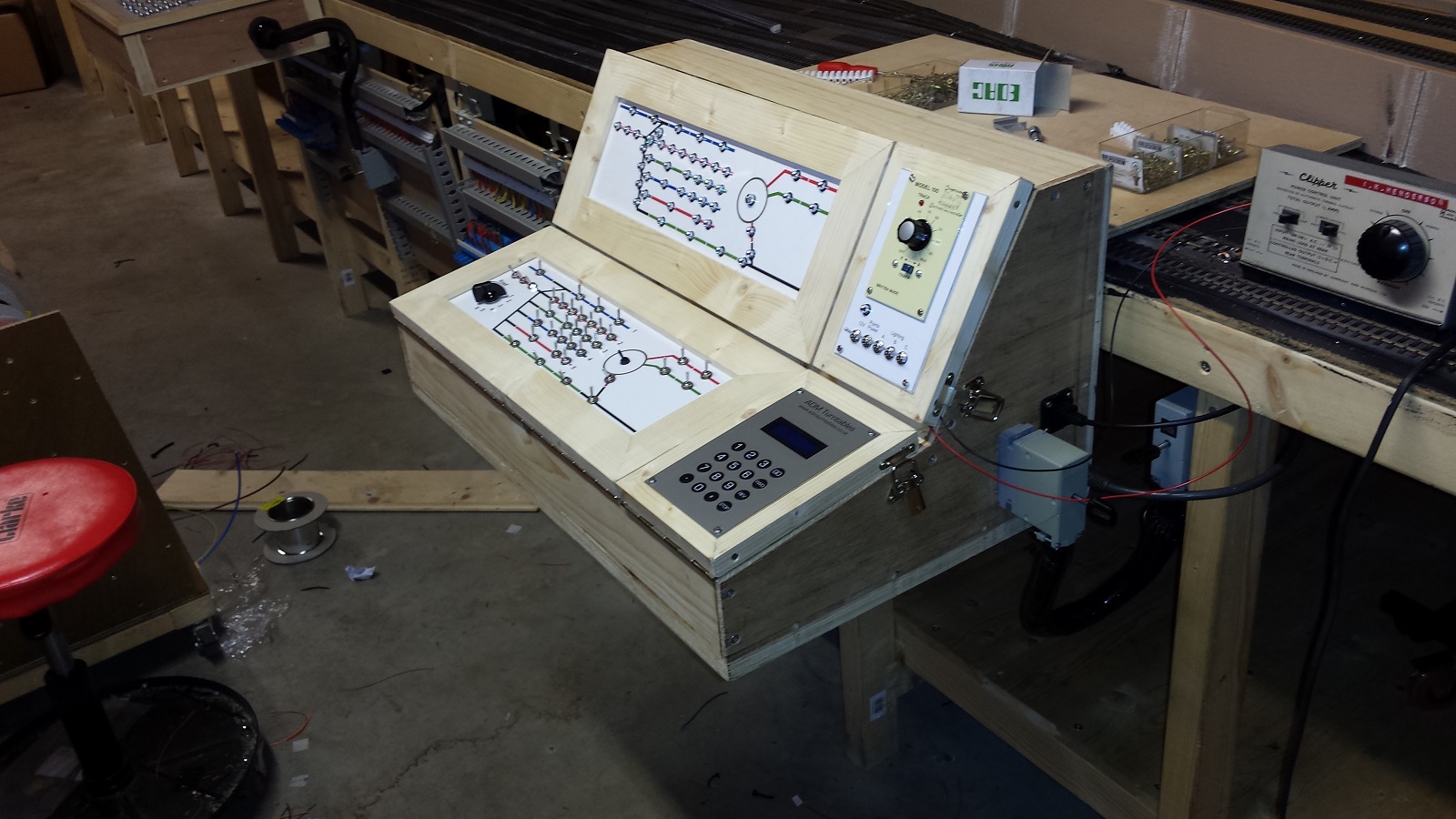 |
December 2016 Here's the almost finished control panel - switches on the bottom, indicators on the top. I decided that a combined indicator/switch panel was going to be too busy. You can see my trusty H & M Clipper providing a temporary 16V AC power source for the loco yard controller. 16V AC is a total pain as off the shelf transformers are either 15V or 18V. I really don't like the Gaugemaster transformers as they emit a considerable buzz. In contrast, the Clipper has a transformer which you can hardly hear. The Clipper must be 50 years old. It's been dragged up and down the country and has spent years in storage. It just works which is complete contrast to the controller I bought 5 years ago which has given up. In the end I bought a standard 15V transformer and that has worked fine. |
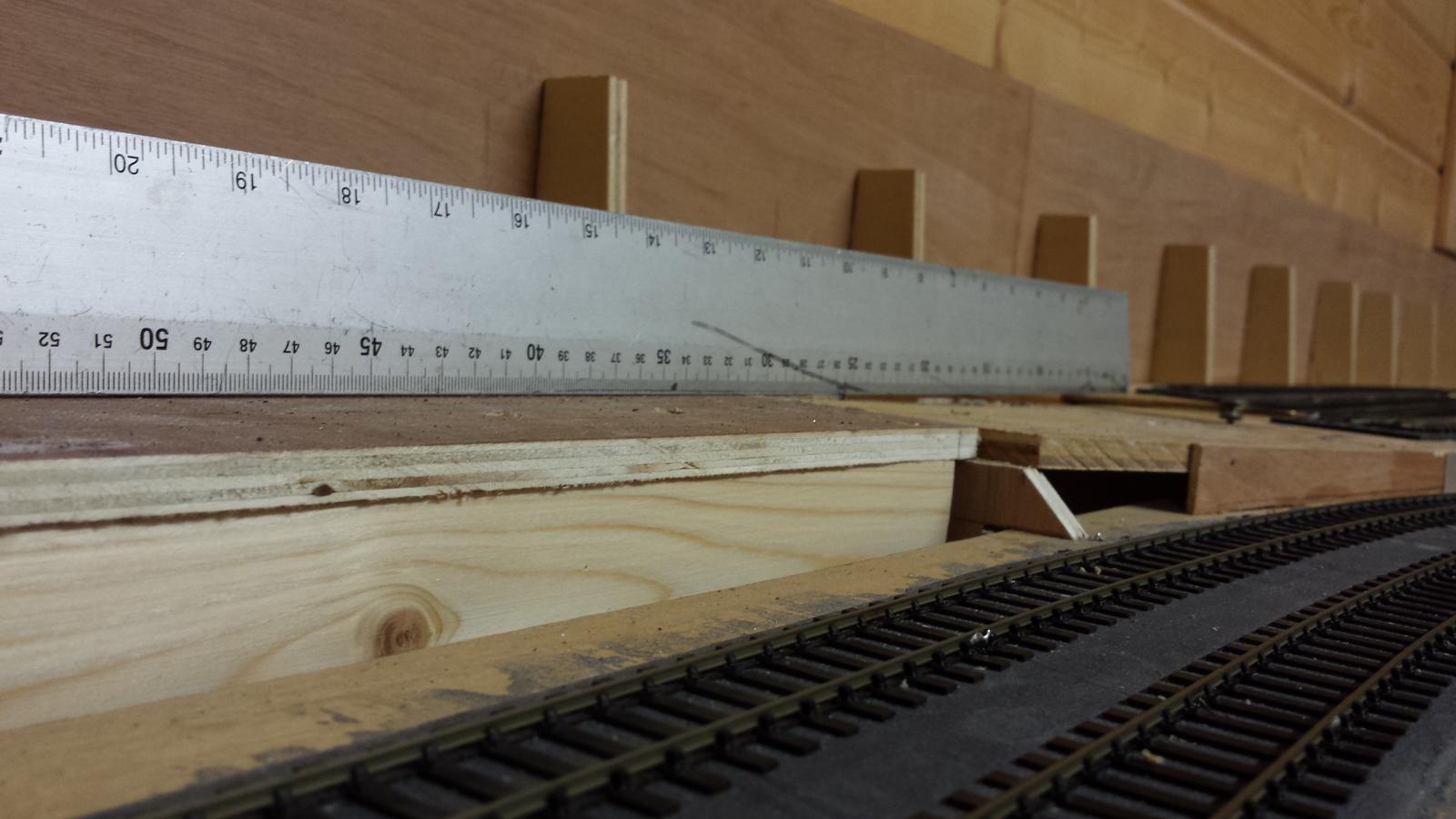 |
December 2016 When I started to test the loco yard control panel, I noticed that some locos struggled over the 3 way points at the entrance to the shed. On closer examination it was obvious that I had a level problem. It's always a bit galling to rip up a load of track but the only way to get good running is to get it right. Here you can see the difference in levels that was right under the point. The boards and formers came up and all were replaced. |
|
First | |
Previous | |
Back to Index | |
Next | |
Last |
| 149 records found. Page 4 of 15 displayed. | |||||||||