

 |
First |  |
Previous |  |
Back to Index |  |
Next |  |
Last |
| 149 records found. Page 2 of 15 displayed. | |||||||||
For most of the photos on this page, you can click the image for a larger picture.
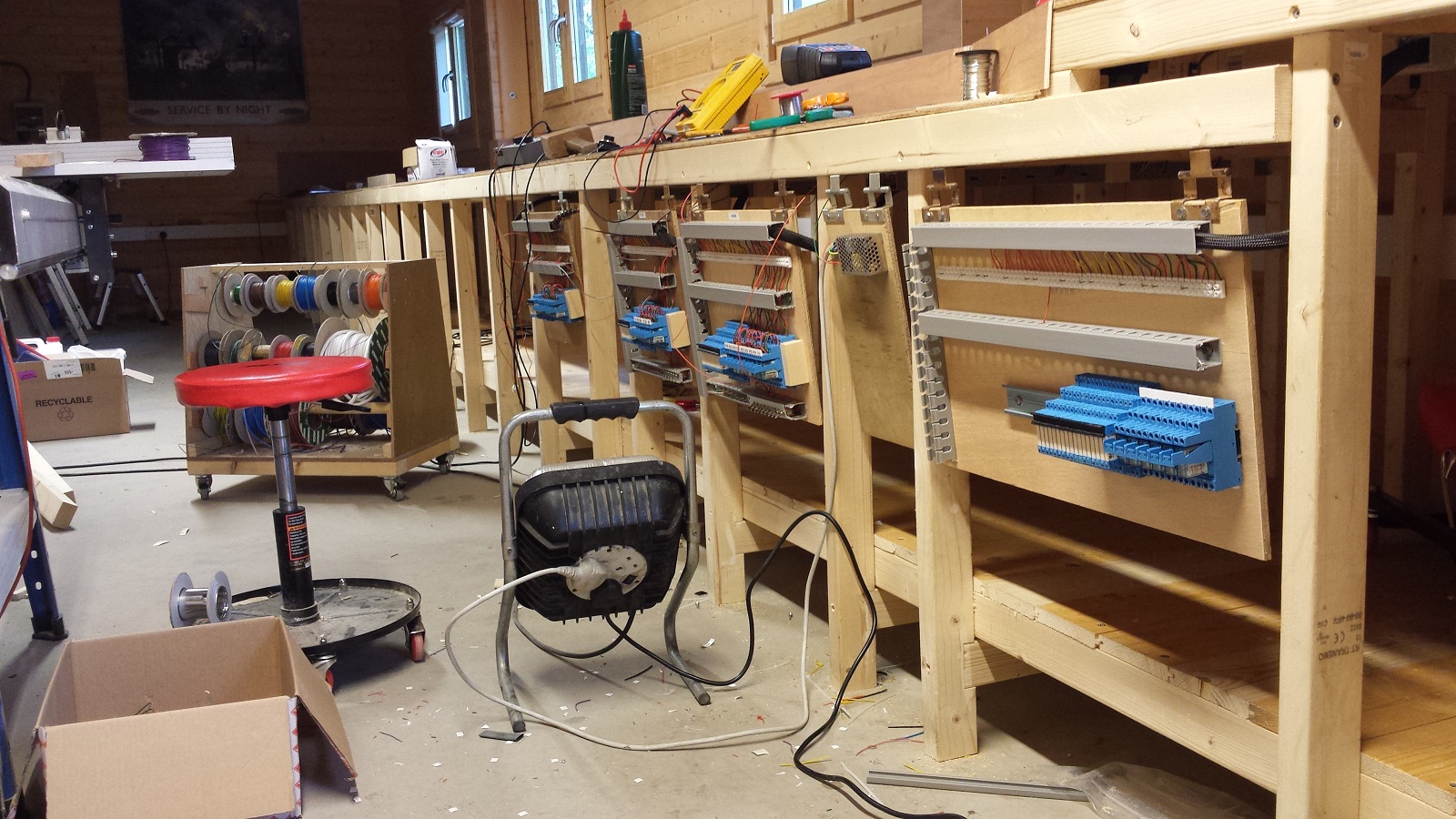 |
June 2016 The 2 boards in the centre have had the point wiring completed - that's the red and green wires. Now I need to 1) set the points so that the "normal" setting is with the relay de-energised 2) check the frog polarity is correct for this setting. 3) Make sure the point detection is normal for this setting. One of the switches in the point motr will control the polarity of the frog, the other will be used to tell the PC whether the point is normal or reversed (in signalling speak). Slips always seem to cause problems as you get a short if the frogs aren't right. On the board in the foreground, the white relays to the left of the point motor relays are for signal and zone control. On the small board to the left of that board is a 12V power supply unit. |
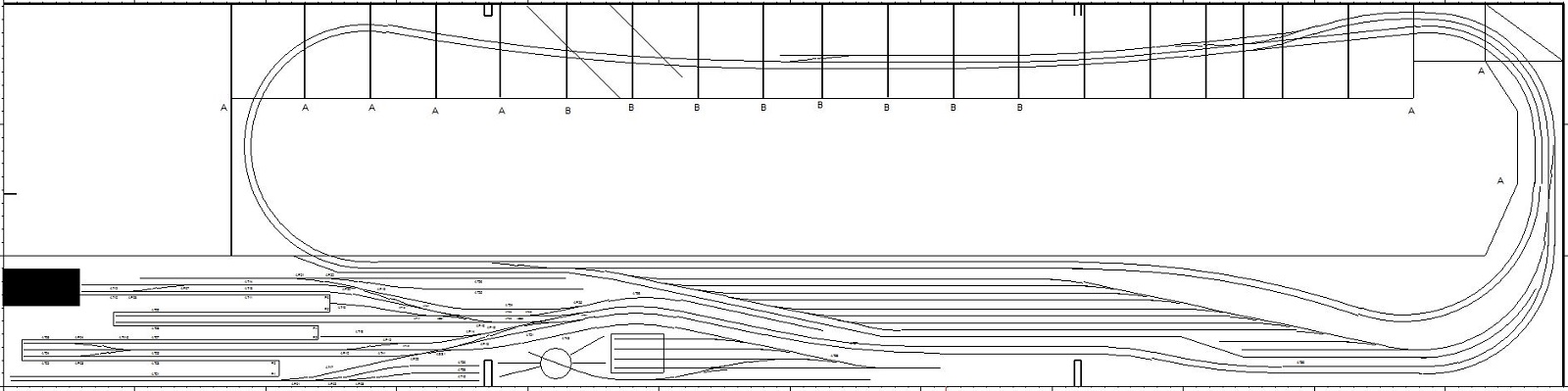 |
Summer means being outdoors and the railway takes a back seat. The track plan has had a significant revision. I decided that having the through station in addition to the terminus station was a bit excessive and I couldn't watch the trains go by. In the summer we had a walk along the Rochdale canal from Walsden to Hebden Bridge. I was taken by the idea of a skew bridge across the canal with, maybe, a lock. A passing loop starts after the canal bridge and then the junction to the terminus. The engine shed has been reworked - I've still got some work to do here. |
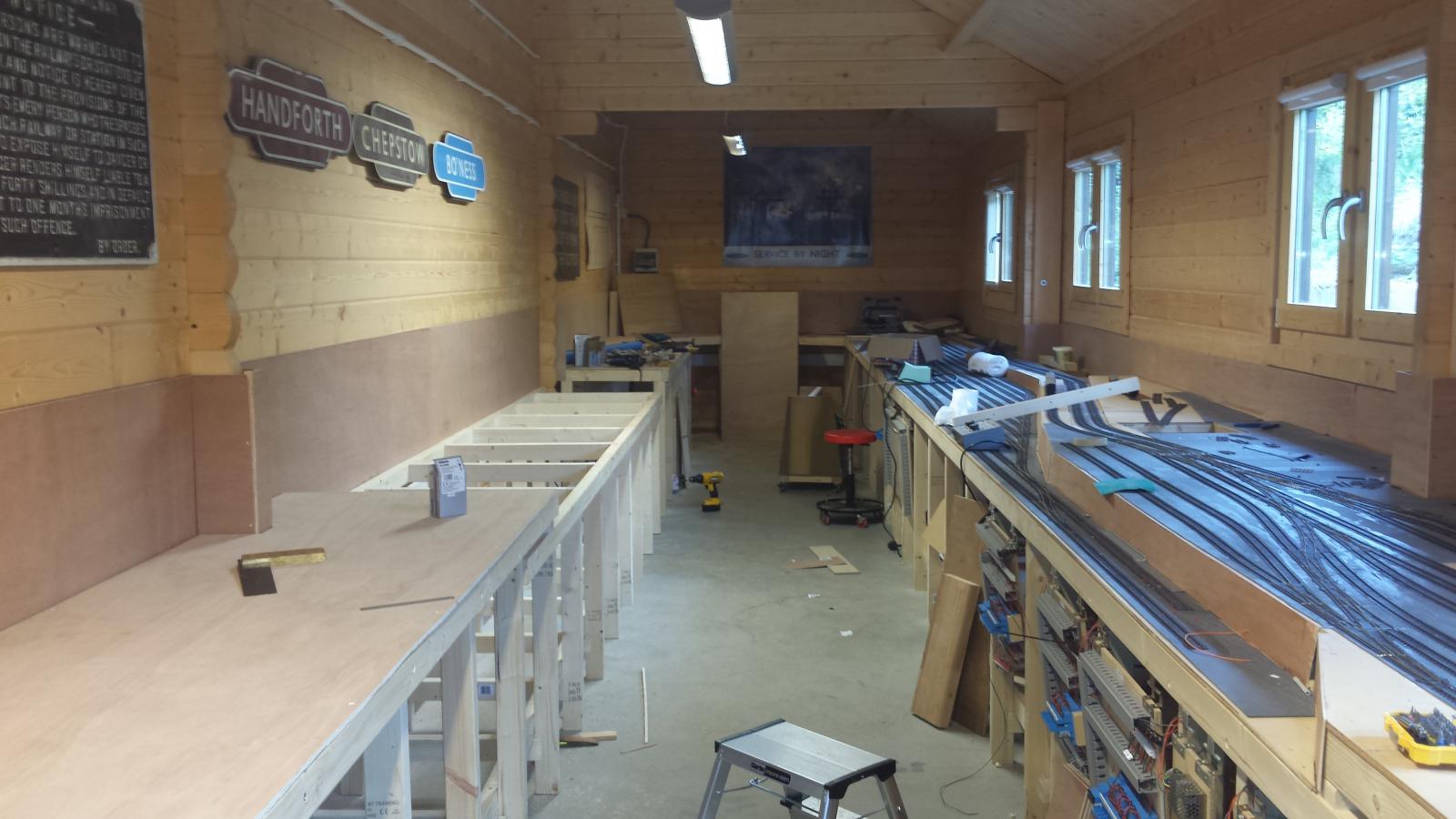 |
October 2015 The wiring of the station and yard took all summer when the weather was bad. I've now started the other side and am making reasonable progress. I have to do the sawing outside now as otherwise I would have a major dust problem. You can see that I like to build bombproof structures. The timber is 63mm * 38mm and the tops are 9mm ply. All joints are glued and screwed. The middle section on the left is lower so that I can build the canal bridge. At the end nearest the camera, I've got to make a lifting section for access. |
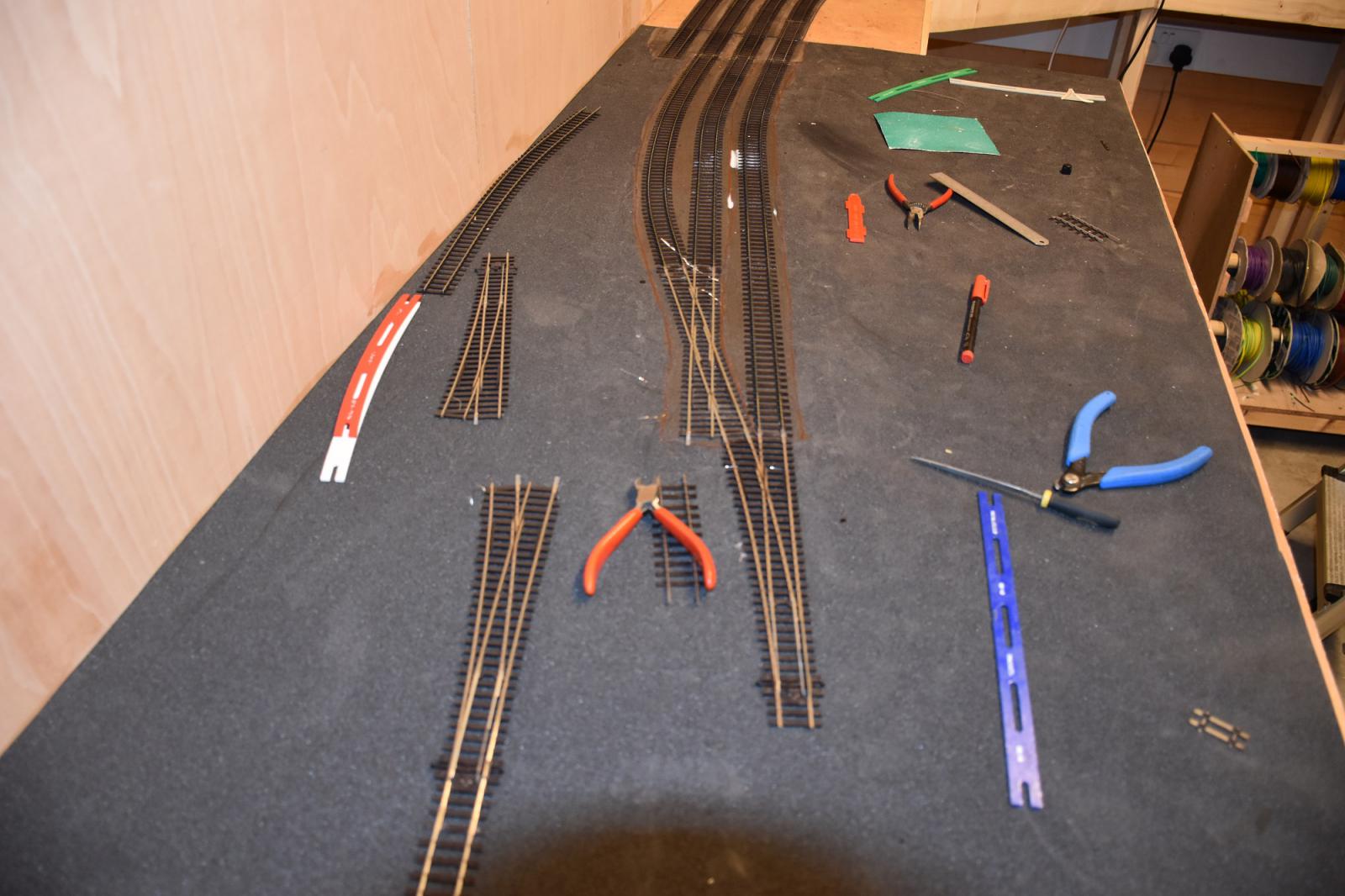 |
October 2015 This is the double junction taking place. I'll use this section to show how I lay track. Norman Solomon has influenced my thinking. Track is Code 75 from C & L Finescale. Fortunately I bought a couple of boxes of track before their moulding tool broke in 2015. Pointwork is Peco Electrofrog. I'd have like to built my own but there's a lot to do and I don't have the time. I use Trackesetta templates. For a junction, I reckon it's not worth doing too much at one time. Here the diamond and the first turnout are in place. |
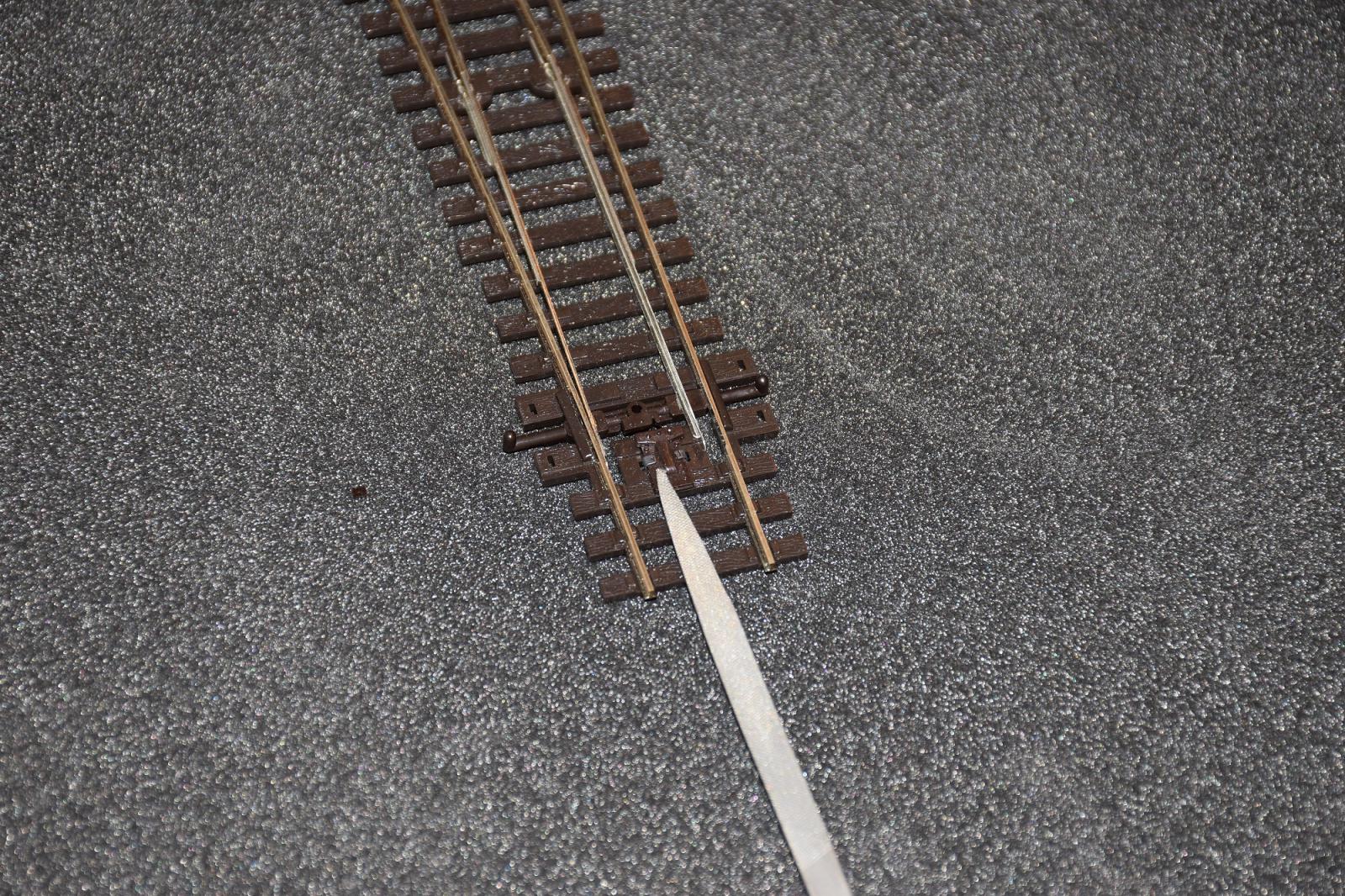 |
October 2015 Peco turnouts need modification in 4 places. I started by using Tortoise slow motion motors but have since changed to Cobalt Motors from DCC Concepts. They are smaller and seem better put together but (with hindsight) they aren't as reliable.. As I'm using slow motion motors I don't want the over centre spring in the turnout controlling the speed. So prise up the 2 arms that hold the spring retaining block down. |
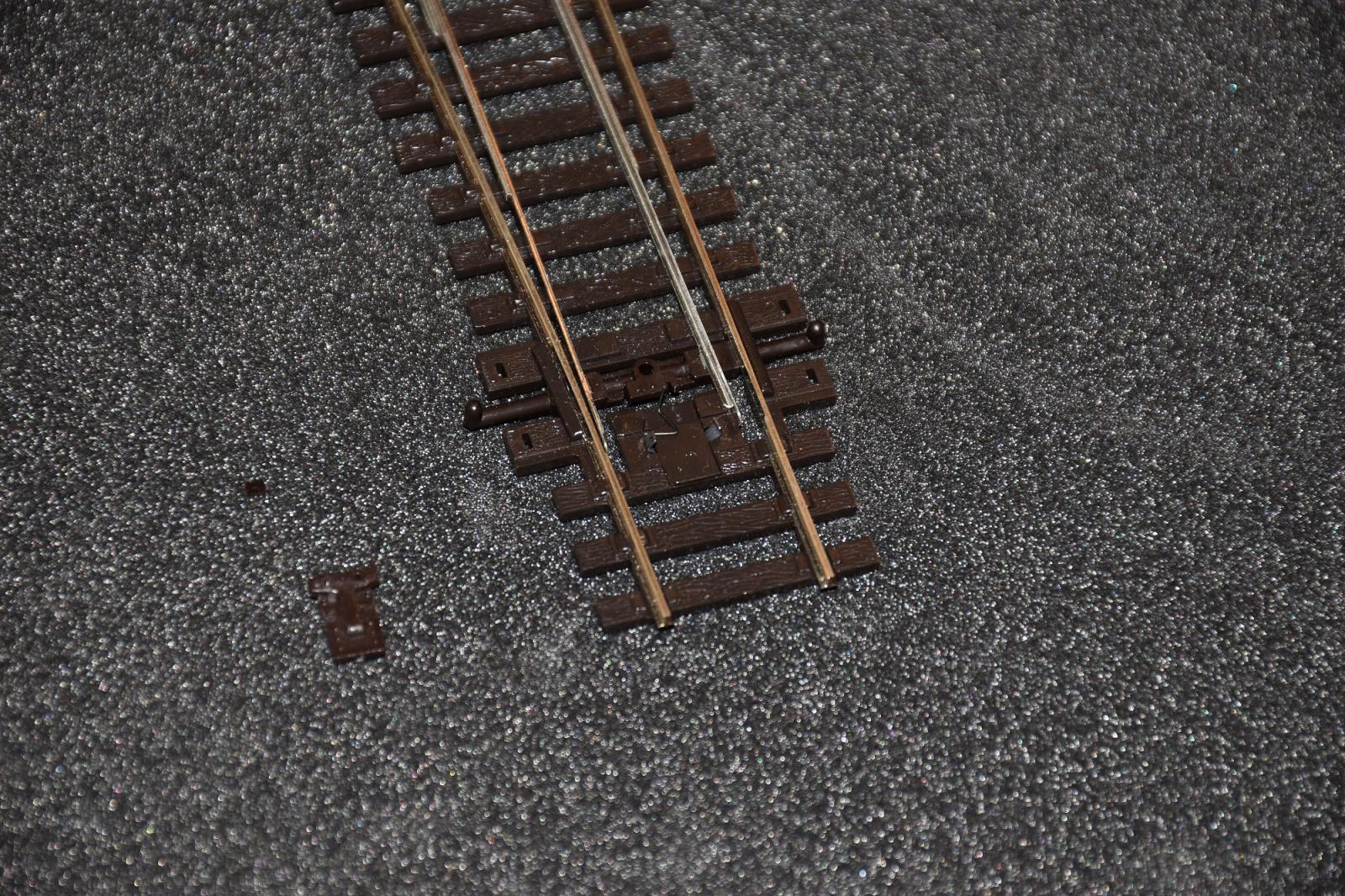 |
October 2015 Remove the V shaped spring and put the retaining block back in place. Squeeze the 2 arms again to hold it in place. |
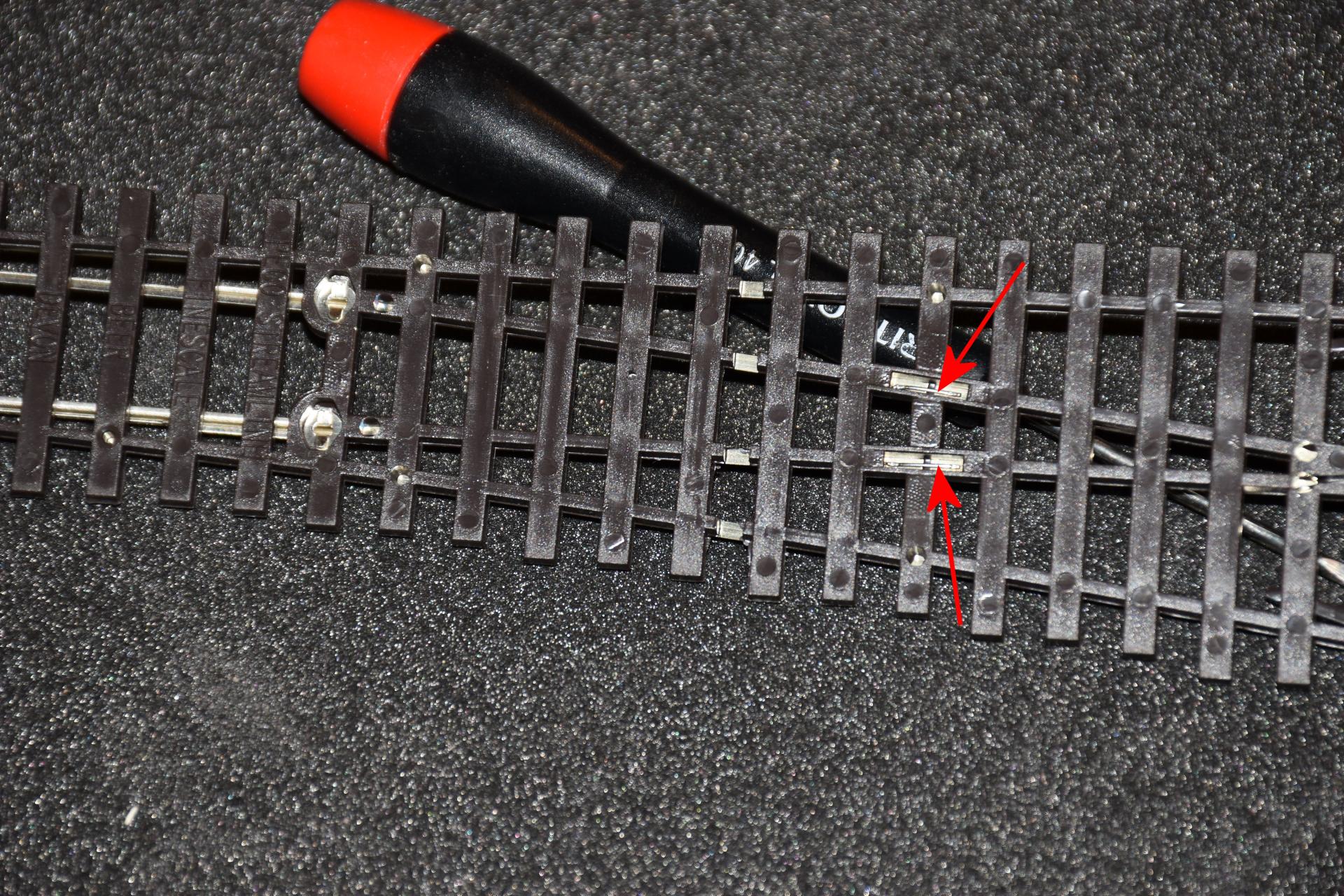 |
October 2015 The point motor will control the frog polarity so we need to remove the reliance on the switch blades which is bound to stop working in time. Underneath the turnout with a fine jewellers screwdriver remove the shorting links - shown by the red arrows. I put the screwdriver in vertically and twist it alongside one end of the wire. 50% of the time it will break off cleanly. Do the same at the other end. The rest of the time it will not break off so you need to prise one end up and pull it out with a set of pliers. It's a real pain when you find you've forgotten to remove the links once the track is down! |
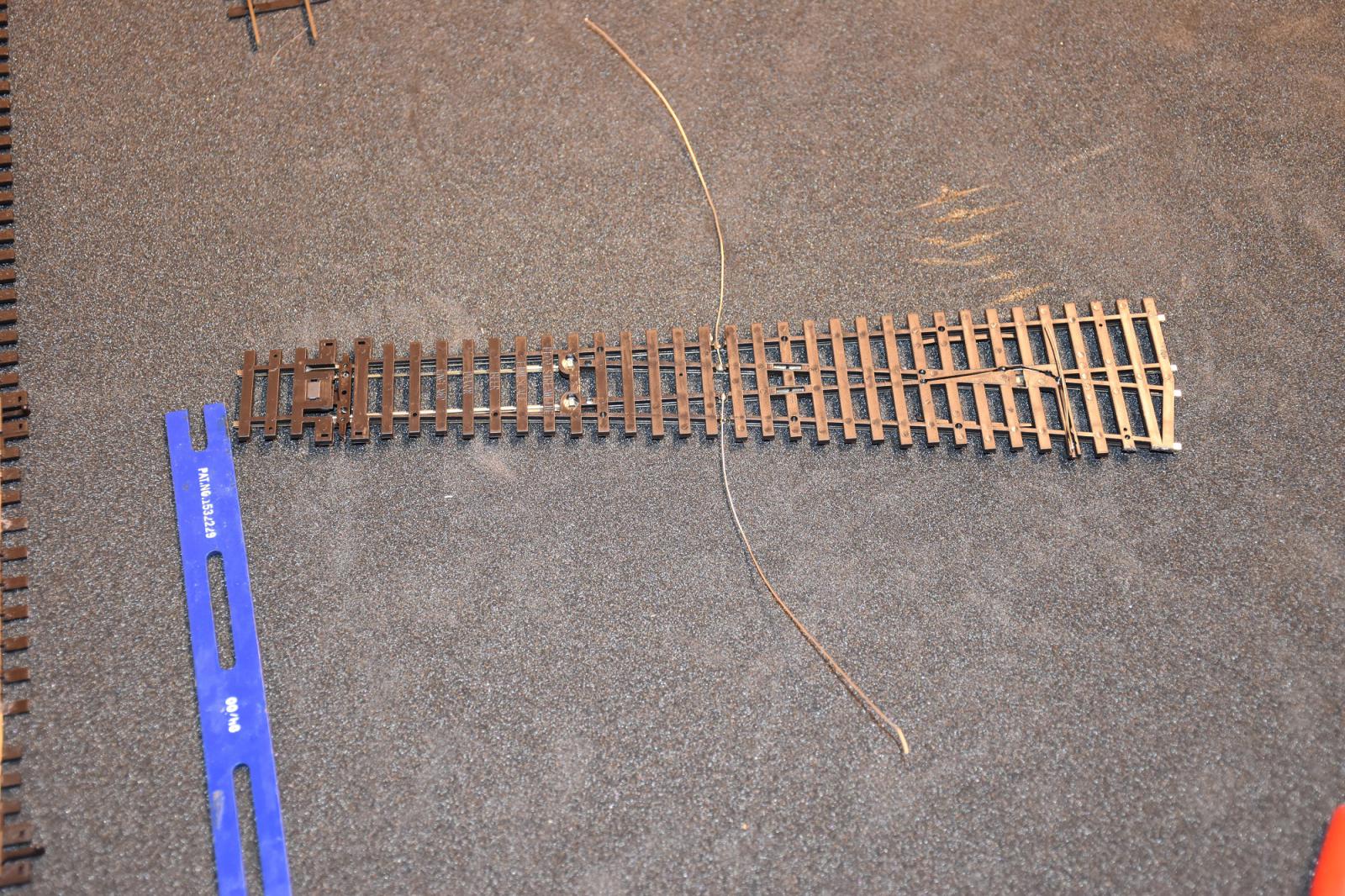 |
October 2015 Now clean the bottom of the rails in the gaps underneath the turnout. I use a file. Tin the bottom of the rail with a small amount of solder. I then use 24awg tinned copper wire from RS Components soldered across the stock and switch rails. These wires will be fed through the baseboard and will provide the feed and return supplies to the turnout. Holding the tinned copper wire down while holding the solder and the soldering iron is a bit of a juggling act! |
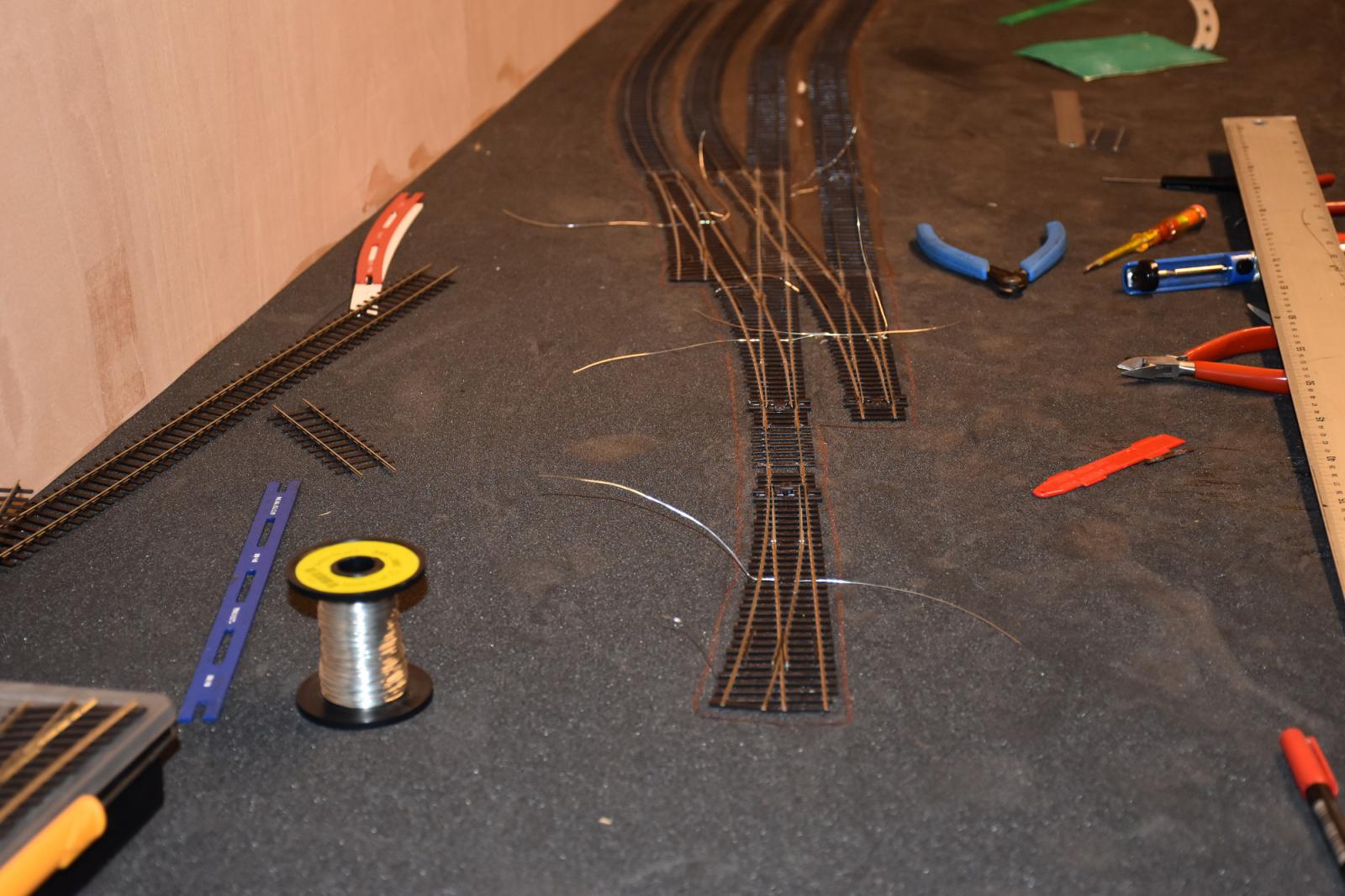 |
October 2015 Everything goes in for a trial fit. For this type of junction it is necessary to cut off the ends of some sleepers on the turnouts as they interfere with the adjacent turnout. |
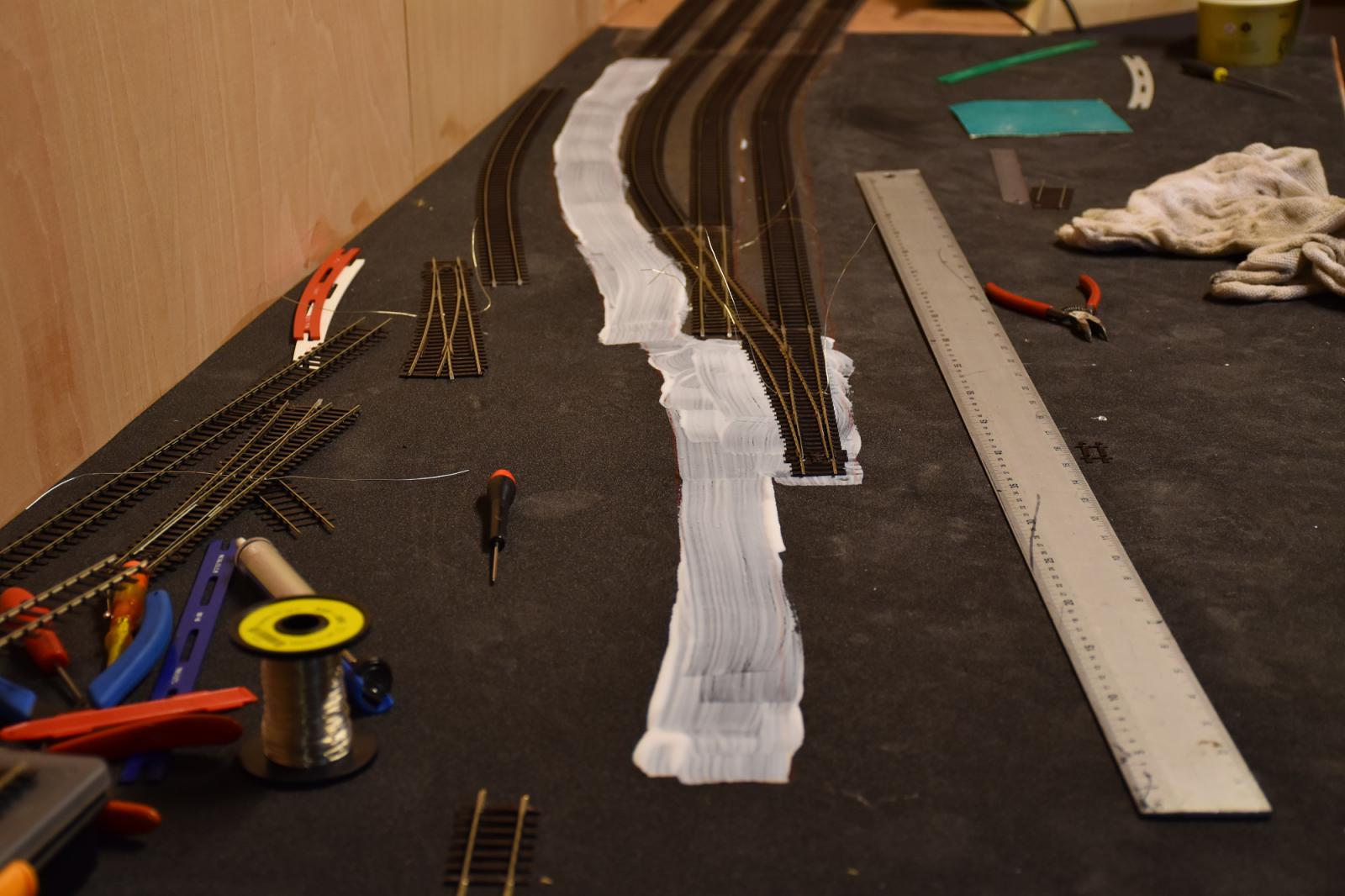 |
October 2015 Before I remove the trial fit I mark the outside of the track area with a felt pen. This helps me put the glue down in the right area. I also mark where the hole for the point motor operating wire comes up and drill this with a 5/16" drill. I use PVA glue watered down about 50% PVA, 50% water. |
|
First | |
Previous | |
Back to Index | |
Next | |
Last |
| 149 records found. Page 2 of 15 displayed. | |||||||||